Home security has long been associated with peace of mind, but increasingly it is also becoming tied to questions of sustainability. Traditional surveillance systems, once defined by bulky wiring and power-hungry cameras, are being reimagined through energy-efficient design, renewable power integration, and digital innovation.

As climate concerns grow and consumers look for eco-friendly solutions in every corner of their homes, the security sector is adapting. The “greening” of home security reflects not only technological progress but also a cultural shift toward responsibility—proving that safety and sustainability are not mutually exclusive.
Global Trends In Home CCTV
Across the world, demand for residential surveillance is climbing, driven by rapid urbanization, the spread of remote work, and a growing awareness of property risks. Yet alongside this rise comes a crucial concern: how to ensure that home security systems do not become unsustainable energy drains. Traditional CCTV setups, which often run continuously with cameras and recording units active around the clock, consume significant power—an issue magnified in dense cities where energy costs are high.
In Europe, providers are increasingly turning to motion-triggered recording and cloud storage solutions to cut down on electricity usage. German and Scandinavian markets, where sustainability standards are strict, now favor energy-efficient infrared cameras combined with smart home integration.
In the United States, installers are promoting hybrid systems that combine grid power with solar support, appealing to eco-conscious homeowners who also want resilience during outages. Cloud-based platforms are replacing on-site servers, reducing household energy consumption while still providing secure access to recorded footage.
In Australia, the emphasis has been on durability and efficiency, with outdoor solar-powered cameras gaining traction in suburban neighborhoods. The country’s strong solar infrastructure makes renewable-powered CCTV an attractive option for households aiming to lower utility costs.
In Singapore, service companies tailor CCTV solutions for high-density living environments that need home CCTV installation. These setups often combine low-power cameras, smart mobile integration, and motion-detection technology, ensuring comprehensive coverage without the need for full-power operation at all times. This is especially valuable in a market where space is limited and efficiency is highly valued.
Low-Power Cameras: Small Devices, Big Impact
One of the biggest advances in sustainable home security is the widespread adoption of low-power surveillance cameras. Unlike earlier generations that required significant electricity, new models consume only a fraction of that energy. Advances in sensor design, LED-based night vision, and energy-efficient chipsets have made it possible to achieve higher resolution images with lower power draw.
For example, some Wi-Fi-enabled indoor cameras now operate on as little as 2–3 watts of continuous use—compared to 10–15 watts in older models. When combined with motion-detection software, energy consumption can be cut by more than 50%, since cameras remain on standby until activated by movement. For outdoor systems, weatherproof cameras are increasingly designed with built-in power-saving modes that adjust brightness and recording frequency based on environmental conditions.
This trend has a dual benefit: households lower their energy bills, and communities reduce the cumulative environmental footprint of widespread security systems. As adoption grows, manufacturers are investing heavily in further efficiency improvements, promising an even greener next generation of surveillance equipment.
Solar-Powered Surveillance Systems
Perhaps the most visible sign of sustainable home security is the integration of solar power. Outdoor cameras equipped with photovoltaic panels have surged in popularity, particularly in regions with high sun exposure. These cameras can operate entirely off-grid, relying on rechargeable batteries supported by solar panels, which makes them both eco-friendly and practical in locations where wiring is difficult or costly.
In suburban developments across the United States, solar-powered security lights and cameras are becoming standard in smart home packages. In Australia, households are pairing rooftop solar systems with surveillance units that draw directly from their existing renewable energy capacity. The appeal is both financial and environmental: families reduce utility bills while simultaneously cutting carbon emissions.
Challenges remain—such as limited performance in cloudy climates or shaded urban settings—but battery technology is improving rapidly. Lithium-iron-phosphate batteries now enable longer storage cycles, ensuring that solar cameras continue working through nights and extended poor-weather periods. These advances are making solar surveillance less of a niche option and more of a mainstream solution.
Smart Systems And Digital Efficiency
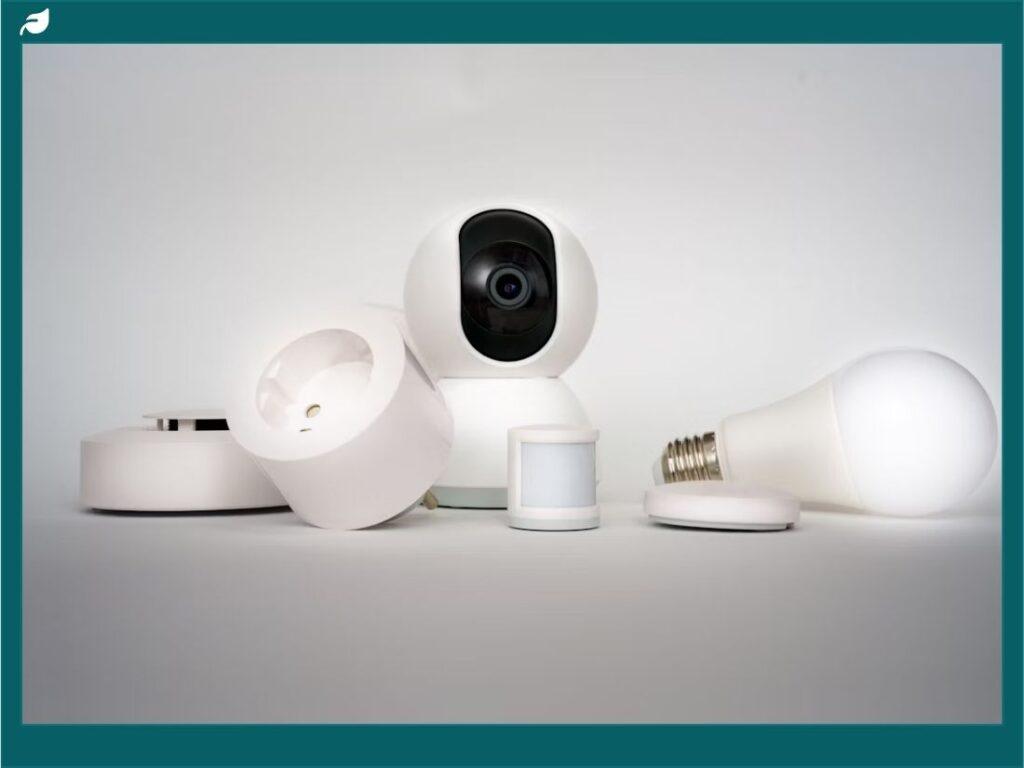
Sustainability in security is not only about hardware but also about intelligent system design. Smart home ecosystems—where lighting, heating, and security are interconnected—can significantly reduce waste. A camera linked to an AI-enabled hub can decide when to activate recording, send alerts, or adjust power consumption based on activity patterns.
For example, if sensors detect that a household is unoccupied, the system can shift to a low-energy monitoring mode, cutting unnecessary usage. Integration with mobile apps allows homeowners to review live footage without running high-energy local DVRs, since cloud storage and compression algorithms reduce data transfer requirements.
Artificial intelligence also reduces false alarms. By distinguishing between humans, animals, and environmental changes such as moving trees, cameras avoid unnecessary activations and conserve energy. Collectively, these smart efficiencies transform security from a passive energy drain into an adaptive, responsive system.
Balancing Security And Sustainability
While technology provides solutions, sustainability in home security also depends on consumer choices and broader awareness. Choosing the right equipment size, avoiding redundant devices, and maintaining systems properly are essential for minimizing energy use. For example, households with small apartments often do not need multiple cameras running 24/7; instead, a single multi-angle camera with motion activation can suffice.
At the policy level, regulators are starting to consider the environmental impact of consumer electronics, including security devices. In the European Union, energy-labeling standards and e-waste directives are nudging manufacturers toward more efficient, recyclable designs. Similar measures are being discussed in North America and Asia, where consumer demand for greener products is strong.
The challenge is finding balance. Safety cannot be compromised, but nor can sustainability be ignored in an era of rising energy costs and environmental responsibility. The companies that succeed will be those that deliver both.
The Future Of Green Home Security
Looking ahead, the future of eco-friendly home security will likely be defined by three converging forces:
- Battery Innovation: Breakthroughs in solid-state and lithium-iron-phosphate batteries will extend the viability of solar-powered and low-power devices, allowing homes to run fully independent surveillance systems.
- Integration with Smart Grids: Security systems will increasingly connect with local energy grids, enabling devices to run during renewable peaks and reduce load during fossil-fuel periods.
- Circular Design and Recycling: Manufacturers will move toward modular cameras that can be upgraded rather than replaced, and materials designed for disassembly will reduce e-waste.
These trends promise a future where home security is no longer viewed as an environmental burden but as part of a sustainable lifestyle.
Wrapping Up
Home security is no longer just about safety—it is part of the sustainability equation. From modern home CCTV installation practices that emphasize efficiency, to low-power cameras that drastically reduce energy draw, to solar-powered surveillance units that eliminate reliance on the grid, the greening of home security is well underway. Smart systems add an additional layer, ensuring that technology adapts to households rather than wasting resources.
Looking for a solar installer?
Compare MCS-certified solar panel installers across the UK in our directory, with ratings, reviews and free quotes, listed by county.
Related solar guides: