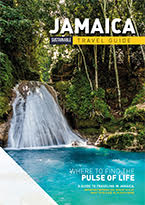
Sustainable Business Magazine speaks to Janis Williams, Acting Chief Operating Officer of the Jamaica Special Economic Zone Authority, about how the organization is using its power to create a better sustainable future for the Caribbean nation. Written by Glen Westall.
Established in 2016 through a dedicated piece of legislation, the Jamaica Special Economic Zone Authority (JSEZA) replaced a previous free-zone framework and set a new course for investment-led development across the island. As a state-owned company it operates at the intersection of commerce, infrastructure, and community to facilitate special economic zones (SEZs). These zones attract both local and international investors while delivering measurable economic and social returns.
Now approaching a decade of operation, JSEZA has embedded sustainability at the heart of everything it does, making environmental and social responsibility a prerequisite for participation rather than an optional add-on.
Janis Williams, Acting Chief Operating Officer at JSEZA, describes what the Authority does and why it matters:
“We create zones, or we facilitate the creation of zones all over Jamaica, that help to drive economic development by making sure persons have access to both fiscal and non-fiscal incentives to drive further commercial activity, develop infrastructure, and help to provide jobs for the population. Collectively, these elements create opportunities for meaningful returns for both local and international investors.

Sustain-a-livity
Central to JSEZA’s sustainability work is a framework the authority has developed and named ‘Sustain-a-livity’. More than just a policy checklist, Sustain-a-livity is a philosophy looking to blend a global sustainability agenda with a locally-grounded commitment to ensuring that businesses actively improve the environments and communities it enters. Mrs. Williams explains the concept and its origins:
“Sustain-a-livity is a combination of concepts between sustainability and livity, which is a Jamaican approach to ensuring that the environment you’re in is better off because of you being there. In order to access the current SEZ benefits, you have to meet and maintain certain key SDG and sustainability objectives.
“One of the things that we assess in the applications to determine eligibility is your holistic impact on the world around you. That means asking what is your output, what’s the social impact of what you are developing, building or renovating within your area, what kind of training are you providing to improve the community or the persons who are going to come and work, and what kind of skills improvement is being impacted by your business activities.
“We also look at things like whether or not your building can be LEED certified, the impact of the building, the spacing, the lighting, air quality. We look at things like when you’re going through your building process what are your waste management tactics, whether or not you’re going to improve the circularity of that zone, and feedback from our National Environmental Planning Agency on your project.”
This scrutiny does not end at the point of entry, though. Ongoing compliance is monitored and publicly recognized through an annual awards program that celebrates the zone operators making the greatest contributions to sustainable practice.
“We encourage our stakeholders within the SEZs to take part in existing sustainable practices that are already happening,” Ms. Williams says. “For example, if you are cutting down trees to build a building, we shorten the timeline to replant trees. If you have any effluent waste we are looking very carefully at where that waste is going, what’s happening with that waste, how you are counteracting that to mitigate against any negative impact. And for those who do not have as much negative impact we’re now working with them to look at how you can have a positive impact on the environment.
There is a list of requirements at the point of entry into the SEZ, along with a compliance and monitoring metric that we use. Our SEZ Sustainability Awards at the end of each year marks that, highlighting the best performers and we promote them because of their sustainability efforts.”
Beyond compliance, JSEZA is working toward a future in which green building and low-carbon operations are the default standard for every zone it oversees. The Authority has developed a sustainable innovation framework with the creation of model green SEZs as its primary goal, setting benchmarks around energy consumption and carbon emissions that every occupant, developer, and designer within those zones must meet from the outset. Janis explains the vision:
“Our sustainable innovative framework promotes the development of green zones, and the primary intention is to develop SEZs that consistently reduce carbon emissions from energy used or consumed within that built environment of the specific infrastructure. So that would require that entire zone of occupants and developers to meet certain standards, specifically starting at design, construction, and the operational phases of that zone itself.
“Our aim is for these green SEZs to become a model for other zones, so that, over time, sustainability becomes the standard and all zones operate as green zones.”
Community at the Core
Sustainability at JSEZA extends well beyond environmental metrics. The authority views social impact as an integral element of its mission, and the zones it facilitates have become active platforms for community investment, workforce skills development, and educational partnership.
“Social impact of course is always going to be the more attractive and easier initiative to take advantage of,” explains Mrs. Williams. “A lot of our SEZs are global digital services providers. So they work with a number of schools that are in the community, from preschools all the way up to high schools and university. They offer training and general support to the students that are there.
“Traditionally, companies engage their stakeholders and community during the Christmas season through gift drives, special grants or through community improvement projects on Labour Day. Companies also offer training to youth or women in the area who need better skills upliftment and improvement. They will identify interns from the high school and invite them to participate in training to help to improve the skills at a lower level through school. We want to make sure the computer skills are sharp, the AI coding skills and the customer service skills are all built on. Jamaica is a major tourist destination. Schools are always looking forward to bringing that into their curriculum through internships and extracurricular activity.
“So those are some of the social impact community initiatives that are happening. They look to either underserved communities or communities that are local to the infrastructure that they are putting together in the zone.”
A Net-Positive Future
JSEZA’s ambition does not stop at net zero. The Authority is pushing beyond a neutral carbon footprint toward a future in which its zones make a measurably positive contribution to the environment, and where the circular economy becomes the operating model rather than the exception.
With new stakeholders bringing innovative uses of bamboo and mining waste into the SEZ ecosystem, Mrs. Williams sets out the full scope of where the organization is headed:
“Generally we’re aiming towards net zero, but because we are ambitious our aim is to have every zone green and not just green zones as standalone developments. What we are looking for is ways to engage persons who are trying to have a more positive effect on the environment rather than just coming out at zero. We’re looking at ensuring that the research is done to find better ways to make use of waste and how that can be used in other forms. We are in the area of agro-processing and manufacturing, where waste is plentiful and can be harmful.
“For example, mining is not permitted within the SEZ, but what is happening now is persons are finding better ways to make use of the waste from the mining process, and that is something that is being explored for SEZ stakeholders. We’re looking at how that waste can be turned into bricks that can themselves be turned into actual construction material for housing and commercial building. That’s one avenue we’ve explored.
“We also have another stakeholder within our SEZ that is using bamboo in three or four different ways that have not yet been explored within Jamaica. That is specifically for household products as well as for stationery and for other building materials, so not just the bamboo itself but the waste from the process of manufacturing typical bamboo goods. So we have things that are coming into the SEZ as well as examining how waste that is actually being generated in the zone can be used.
“By doing that, we can focus more on circularity and create a nation that isn’t just net zero but net positive.”