The Sustainable Business Magazine speaks to Founder Adrian Ferraro about outdoor adventure program The Bioasis and his approach to reigniting the passion for sustainability in the workplace
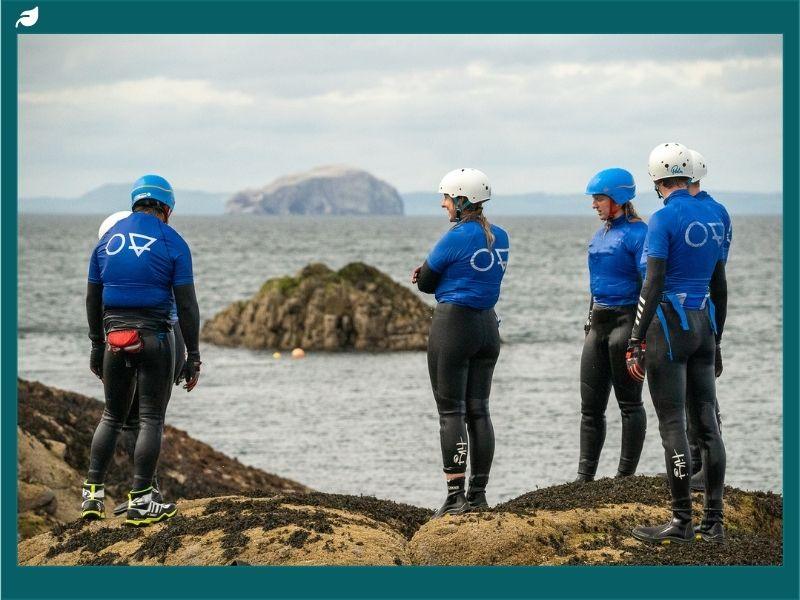
The Bioasis is an outdoor adventure program brought to life during lockdown by founder Adrian Ferraro. It provides an opportunity for school groups and business teams to escape the noise, and reignite the sense of purpose that drives sustainability strategy implementation. The Bioasis is located in Devon and is a National Landscape and Site of Special Scientific Interest (SSSI). The site encompasses 1200 acres of wildflower meadow, salt marsh and ancient woodland, providing a stunning environment to lose the phones and immerse in nature.
A History of The Bioasis Outdoor Adventure
Adrian starts our conversation by describing the devastating impact of Covid on his overseas adventure company. Inspiringly, he used lockdown to bring to life an idea which, up until 2020, had lived only in the back of his mind: ‘The pandemic came along, and it wasn’t particularly kind to us. We went from turning over about £1.8 million to zero, essentially, for two and a half years. In a weird way, it gave me lots of time to think about an idea I’d had for a long time. What would it look like if we took that overseas expedition model of adventure and taking people outside their comfort zones, but do it in the UK to be lower carbon, lower cost and much more accessible?’ The Bioasis outdoor adventure program aims to give back individuals the sense of agency that inspires environmental action.
Adrian talks passionately about the benefits of allowing people the opportunity to reconnect with each-other and the natural environment in The Bioasis haven: ‘We take school groups and also business groups, with the intent to re-wild people and get people more connected with nature.’ Adrian shares the philosophy that a truly sustainable business embeds certain values in all internal decision making. This program reminds people of the inherent value of the natural world: ‘With schools, it’s very much about connecting all the dots between what they learned in the classroom. And with businesses, it’s about giving them the time and space to think strategically about the journey ahead and the challenges of sustainability and implementation and climate change.’
An Outdoor Adventure Program For School Groups
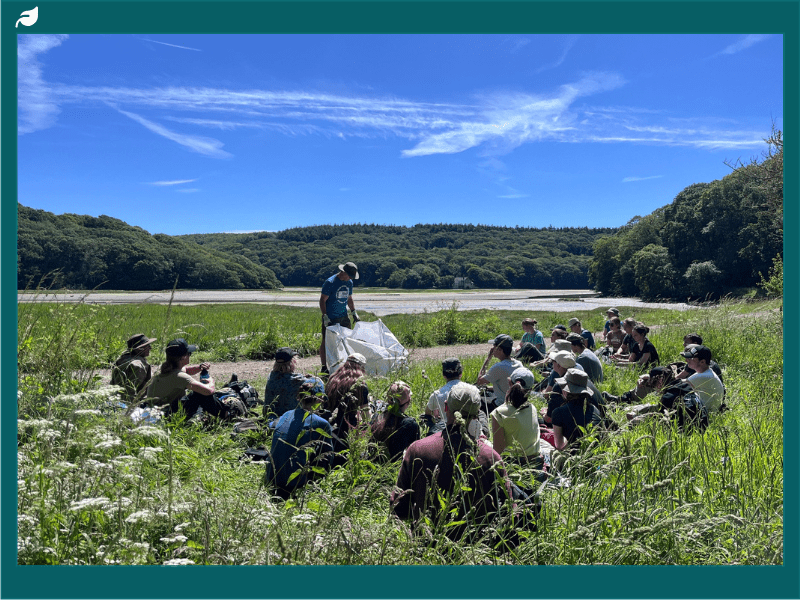
I ask Adrian about the types of activity included in The Bioasis school programs. He feels strongly that his integrated learning model elevates The Bioasis beyond standard residential programs: ‘They’re outside of their comfort zones, but they are also learning about biology and nature, ocean plastics and conservation work relating to invasive species.’ Adrian continues to describe how he intertwines outdoor adventure with bigger picture education. He is enthusiastic about providing children the opportunity to connect their classroom learning to wider topics of land management, conflict resolution and rural economics. The program options are 3, 5 or 10 days, with the longest option including a 4 day wilderness trek camping in the beauty of the South Devonshire Estate.
Adrian was determined to make The Bioasis outdoor adventure program a truly immersive experience, an entirely different world for city dwelling children: ‘When a group arrives with us they leave their coaches, and on a 5-day residential they will walk into one of our base camps, which usually takes about an hour. We don’t allow any mobile phones, and the children are then living on one of our base camps for five days until they come back out again. So it feels like a mini-expedition, a proper adventure.’ Adrian tells me that despite initial hesitation to give up their devices, life without a phone is often reported as a highlight of the trip for these well connected young people.

Connecting Businesses With Nature
As we begin talking about the business retreats, Adrian explains that the most important thing The Bioasis can provide companies is the space and time to think: ‘Individuals in businesses are inundated with noise and distractions, Slack messages, notifications, emails, calls and all the rest of it. If you want to think about your ongoing sustainability strategy, being surrounded by four walls and glass towers in London is not a great environment.’ Adrian notes that opportunities for team growth and resilience building are very limited within company settings, with most outdoor education ending between ages 16 and 18. The Bioasis provides a natural environment inducive to businesses making better decisions with existing data.
Adrian backs up his point with a citation from a University of Derby Study: ‘People are 350% more likely to take action for nature when they feel connected to it’. The Bioasis does offer educational biomimicry workshops to businesses, but Adrian reiterates that most importantly it gives teams dedicated, distraction free time to make decisions on sustainability strategy. Our conversation then turns to how disconnected UK society is from the natural world: ‘Disconnection from nature, thinking we are separate from nature, has essentially got us into a lot of the mess that we’re in. We provide the residential retreat space to get teams working together in nature for the benefit of the team and people, but also for the longevity of strategic sustainability.’
The Bioasis Sustainability Strategy
Adrian talks through some of his partnerships with environmental organisations to ensure the sustainable management of the site: ‘An example is taking out invasive rhododendron and laurel, which, if we did it in the wrong way, could result in it actually coming back worse. So there are various collaborations with Natural England, ecologists and forest managers to make sure the conservation work we are doing is to the best standard.’ Adrian describes how The Bioasis created natural windbreaks for its basecamps, planting 3000 trees of over 22 different native species. Adrian strives to maintain a sustainable supply chain, and The Bioasis offers local Riverford Organic vegetables, biodegradable Clipper teabags, recyclable toilet tissue and free Grace and Green period products.
We end our conversation on the future goals that Adrian has in mind for The Bioasis. He is particularly keen to continue expanding the offer of business retreats, especially since there is an urgent need for effective change: ‘If we take an SME away, or a corporate CEO team, on Wednesday, Thursday, Friday, they can go back to the office and make changes on Monday morning. I don’t think we have 10 or 15 years to make these changes. We need to start making real impact very quickly.’ Adrian isn’t placing any limits on the growth of The Bioasis, and is open to the idea of expanding the model across multiple sites in the UK and even Europe. What is certain is that Adrian is determined to continue to use the land to educate and inspire change in our children and current workforce.
‘Disconnection from nature has essentially got us into a lot of the mess that we’re in. We provide the residential retreat space to get teams working together in nature for the benefit of the team and people, but also for the longevity of strategic sustainability.’