Guthrie and WWF-Malaysia have recorded threatened wildlife in a 13,000-hectare regenerative palm oil pilot in eastern Sabah. Camera trap surveys identified the Bornean clouded leopard, sun bear and Sunda pangolin within proposed ecological corridors at Guthrie’s Binuang plantation. The landscape borders more than 56,000 hectares of forest habitat, including the Madai Baturong and Ulu Kalumpang Forest Reserves. The baseline assessment has identified three priority connectivity zones and covers 1,073 hectares of conservation areas within Guthrie’s operations. The findings give the partners a defined starting point for habitat restoration and wildlife movement measures alongside palm oil production.
Wildlife Records Shape Corridor Plans
The assessment was carried out between February and September 2026 across four estates and one mill in the Binuang plantation. It found that forest habitats across the wider landscape continue to support threatened and Borneo-endemic wildlife, while surveys also recorded orangutan nests in adjacent forest habitats.
Three corridor areas have been identified to strengthen connections between the Madai Baturong and Ulu Kalumpang Forest Reserves. The proposed work includes restoring degraded habitat, improving riparian corridors and addressing barriers to wildlife movement, including electric fencing in selected areas.
Dr Henry Chan, Senior Director, Strategic Conservation Partnerships at WWF-Malaysia, said:
“The presence of threatened wildlife within these proposed corridor areas highlights the importance of maintaining and restoring habitat connectivity across the landscape. This baseline assessment provides valuable evidence to guide conservation actions that can strengthen ecological linkages and support nature recovery. Importantly, it also helps identify where regenerative palm oil approaches can deliver the greatest impact, by addressing landscape-level challenges such as habitat fragmentation while maintaining productive agricultural land. This pilot demonstrates how working landscapes can contribute to biodiversity recovery by enhancing habitat connectivity and restoring ecological functions. It also offers an opportunity to test how regenerative palm oil approaches can address drivers of species decline while supporting resilient agricultural production.”
Testing Regenerative Palm Oil
The pilot assesses six Priority Commitments: productivity, human wellbeing, biodiversity, ecosystem services, climate resilience, and greenhouse gas emissions and carbon storage. Its baseline assessment has also completed an independent third-party review.
For the partners, the programme is intended to test how regenerative palm oil approaches can support biodiversity conservation, ecosystem health and climate resilience while retaining productive agricultural landscapes. The next phase will use the assessment to target interventions in priority areas and establish a basis for measuring their results.
Mohd Haris Mohd Arshad, President & Group Chief Executive Officer at Guthrie, said:
“Our 13,000-hectare pilot landscape borders more than 56,000 hectares of forest habitat. That makes the way we manage our estates important not only for palm oil production, but also for the ecological links between these forests. The assessment has identified three priority connectivity areas, giving us a clear basis for targeting restoration and improving wildlife movement. For us, regenerative palm oil must translate into practical changes on the ground, supported by evidence. This baseline will guide those interventions and provide the starting point for measuring their results. The test is whether we can strengthen biodiversity and ecosystem resilience while maintaining productive estates and build credible evidence to inform how these approaches could be applied more widely,” he said.
Links To Biodiversity Targets
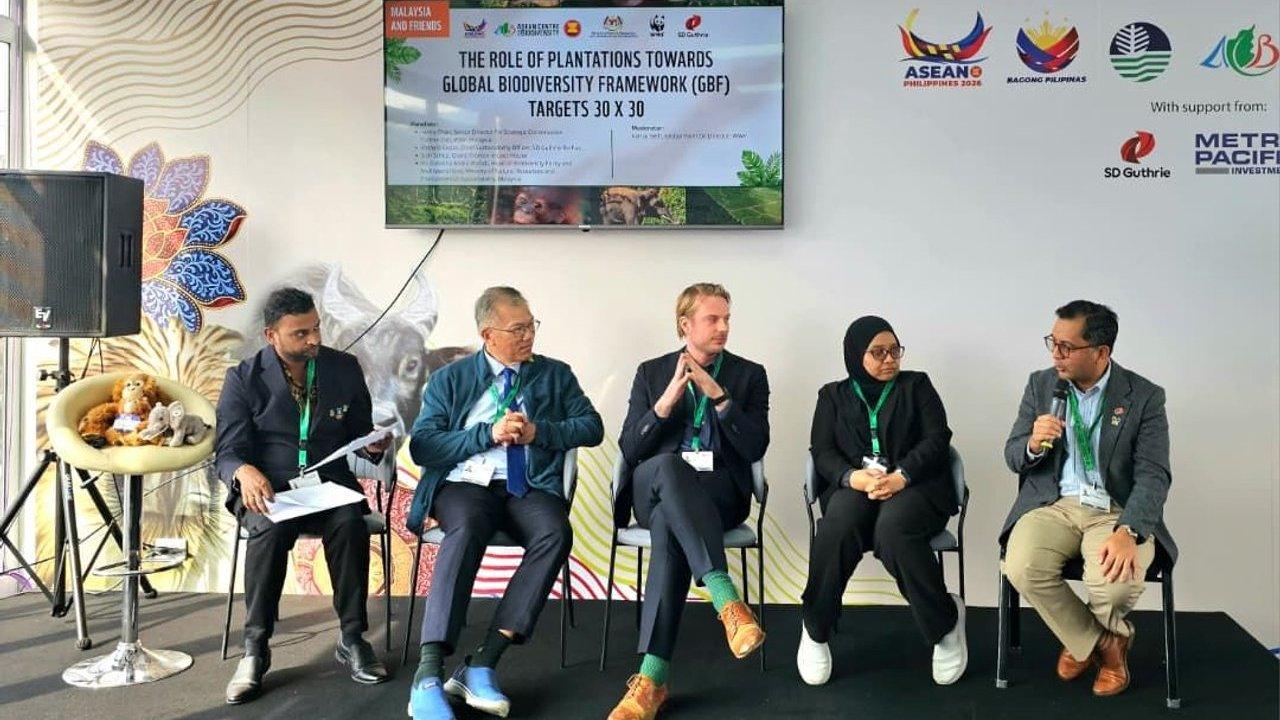
The findings were presented at a COP17 side event co-organised by Guthrie and WWF-Malaysia, titled “The Role of Plantations Towards Global Biodiversity Targets: Guthrie’s Adoption of a Regenerative Palm Oil Framework.” The event considered the role of plantation landscapes in supporting ecosystem connectivity, habitat restoration and species conservation.
The pilot is also presented as a contribution to the Kunming-Montreal Global Biodiversity Framework, which sets global biodiversity targets. Its focus on connected habitats reflects the role that land management within plantation boundaries can have alongside neighbouring protected forest areas.
The partnership was formalised on 1 February 2026. Guthrie expects the Sabah pilot to inform longer-term changes across its plantations in Malaysia, Indonesia, Papua New Guinea and Solomon Islands under its “Beyond Zero” sustainability commitment.
Evidence For Wider Application
The Sabah assessment does not claim that the corridor work has yet delivered ecological outcomes. Instead, it provides baseline evidence on wildlife presence, existing habitats and areas where restoration can improve connections between forest blocks.
That distinction matters for a production landscape of this scale. The next phase will determine how targeted measures affect habitat connectivity, restoration and landscape resilience, while the pilot’s lessons may inform similar work across palm oil-producing landscapes in Malaysia and beyond.