Five London businesses are being offered the opportunity to trial electric cargo bikes as part of a new initiative aimed at testing their role in urban logistics. The programme, launched on 21 April 2026, will provide selected companies with a one-week trial to assess whether eCargo bikes can replace vans and cars in day-to-day operations.
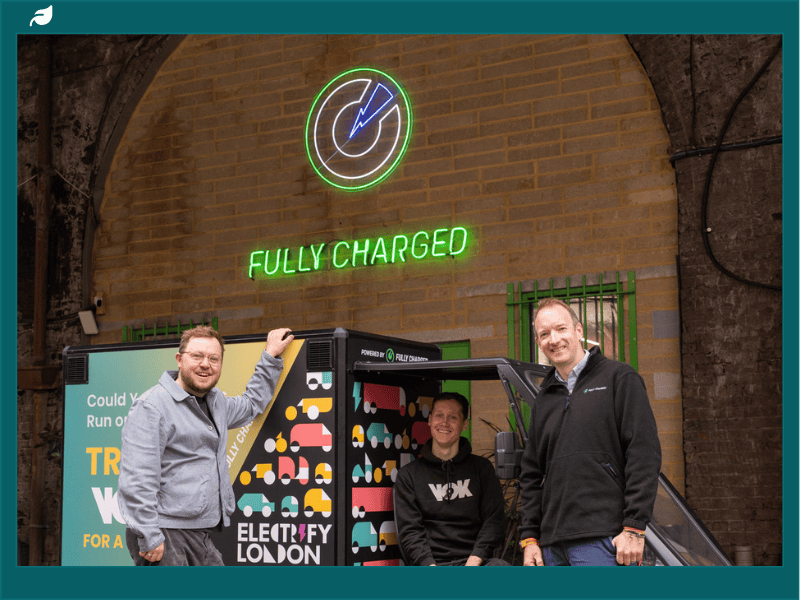
The campaign, titled “Could Your Business Run on Cargo Bikes? Trial Vok For a Week”, is led by Vok Bikes in partnership with Electrify London (Clean Cities) and Fully Charged. It will run over five weeks, with applications open until 6 May and trials scheduled between mid-May and early June.
Five London-based businesses will be chosen to participate in the scheme. Each will receive a commercial-grade Vok eCargo bike alongside onboarding support to help integrate the vehicle into existing workflows.
Participants will test real operational use cases such as deliveries and service visits. Performance data and feedback gathered during the trials will be used to assess cost, efficiency, and emissions outcomes.
“London is one of Europe’s leading cities for cargo bike adoption, but many businesses still haven’t experienced how practical they can be,” said Chris Cayford, UK Country Manager at Vok Bikes London. “This trial is about turning curiosity into real-world insight.”
The initiative comes at a time when London’s transport network is under increasing strain. Congestion remains a persistent issue, with the TomTom Traffic Index identifying London as the slowest city in Europe for drivers, where peak-hour speeds in central areas average around 9 miles per hour.
Freight transport also plays a significant role in urban air pollution. Diesel vans are now the largest road source of nitrogen oxides in central London, contributing to poor air quality and associated public health concerns.
“Our analysis has shown that diesel vans are now the biggest road source of dirty air in central London. Shifting as many deliveries as possible to cargo bikes is essential. We are excited to support this trial, which will help companies think differently about their operations,” said Zak Bond, Campaign Manager at Clean Cities.
Policy measures are adding to the pressure on businesses to review how they operate. The expansion of the Ultra Low Emission Zone and rising fuel and maintenance costs are prompting companies to look for alternatives to traditional vehicle fleets.
Electric cargo bikes are increasingly being considered a viable option for urban logistics. Industry and policy studies indicate that around half of motorised goods trips in cities could be transferred to cargo bikes under the right conditions.
The trial is designed to provide practical, business-led evidence rather than theoretical modelling. By focusing on real-world operations, organisers aim to demonstrate whether cargo bikes can deliver measurable operational benefits in a dense urban environment.
Dan Parsons, co-founder of Fully Charged, said: “Since 2014, Fully Charged has been offering cargo bike solutions to businesses and organisations of all sizes, private and public. We are excited to be partnering with Vok and Electrify London to offer these free trials, removing a barrier to entry and offering businesses the chance to put a Vok through its paces, seeing firsthand how one might benefit their business.”
The programme is targeted at companies that currently rely on vans or cars within London. Sectors likely to benefit include last-mile delivery services, maintenance providers, and businesses requiring frequent short-distance travel across the city.
Selected participants will receive support to ensure the trial reflects typical operating conditions. This includes guidance on route planning, load management, and day-to-day usage to ensure the results are representative of real business activity.
Beyond individual trials, the initiative is intended to contribute to a wider shift in how goods and services are transported in cities. Findings from the programme will be compiled into a report featuring case studies and operational data.
This report is expected to be published later in the summer, providing insights into cost savings, efficiency changes, and emissions reductions observed during the trials. It will also document the practical challenges businesses may encounter when transitioning to cargo bikes.
Urban logistics is a growing focus for policymakers and businesses seeking to reduce emissions while maintaining service levels. Cities across Europe are introducing stricter regulations on vehicle emissions and access, increasing the need for alternative transport solutions.
Cargo bikes, particularly electric models, are being deployed in a range of sectors, from parcel delivery to construction support services. Their ability to navigate congestion and access restricted areas has made them an option for certain types of urban journeys.
The London trial aims to build on this momentum by providing direct evidence from businesses operating in one of Europe’s most congested cities. By testing the technology in varied use cases, the programme seeks to assess its practicality at an operational level.
The campaign will conclude on 23 June, following the completion of all trial periods. Organisers expect that the findings will help inform future decisions by businesses considering changes to their vehicle fleets.
By focusing on measurable outcomes and documented experiences, the initiative is positioned as a step towards understanding how urban transport systems may adapt to meet environmental and economic pressures.