The maritime industry is under increasing pressure to reduce its environmental impact, and Michelin’s WISAMO (Wing Sail Mobility) technology is poised to make a significant contribution. In a groundbreaking development, Michelin has secured its first contract for the WISAMO wingsail, equipping a new deep-sea patrol vessel for the French Directorate for Maritime Affairs, Fisheries and Aquaculture (DGAMPA). This milestone highlights the potential of wind-assisted propulsion in the quest for decarbonization.
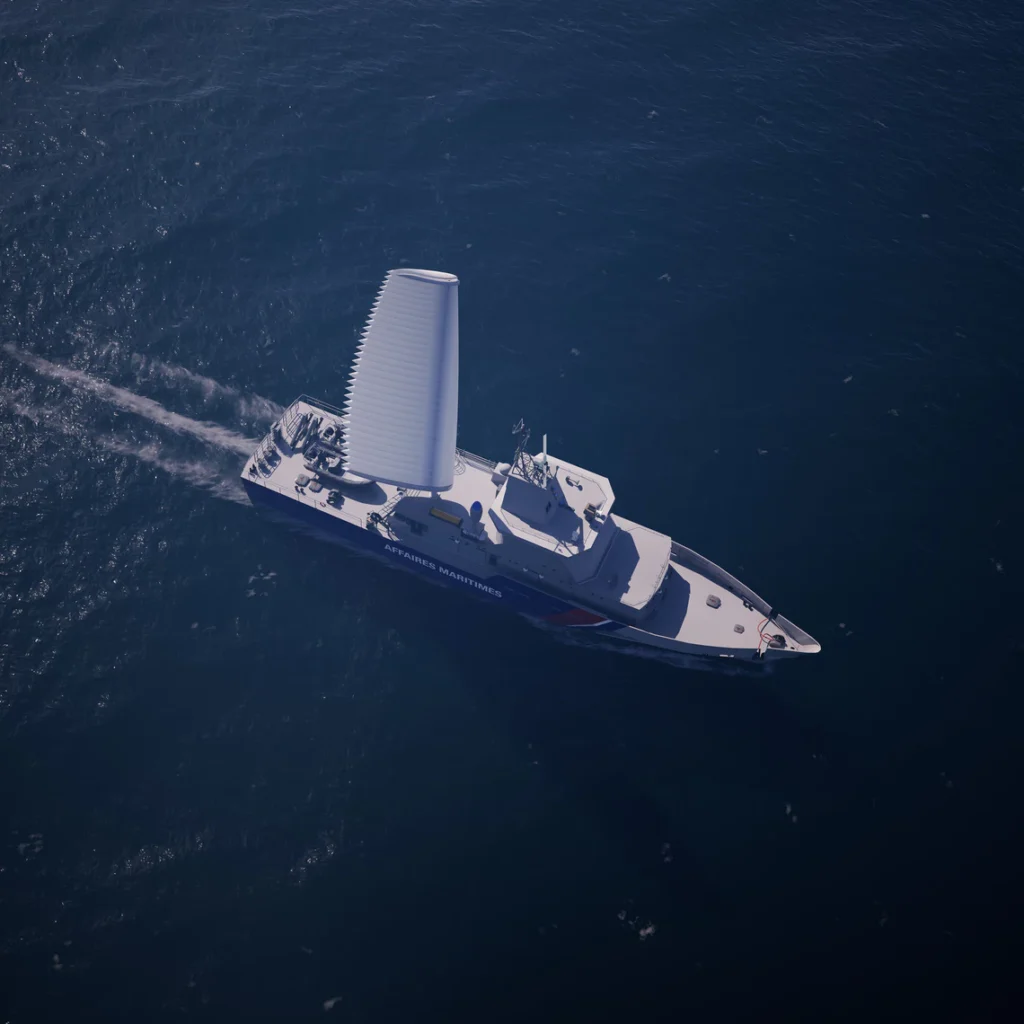
Innovative Wind Propulsion for a Sustainable Future
The WISAMO wingsail, covering an impressive 170 m² (1,829 ft²), will provide additional propulsion alongside the vessel’s hybrid diesel-electric system. With this integration, fuel consumption is expected to decrease by approximately 15%, optimizing efficiency while maintaining operational effectiveness.
“Equipping a first ship is a significant step forward in the development of WISAMO, Michelin’s solution, which aims to support the decarbonisation of the maritime sector. This contract not only validates the relevance of our technological choices and the robustness of our solution but also reinforces Michelin’s pioneering spirit,” said Maude Portigliatti, Business Director of Polymer Composite Solutions and a member of Michelin’s Executive Committee.
The project underscores Michelin’s ambition to lead in composite materials innovation. The WISAMO wingsail demonstrates the versatility of these materials in real-world applications, reinforcing Michelin’s position in this high-tech sector.
A Technological Marvel: The “Swiss Army Knife” of Wind Propulsion
At the heart of the WISAMO system lies a trio of groundbreaking components:
- Self-supporting telescopic mast – Fully retractable, allowing seamless deployment or stowage as necessary.
- Lightweight, durable fabric envelope – Inflated at low pressure, forming a symmetrical wingsail profile.
- Automated control system – Managing all functions, including hoisting, lowering, adjusting, and protective stowage based on environmental conditions, reducing crew workload.
This cutting-edge technology allows WISAMO to seamlessly integrate with various maritime applications. Its ability to retract ensures that vessel operations remain unaffected, making it a versatile choice for multiple ship designs. As part of its implementation, WISAMO will collaborate with naval architects and shipyards from the vessel’s design phase in 2025, overseeing the installation and final sea trials scheduled for 2027.
Made in France: A Collaborative Maritime Initiative
The new deep-sea patrol vessel, set to replace the nearly 40-year-old Iris, is a testament to France’s innovation-driven approach to maritime sustainability. Three French companies are at the helm of this ambitious project:
- Mauric – The naval architecture firm responsible for the vessel’s design.
- Socarenam – The shipyard undertaking construction.
- Michelin – Providing the cutting-edge WISAMO wind propulsion system.
This collaboration highlights the strength of the French maritime industry in pioneering sustainable solutions. The patrol vessel will operate from La Rochelle along the Atlantic coast, particularly in the Bay of Biscay, where the WISAMO technology has already proven its durability. During extensive testing in 2023 aboard the MN Pelican, WISAMO successfully demonstrated its ability to endure the harsh maritime environment.
Beyond Maritime Surveillance: A Broader Role for WISAMO
The vessel’s role extends far beyond maritime surveillance. In addition to monitoring vessels of all sizes and enforcing fisheries regulations, it will also contribute to:
- Navigation monitoring
- Maritime pollution control
- Environmental law enforcement
- Search and rescue operations
This deployment signifies a crucial step toward integrating wind-assisted propulsion into government fleets, further legitimizing its role in the maritime industry’s push for sustainability.
Scaling Up: WISAMO’s Future in Decarbonizing Maritime Transport
While the DGAMPA contract marks an important milestone, Michelin envisions a much broader application of its WISAMO technology. The company aims to expand its wingsail solutions across various vessel types, including large pleasure craft, workboats, and cargo ships ranging from 60 feet to 60 meters. This scalability positions WISAMO as a transformative technology in the maritime sector’s decarbonization journey.
The increasing adoption of wind-assisted propulsion aligns with global sustainability trends. As international regulations, such as the International Maritime Organization’s (IMO) decarbonization targets, push for lower emissions, innovations like WISAMO are becoming essential. With continued development, this technology could play a key role in helping shipowners reduce their carbon footprint and comply with tightening emissions regulations.
Composite Materials: The Backbone of WISAMO’s Innovation
At the core of WISAMO’s success lies Michelin’s expertise in composite materials. By combining multiple elements with complementary properties, composite materials enhance performance across industries. Michelin’s history of innovation in this field extends beyond maritime applications to:
- Neoprene-coated fabrics
- Fire-resistant clothing for industrial use
- Conveyor belts for mining and agriculture
- High-performance bicycle frames and racecar body panels
This extensive knowledge allows Michelin to continuously improve its composite-based solutions, making WISAMO a cutting-edge technology that bridges the gap between sustainability and efficiency.
Conclusion: A New Era for Sustainable Shipping
Michelin’s WISAMO wingsail represents a critical leap forward in reducing the environmental footprint of maritime transport. The partnership with the French government not only validates the viability of wind-assisted propulsion but also sets the stage for broader adoption. With a projected 15% fuel savings and seamless integration into existing vessel operations, WISAMO is proving that sustainability and efficiency can go hand in hand.
As Michelin continues to refine its technology and expand its applications, WISAMO is set to become a key player in the maritime industry’s sustainable transformation. This innovative approach to wind propulsion could very well redefine the future of shipping, making it cleaner, more efficient, and better prepared for the challenges of a rapidly changing climate.