The International Maritime Organization has agreed to formally incorporate wind propulsion into its draft safety framework for greenhouse gas reducing technologies, marking a notable regulatory development for the shipping sector. The decision follows the 12th session of the IMO’s Sub-Committee on Ship Design and Construction and includes a commitment to develop interim safety guidelines for wind propulsion systems by 2029.
The move is intended to address long-standing regulatory uncertainty around wind-assisted propulsion, which has been cited by industry stakeholders as a barrier to wider uptake. By bringing wind propulsion into the IMO’s safety framework, the organisation is signalling that these technologies are being treated alongside other recognised approaches to emissions reduction within international shipping.
The IMO’s workplan outlines the development of endorsed safety guidance covering the design, installation and operation of wind propulsion systems. These guidelines are expected to provide a clearer basis for assessment by flag states, classification societies and insurers, supporting more consistent treatment across jurisdictions.
The decision comes as the maritime sector faces mounting pressure to reduce emissions in line with the IMO’s revised strategy, which targets net-zero greenhouse gas emissions from international shipping by or around 2050. While alternative fuels remain central to long-term decarbonisation plans, wind propulsion is increasingly being viewed as a near-term option that can reduce fuel consumption and emissions on existing vessels.
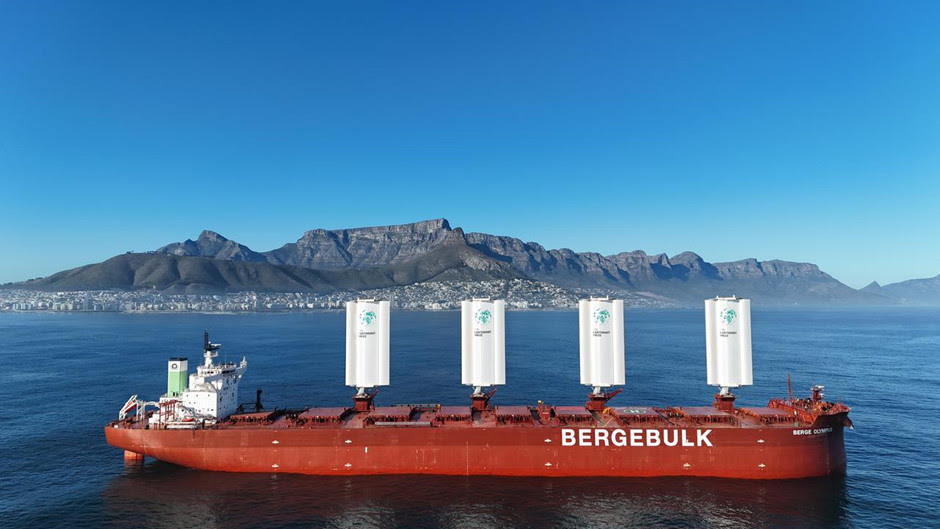
BAR Technologies, a UK-based engineering company specialising in wind-assisted propulsion, said the IMO’s decision represents an important regulatory milestone. The company develops WindWings®, a rigid wing sail system designed for commercial shipping.

John Cooper, CEO of BAR Technologies, said: “This development marks a vital milestone in the decarbonisation of the global fleet. By creating a regulatory environment that supports wind propulsion, the IMO is unlocking one of the most effective zero-emission technologies available today.”
Wind propulsion systems use aerodynamic lift to supplement engine power, reducing the amount of fuel required to maintain speed. Unlike fuel-switching options, wind technologies can be installed on vessels using conventional fuels, allowing operators to achieve emissions reductions without waiting for new fuel supply chains to mature.
According to BAR Technologies, WindWings® are already operating commercially, delivering measurable reductions in fuel use. The company argues that regulatory clarity is essential to enable broader deployment across different vessel types and trading routes.
The inclusion of wind propulsion in the safety framework is expected to reduce perceived risk among shipowners and financiers. Until now, the absence of formal IMO guidance has meant that projects were often assessed on a case-by-case basis, adding time and cost to approvals.
Lauren Eatwell, Head of WindWings® at BAR Technologies, said the focus on safety is closely linked to adoption at scale. “Safety and scalability go hand in hand. The IMO’s commitment is not just about regulation, it’s about enabling real change. We’re proud to be leading the charge with proven solutions like WindWings®.”
The IMO’s target date of 2029 for interim guidelines provides a defined timeline for the sector, although some industry groups have argued that faster progress will be needed to meet near-term emissions targets. Even so, the formal recognition of wind propulsion within the IMO process is seen as an important step in aligning regulation with technologies already entering service.
John Cooper added: “WindWings® are already proving their value in commercial operation, and this move gives the industry the clarity it needs to scale adoption at pace.”
The regulatory progress also aligns with wider industry advocacy around the treatment of wind propulsion within efficiency metrics and market-based measures. The International Windship Association has been calling for wind-assisted technologies to be properly reflected in fuel efficiency calculations and financial incentive schemes under the IMO’s Net-Zero Framework.
Industry representatives have warned that if direct energy solutions such as wind are undervalued in greenhouse gas accounting, investment could be skewed toward fuel-based options even where wind could deliver immediate reductions. The development of safety guidelines is seen as one part of a broader effort to ensure wind propulsion is assessed on equal terms.
Green shipping corridors and demand for vessels that can demonstrate lower emissions profiles are also influencing uptake. As charterers and cargo owners set their own climate targets, technologies that can be deployed quickly are attracting increased attention.
BAR Technologies said it plans to expand the deployment of WindWings® across a growing number of vessels as regulatory processes evolve. The company has encouraged shipowners, regulators and other stakeholders to engage with the IMO’s ongoing work on wind propulsion guidelines.
The IMO’s decision does not mandate the use of wind propulsion, but it establishes a framework that could support wider adoption over time. For an industry seeking practical options to cut emissions while longer-term fuel solutions develop, the move signals a shift in how wind is viewed within international maritime regulation.
As work on the interim guidelines progresses, stakeholders across the shipping value chain will be watching closely to see how safety, performance and operational considerations are addressed. The outcome is expected to play a role in shaping investment decisions and technology choices during the next decade of maritime decarbonisation.