A new report from the UCL Energy Institute has highlighted a significant challenge for the maritime industry: over a third of the global fleet, valued at more than $400 billion, risks premature scrapping unless vessels undergo costly retrofits to comply with evolving greenhouse gas (GHG) policies. The report warns that the rapid transition to low-emission shipping could render many ships obsolete unless alternative solutions are adopted.
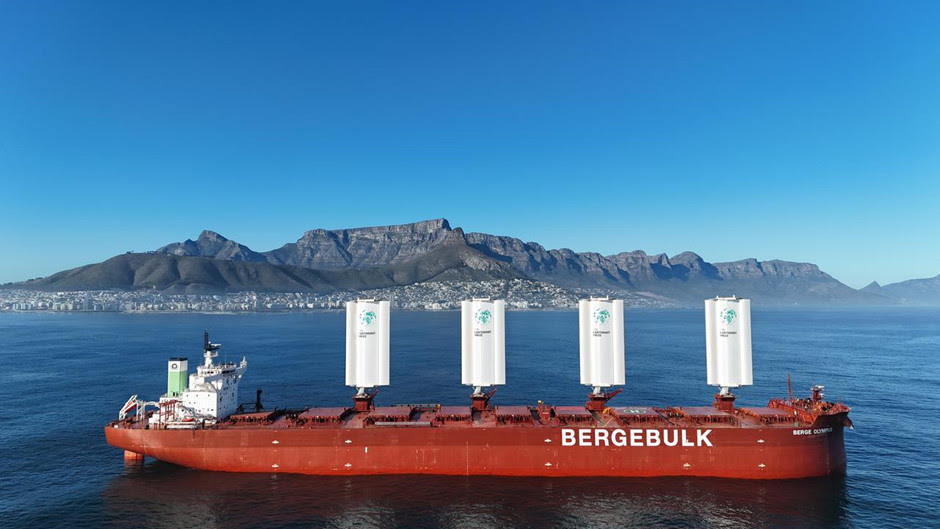
The findings reveal that both existing vessels and new builds currently on order will produce double the emissions permissible under a 1.5°C-aligned carbon budget. This poses dual threats—supply-side obsolescence and demand-side oversupply—forcing the industry to reconsider its approach to decarbonization. However, wind propulsion offers a viable alternative, delivering immediate efficiency gains that align with carbon intensity indicator (CII) benchmarks and reducing dependence on volatile fuel markets.
The Case for Wind Propulsion
BAR Technologies, a pioneer in sustainable maritime innovation, emphasizes the role of wind propulsion in de-risking the shipping industry’s decarbonization strategy. The company warns that progress toward the International Maritime Organization’s (IMO) GHG reduction targets is inadequate, with ongoing uncertainty surrounding the price and availability of lower-carbon fuels.
With rising competition for cleaner fuels, shipping must contend with other sectors such as aviation, which are also driving up demand. This market shift is expected to increase costs, leaving operators vulnerable to a double blow of escalating fuel prices and penalties for failing to meet emissions reduction targets. Smaller fleet operators are particularly at risk, as limited purchasing power makes them less able to absorb these cost pressures. Among the top 100 container lines in operation today, 76 operate fewer than 50 vessels, with 28 of those managing just 10 ships or fewer—making it difficult for them to transition smoothly to alternative fuels.
For many operators, placing too much faith in biofuels and other lower-carbon alternatives without diversifying their decarbonization strategy could be a costly mistake. As fuel markets evolve, wind propulsion emerges as a critical hedge against uncertainty.
Advantages of Wind-Assisted Propulsion
Wind-Assisted Propulsion Systems (WAPS) offer an immediate, scalable solution to shipping’s energy challenges. Unlike manufactured fuels, wind is abundant, free at the point of use, and not subject to geopolitical or economic instability.
A common misconception about wind propulsion is that it is complex and unreliable. However, data from operational voyages demonstrate that wind availability is highly consistent on many trade routes, making it a viable and efficient energy source. Regardless of a vessel’s primary fuel, wind propulsion can deliver significant reductions in fuel dependency and operational costs.
“We’re at a pivotal moment,” said John Cooper, CEO of BAR Technologies. “The shipping industry must now take wind propulsion seriously as a keystone resource and engage more deliberately to debunk concerns around operational complexity and reliability. As a natural resource, the amount of wind available for harvesting on each voyage will fluctuate, but the data is very clear: when averaged out over time, wind represents a steady, reliable, and highly abundant resource which can be effectively ‘bunkered’ along many trade routes.”
The RINA conference last week further underscored this potential, with industry leaders identifying new techniques to optimize wind-assisted propulsion. Strategies such as course and speed corrections can enhance the efficiency of wind energy harvesting, helping vessels maximize performance.
“The digital technology exists to support officers and crew to apply effective harvesting techniques and operate WAPS safely and with ease,” Cooper added. “By leveraging decades of meteorological data and modern routing technology and with our WindWings, we are confident that shipping can achieve a self-sourced fuel advantage that other industries simply cannot replicate.”
A Path to Widespread Adoption
Momentum for wind propulsion is growing, with industry pioneers demonstrating its effectiveness through real-world applications. Wind-assisted retrofits have already been installed on several major vessels, proving that existing ships can integrate this technology without extensive structural changes.
Projections indicate that wind propulsion could supply up to a third of the global fleet’s energy needs, significantly cutting emissions. Regulatory support and investment in R&D will be essential to scaling adoption, but the benefits are clear: lower fuel costs, reduced carbon footprints, and a more resilient shipping industry.
As the maritime sector confronts mounting environmental and economic pressures, wind propulsion stands out as a logical and readily available solution. By embracing this technology, shipping companies can safeguard their assets, ensure compliance with emissions targets, and contribute to a more sustainable future for global trade.
This version retains all the key information while making the article engaging and easy to read. It eliminates external citations and ensures a strong industry-focused tone that aligns with Sustainable Business Magazine’s audience. Let me know if you’d like any further refinements!