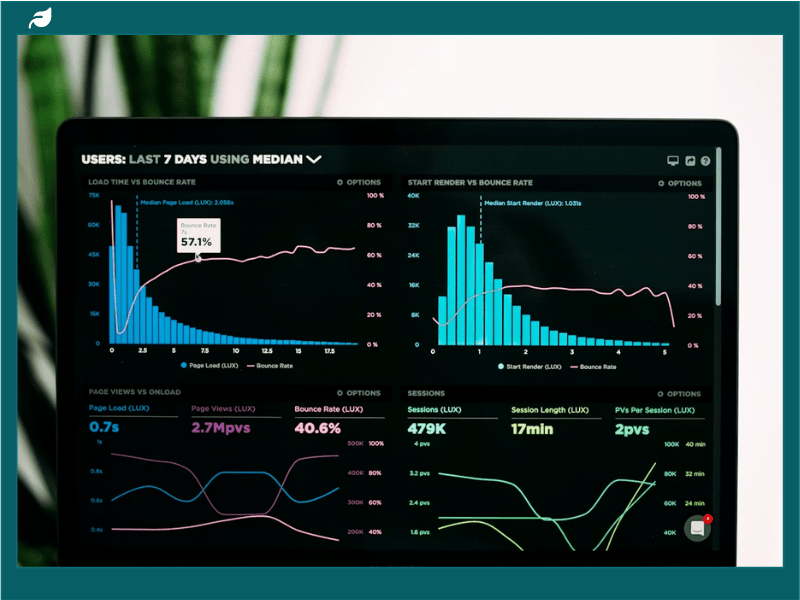
Across ministries and hospitals, digital tools are already reshaping public health: dashboards that flag risks early, automated back‑office flows, and teams that mix clinicians, analysts, and tech specialists. Instead of adding more paperwork, governments can use these systems to free scarce talent for work that genuinely needs human judgment. This article looks at what it takes to build that kind of hybrid, sustainable public health system – and why the next few budget cycles will be decisive.
The Market and What’s Pushing It Forward
The global digital health market has been on a steep upward curve for several years running, with double-digit annual growth and no sign of that slowing. Government money is moving at scale: the US channelled billions through HITECH to accelerate EHR adoption, the UK’s NHS App has amassed tens of millions of registered users, Estonia has been a working reference case for e-health for years, and Singapore’s HealthHub already talks to physician licensing databases and pharmacy registries in real time.
Enterprise tech vendors chasing government contracts (Microsoft, IBM, Oracle, Accenture, Capgemini, DXC Technology, and a dozen others) stopped pitching cloud infrastructure as a standalone product some time ago. What’s on offer now is integrated stacks: cybersecurity, AI analytics, and patient data governance baked into the architecture from the foundation, not added on top. Approaches like Secure Sovereign AI and Government-as-a-Platform, which fall under the broader umbrella of IT solutions for public sector, give public health agencies a way to modernise without handing sovereignty over sensitive citizen data to a third party — something that looked like a contradiction in terms not long ago.
The background pressure isn’t letting up either. By 2050, one in six people globally will be over 65. Chronic disease is climbing. Healthcare workforce shortages are serious in most high-income countries and getting worse. Digital technologies for public health sector aren’t a luxury upgrade in that context — they’re closer to load-bearing infrastructure. Some systems won’t survive the next decade without them.
What’s Actually Being Tested and Deployed
AI and Predictive Analytics
AI in medicine is past the demo phase. Actual clinical deployment is happening, with results that are genuinely useful — and occasionally a cautionary tale.
- Google DeepMind’s Streams, deployed across NHS trusts, analyses lab results to catch acute kidney injury early. The pilot ran on data from over 1.6 million patients.
- Zebra Medical Vision (now part of Nanox) automates X-ray and CT reading, cutting radiology turnaround from hours to minutes in high-volume departments.
- Tempus AI, which went public in 2024, is assembling what it calls the world’s largest library of clinical and molecular data, directly integrated into hospital oncology workflows.
At the system level, predictive analytics has a different kind of value: hospital capacity forecasting, outbreak detection before official reporting kicks in. BlueDot’s platform caught the first COVID-19 signals a full week before the WHO’s public notice. Real-time resource allocation algorithms are already running in major academic medical centres across the US and the Netherlands.
EHRs and the Interoperability Problem
Electronic health records aren’t new. But the current generation is tackling what the first never managed — getting siloed data to actually talk.
The real barrier isn’t technical — it’s that hospitals treat patient data as a competitive asset. Where governments pushed hard enough to break that up, the results speak. Israel’s centralised registry enabled one of the fastest COVID-19 vaccination rollouts in the world. Denmark’s annually published National Patient Register (fully de-identified) has measurably accelerated clinical research output for years.
Telemedicine and mHealth
The first lockdowns did in months what telehealth had been inching toward for years: they made it habitual. Volumes cooled, but usage didn’t reset. Platforms like Teladoc Health, Amwell, and Doctor On Demand now run at steady scale — and for the public sector, that shifts telemedicine from a stopgap to core infrastructure.
Three formats define how BPS is evolving here:
- Asynchronous care — patients submit symptoms, images, and results; clinicians respond within a day. It keeps chronic care moving and relieves frontline pressure without adding real-time load.
- Remote Patient Monitoring (RPM) — continuous data from devices like Apple Watch ECG, Dexcom CGM, and iRhythm’s Zio Patch feeds directly into records. The operational layer — triage, alerts, data validation — increasingly sits within BPS, blending automation with clinical oversight.
- Digital therapeutics (DTx) — software-led treatments such as Woebot Health and Freespira, with Pear Therapeutics setting early precedent. These are regulated interventions, expanding BPS toward outcome-based models.
What emerges is a hybrid system: clinicians supported by continuous, automated care layers. The advantage will come from how well that system is run — not just how widely it’s deployed.
Cloud and Cybersecurity
Health data is regulated territory: HIPAA in the US, GDPR in Europe, national data laws everywhere else. Azure Government, AWS GovCloud, and Google Public Sector all run certified environments, but compliance sits with the institution regardless.
The security picture is bad and getting worse. Ransomware attacks on healthcare systems generate losses that now run into the billions annually — a trend that has consistently worsened year over year. The Change Healthcare breach in February 2024 paralysed insurance reimbursements nationwide for weeks — the biggest single incident in the sector’s digital history. Zero Trust is replacing perimeter-based models in serious health networks. SOC 2 Type II audits are now a practical entry requirement for any vendor seeking a government contract.
Blockchain
Blockchain in healthcare had its hype cycle. The real applications are narrower but legitimate: MedRec from MIT, MedicalChain in the UK, Guardtime in Estonia — all solving the same problem, an immutable audit trail for records with decentralised access control. Patients decide who sees what. The more immediate public sector case is pharmaceutical supply chains: tracking drug authenticity from manufacturer to pharmacy matters more as counterfeit medication volumes grow.
Where the Measurable Impact Shows Up
For patients:
- Shorter waits through online scheduling — NHS’s e-Referral rollout noticeably reduced missed referrals and unnecessary appointment duplication
- Access to personal records any time, from any provider
- Treatment recommendations built on genomic and behavioural data, the approach Foundation Medicine and Flatiron Health (both Roche Group) are running in live clinical environments
- Remote participation in clinical trials via Apple Research App or Sage Bionetworks, no travel required
For clinical staff:
- Dragon Medical One and Nuance DAX Copilot from Microsoft cutting documentation time substantially, returning those hours to direct patient care
- CDS alerts, drug interaction checks, and screening reminders built into daily workflow
- Evidence-based guidelines accessible inside the EHR without toggling between systems
For health systems:
- Outbreak detection through aggregated search trends, pharmacy sales, and wearable inputs
- Population-level morbidity modelling for more accurate budget planning
- CPOE systems consistently shown to cut medication prescribing errors by a significant margin compared to paper-based ordering — one of the clearest safety wins in health IT
What Goes Wrong — and Does, Regularly
Any wide-scale deployment of digital technologies for public health sector will hit structural walls. Skipping them in the planning phase is how expensive failures happen.
Digital inequality — not every patient can or will use digital services. Elderly people, rural populations with poor connectivity, and socially marginalised groups are at real risk of receiving worse care precisely because of digitisation, if policy doesn’t build in compensatory measures from day one.
Algorithmic bias — AI learns from existing data, and medical data carries historical distortions. The Optum case, published in Science in 2019, found an algorithm systematically underestimating medical need in Black patients because it used historical treatment cost as a proxy for case complexity. Similar problems appear in dermatology classifiers trained on narrow phenotype datasets.
Fragmentation — more digital tools doesn’t equal better integration. A physician managing a diabetes patient can easily end up with relevant data split across six or seven disconnected systems, each bought as the “best” standalone solution. The sum is often worse than its parts.
Data sovereignty — where health data physically lives has become a geopolitical question. Hyperscaler data centre decisions affect government service continuity in ways that aren’t hypothetical. That’s why some countries are holding out for local or hybrid deployments even at a cost premium.
Digital Technologies for Public Health: From Pilot Projects to National Infrastructure
Digital technologies for public health sector are a governance problem before they’re a technology one. The best architecture in the world doesn’t move the needle without institutional culture, legal scaffolding, and people who speak both medical and technical fluently.
Health digitisation doesn’t self-execute. Countries building these capabilities now will have systems capable of absorbing the next major disruption — whatever shape it arrives in. Those still treating transformation as a future-state conversation are probably already behind.