How a reusable glass bottle milk round became a B Corp scoring 100.01 points
Please introduce yourself to our readers and tell us a bit about your role and your work at Modern Milkman.
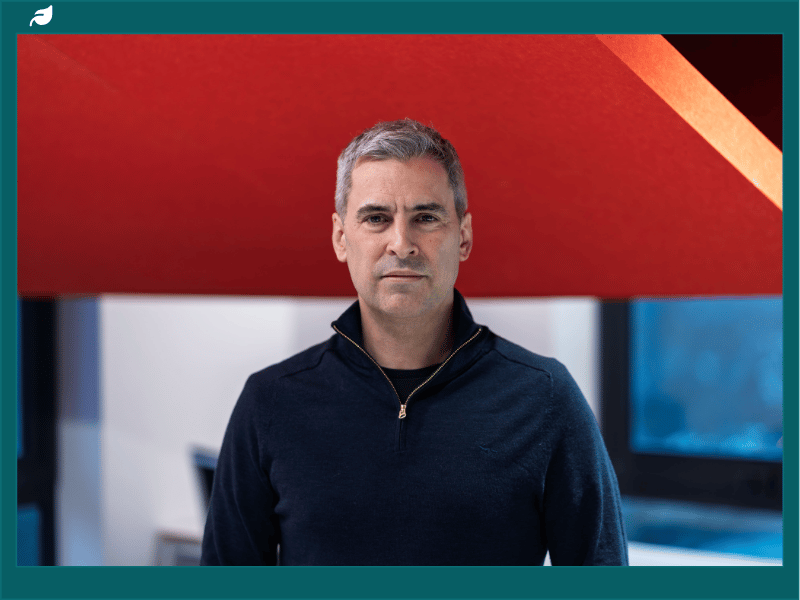
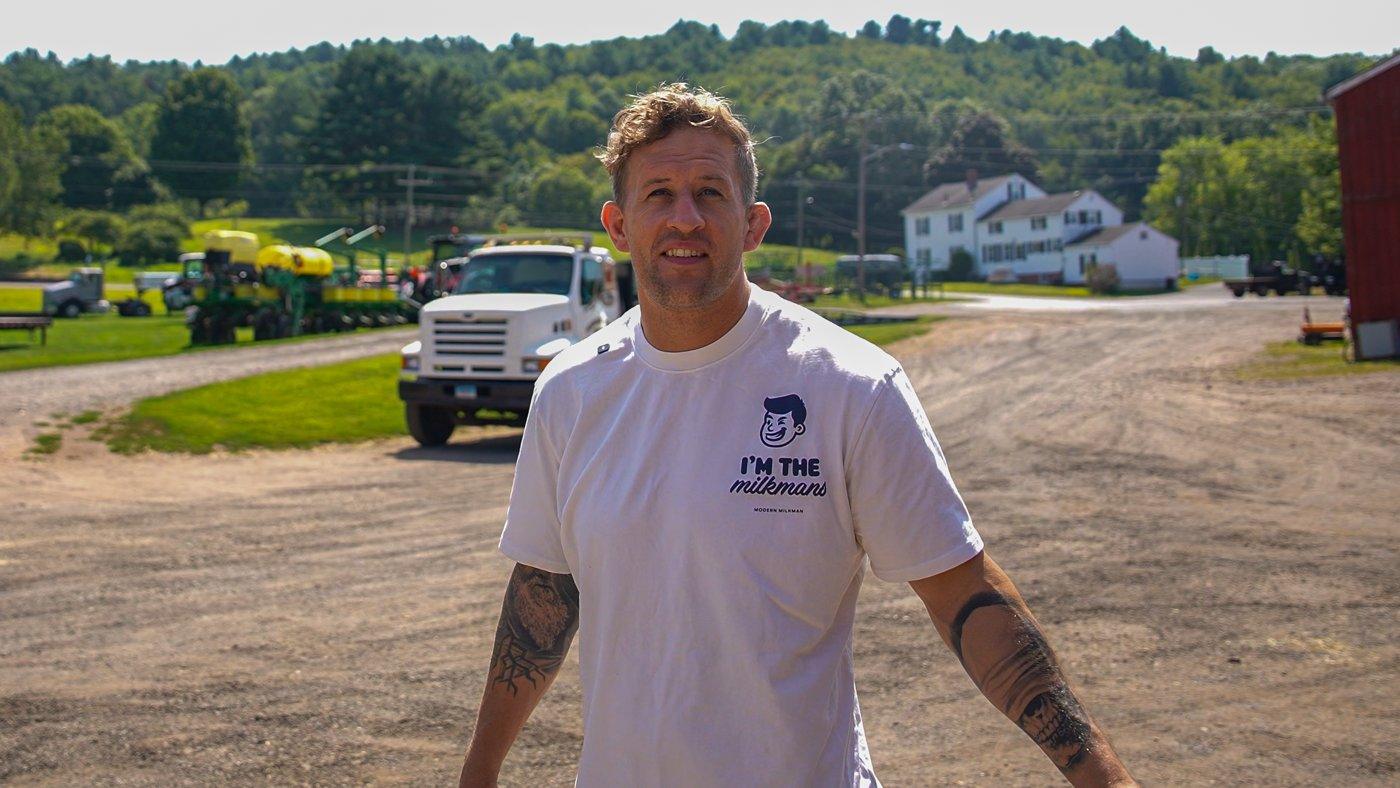
I’m Simon Mellin, founder and CEO of Modern Milkman. I grew up around food and farming in Lancashire, and I started this business in 2018 with a milk round in Colne with a van, a few hundred glass bottles, and a fairly stubborn belief that the way we’d all ended up buying groceries was broken.
Eight years on, we deliver to 100,000s of UK households; we’ve been operating in the US since 2024 across the East Coast and Ohio, and we’re headquartered in Manchester. The bottles still come back, get washed, and go out again.
My focus now is product and business strategy, and where we take the proposition next. That’s the part I care most about. Sustainability that depends on a company being generous with its margin doesn’t last. Our model works because reuse, short supply chains, and ordering only what you need are genuinely better business: less waste, fewer stock write-offs, tighter routes. If doing the right thing is also the cheaper thing, it survives a bad quarter.
What did the process of recertifying your B Corp status involve, and what does scoring 100.01 points mean for the business?
It’s not a form you fill in. Recertification ran across most of 2025 as a cross-functional project, around fifteen people from commercial, operations, people, finance, legal, brand, and our US team pulling together verifiable evidence question by question. And it came in the middle of B Lab overhauling the standards, so we were being assessed against a moving bar.
Our internal target was 96; we came out at 100.01, up from 94.1. Our strongest area is Community, which reflects the network of British dairies and independent producers we buy from, and Workers is close behind.
What the number actually means to me is less about the badge and more about the discipline. Before this, our sustainability work was too siloed, good intentions, real impact, but not properly measured and not tied to how the business is run. The assessment forced us to document processes, set baselines and put owners on things nobody owned. That’s the value.
Can you tell us more about the ‘Pause with a Purpose’ initiative and how it has helped prevent 20,000 grocery items from going to waste?
It came from a very ordinary problem. People go on holiday, so they pause their deliveries, which is perfectly sensible. Every summer, that creates an opportunity to redirect fresh, high-quality food into local communities. By working with community organisations, we can make sure more people benefit from that food, creating positive impact while reducing waste.
Instead of skipping the order or taking a doorstep full of milk they won’t drink, they can redirect it to a Hubbub community fridge near them. Same delivery, different door. More than 20,000 items have gone that way.
What makes it work is that it costs almost nothing to run. The van is already on that road, the food is already in the system, the fridge network already exists. We’re not building a charitable programme bolted onto the side of the business, we’re removing a waste point baked into how subscriptions work. It’s the least glamorous kind of sustainability and probably the most useful.
How has the ‘Virtual Pint of Milk’ donation platform contributed £17,300 to Hubbub’s Community Fridge Network, and what impact has this had?
The mechanic is deliberately tiny. Customers can add a virtual pint to their order, they don’t receive it, the value goes to Hubbub’s Community Fridge Network instead. A pint is a price everybody understands, and it sits inside a shop people are already doing every week, which is why small amounts add up to £17,300.
That money does something quite specific. Community fridges are almost always run by volunteers in a village hall or a community centre, and the thing that stops them isn’t goodwill, it’s a fridge that’s broken, a temperature log that needs doing properly, insurance, or nobody to coordinate the rota. Unrestricted funding covers exactly those unglamorous costs, and it goes to the network rather than to us, which matters. We’re not trying to own the infrastructure.
I’d rather be straight about the gap, though. Our own customer research says only about a quarter of our customers know the charity fridge side of what we do even exists. Impact is one of the strongest reasons people join us and stay, so pushing the community project is a live priority this year.
What did the ESG audit of 65 suppliers across the UK and US reveal, and how is this shaping your supply chain approach?
Two things, and they pulled in opposite directions.
The good news: our suppliers are small, independent, mostly within about an hour of a hub, and they scored well on the things that come naturally to businesses like that, local employment, fair treatment of people, animal welfare, low food miles. That’s the model working as designed.
One of the key insights from this work was the importance of measurement. Many businesses had a genuine ambition to improve their environmental impact, but did not always have the tools, data or dedicated resources needed to track progress across areas such as energy, water and waste. Rather than seeing this as a barrier, we saw it as an opportunity to create greater visibility, understanding and a clearer path forward.
To support this, we have developed our Partner Impact Score, designed as a way to recognise progress rather than simply provide a pass or fail assessment. The score awards points across People and Planet, aligned with B Corp principles, and includes a packaging hierarchy that encourages businesses to move towards the most impactful solutions. Returnable and reusable options represent the highest level, followed by home compostable solutions, with fully recyclable packaging providing the foundation. Partners achieving over 80% are recognised as Impact Leaders.
Packaging was another area where we identified the need for greater insight, moving beyond recyclability claims to better understand what delivers meaningful impact in practice. We are also continuing to strengthen our own data, ensuring we can keep learning, improving and measuring progress as we move forward.
The deliberate choice is improvement over delisting. Dropping a small producer for a weak score just moves the problem and takes their livelihood with it. We’re working through it with them instead, whether that is a supplier targeting zero landfill or moving to 100% reusable glass.
What exciting plans and goals do you have for Modern Milkman over the next few years?
Our ambition over the next few years is to evolve Modern Milkman into the platform consumers use to make better choices, without having to think about it.
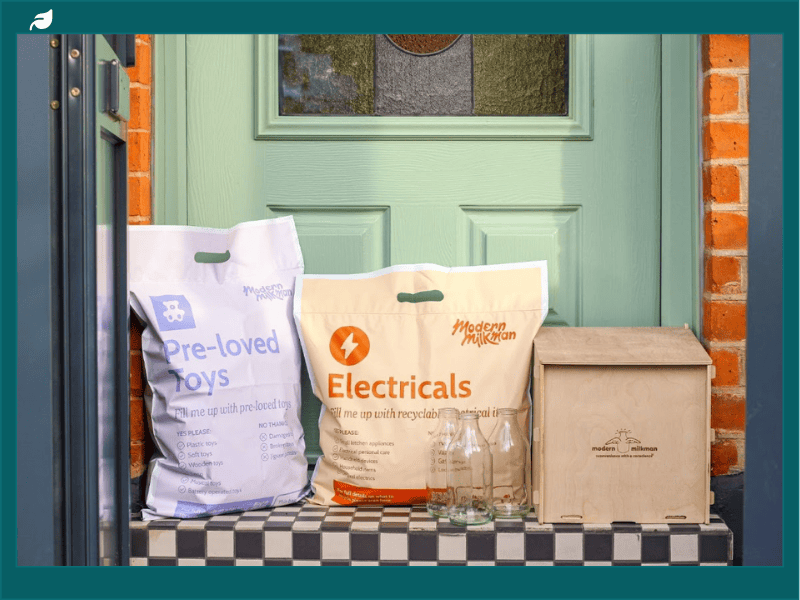
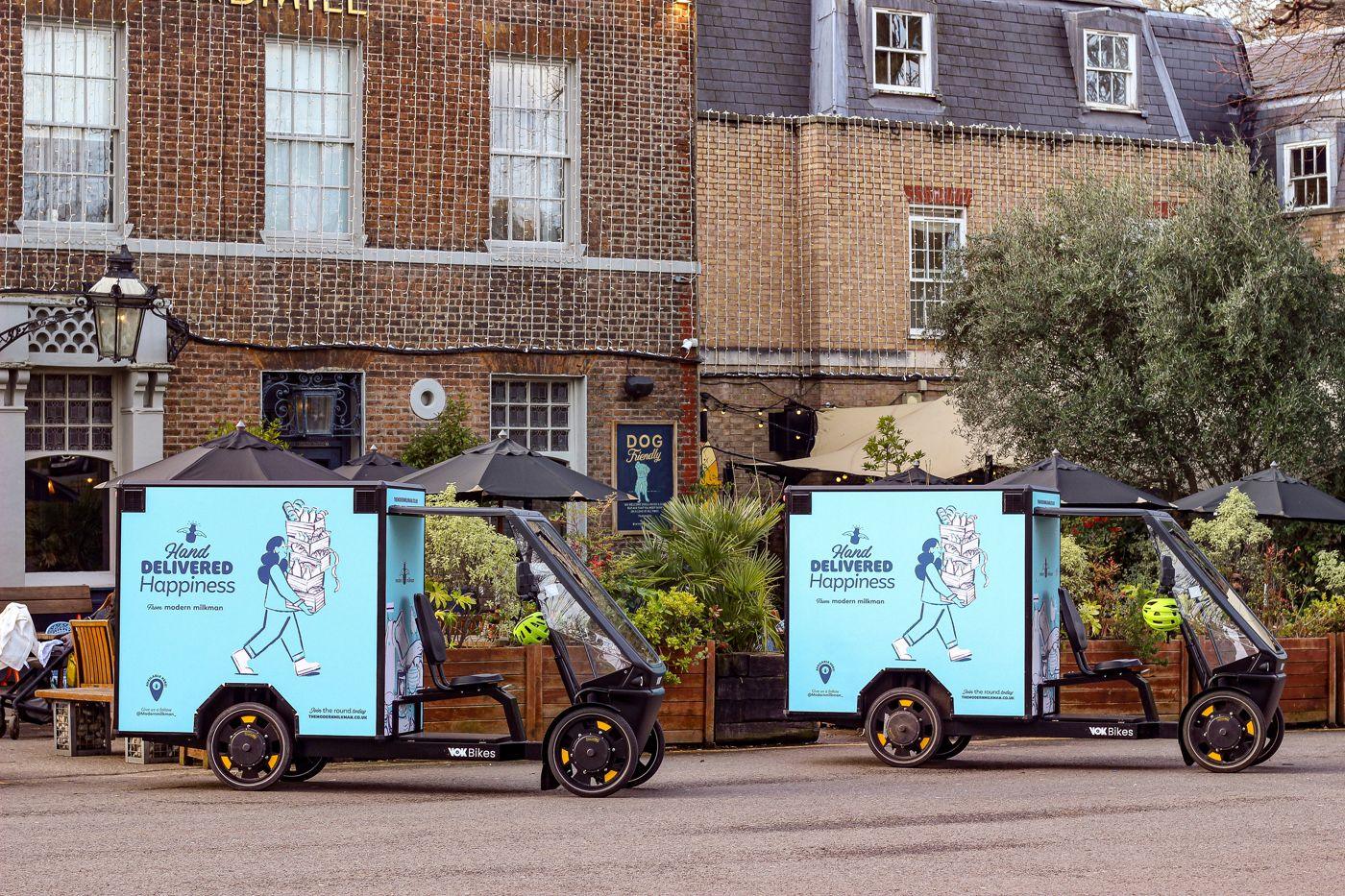
We have already built a unique piece of infrastructure, a trusted doorstep service that reaches households multiple times a week, supported by a reusable glass bottle system and a strong relationship with customers. We see significant potential in using that network to make everyday shopping simpler, more convenient and better value whilst being better for the environment.
A key part of this next phase is opening up the Modern Milkman platform to trusted consumer brands, bringing together products and services that complement our existing offering. By combining multiple brands through one delivery and returns service, we can give customers greater choice, flexibility and value, while making it easier to access products through a delivery route that already exists.
We will also continue to build on initiatives like our Collections service, which helps households give unwanted items a second life through reuse and recycling. We believe there is a major opportunity to make reverse logistics for households simpler and more accessible.
Ultimately, our goal is to make sustainable, convenient and better value choices part of everyday life for households.