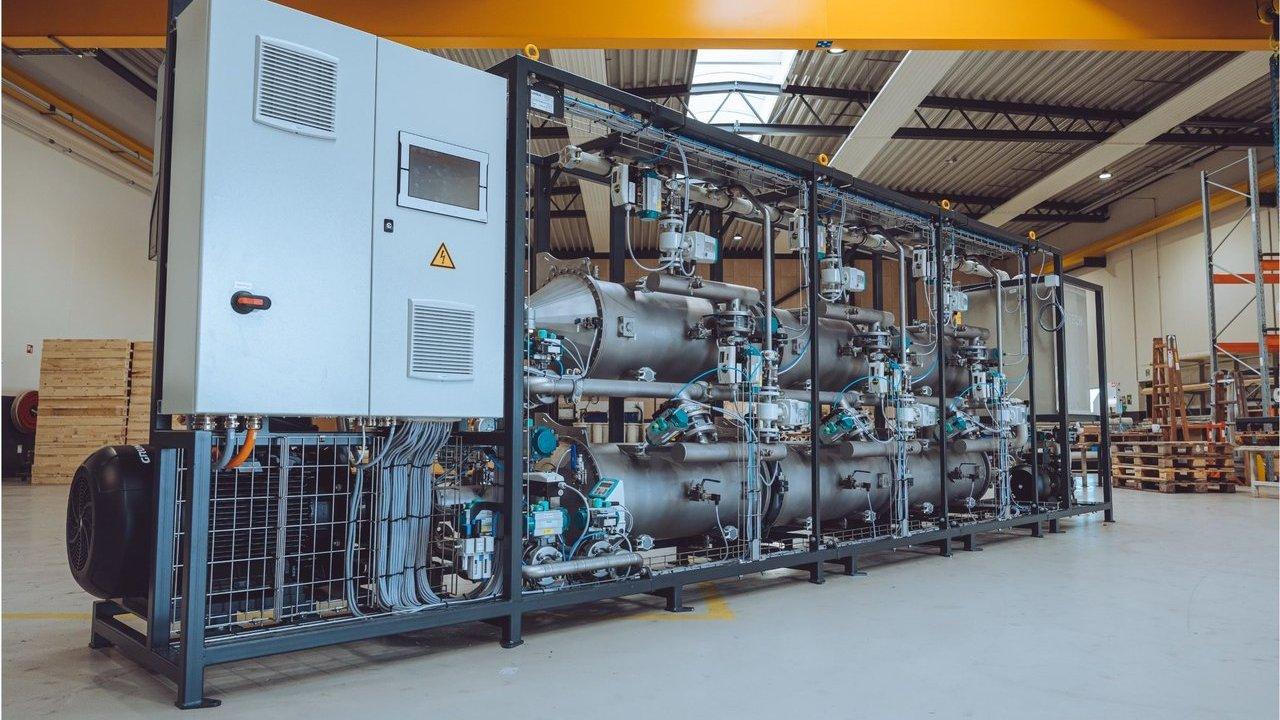
LiqTech International will supply its QureFlow™ QF-6 ceramic membrane filtration system to a new Water Works Industrial Services facility in Freeport, Texas, where it is expected to recover more than 95% of incoming wastewater for reuse. The installation will treat an estimated 150 to 200 US gallons per minute of industrial equipment-cleaning wastewater, returning filtered water directly to the site’s wash-water supply. By incorporating reuse infrastructure into the facility’s original design, the project is set to cut freshwater demand and reduce wastewater disposal volumes. It also offers a practical example of how robust filtration can support circular water management in demanding Gulf Coast industrial operations.
Water Reuse Built Into Design
WWIS cleans industrial equipment from across the Texas Gulf Coast region, including heat exchangers, tower trays, mesh pads, vane packs and other process equipment. The work removes contaminants such as scale and oil residue, producing wastewater with a composition that changes according to the equipment being handled and the material removed.
That variability makes water treatment a central operational consideration. Cleaning requires substantial quantities of freshwater, while the resulting wastewater must be managed after use. The new Freeport site will use the QF-6 system to remove suspended solids from the process stream, enabling treated permeate to return to washing operations rather than being discharged after a single use.
Brett Bourne, Chemical & Environmental Processes Manager at Water Works Industrial Services, said:
“The equipment we clean brings different contaminants into our wash water, so we need treatment that can handle that variability and make the water suitable for reuse,”
The facility’s approach brings water recovery into the core layout of a new industrial operation, rather than treating it as a later addition. It builds on WWIS’s existing experience of using ceramic ultrafiltration at its Geismar, Louisiana facility.
A High Recovery Filtration System
The QureFlow™ QF-6 system is expected to recover more than 95% of incoming wastewater. WWIS has not yet established an average feed rate, but the system is expected to handle feed flows of between 150 and 200 US gallons per minute.
In addition to reducing the need for freshwater, removing suspended solids ahead of reuse is expected to lower the risk of particles blocking nozzles in the washing equipment. This connects the water-saving case with reliable day-to-day plant performance, an important consideration where cleaning demands can change from job to job.
Brett Bourne, Chemical & Environmental Processes Manager at Water Works Industrial Services, said:
“Price, delivery time and technical capabilities all informed our selection of QureFlow. By returning treated water to our washing operations, we expect to reduce our freshwater requirements and the amount of wastewater we need to dispose of, while reducing the risk of solids blocking our wash nozzles.”
For industrial cleaning specialists, the ability to reuse process water while maintaining a dependable wash-water supply can offer a valuable route to reducing the volume of water entering and leaving a site. The Freeport installation is structured around that operational objective.
Ceramic Membranes For Variable Streams
LiqTech’s QureFlow platform uses ceramic membrane filtration. Its silicon carbide membrane technology is designed for challenging liquid and gas applications, including industrial and municipal water treatment, marine water treatment, commercial swimming pools, and oil and gas operations.
The WWIS project applies that filtration capability to a wastewater stream whose contaminant profile can vary substantially. The system’s role is to make reuse workable where operational conditions are not uniform, helping establish a repeatable treatment step within a high-throughput cleaning process.
Fei Chen, President and Chief Executive Officer of LiqTech, said:
“Industrial equipment cleaning creates wastewater that can change significantly from one job to the next, so reliable filtration is essential to making water reuse practical,”
LiqTech first announced the WWIS order in August 2026. The new facility application extends the company’s standardised QureFlow™ platform beyond produced water treatment and into industrial settings where wastewater variability, operational reliability and water reuse are core requirements.
A Gulf Coast Demonstration
The Freeport installation is expected to demonstrate how a purpose-designed filtration system can support repeated water reuse in industrial equipment cleaning. Its relevance lies not only in the projected recovery rate, but also in the integration of treatment into the water-management design of a new facility.
For sites managing scale, oil residue and other suspended contaminants, recovering process water can reduce both freshwater consumption and disposal needs while protecting downstream wash equipment. The project gives WWIS a treatment model grounded in its existing ceramic ultrafiltration experience and provides LiqTech with a reference point in a new industrial application.
Fei Chen, President and Chief Executive Officer of LiqTech, said:
“The WWIS project shows how our QureFlow platform can be incorporated into a new facility’s water-management design to support repeated reuse. We see the potential for this installation to demonstrate the QF-6’s capabilities in similar industrial applications across the Gulf Coast.”
As industrial operators look for practical ways to circulate water for longer within their processes, the Freeport project presents a focused, measurable application: treating wastewater generated by equipment cleaning and returning it to the job for which it was originally needed.