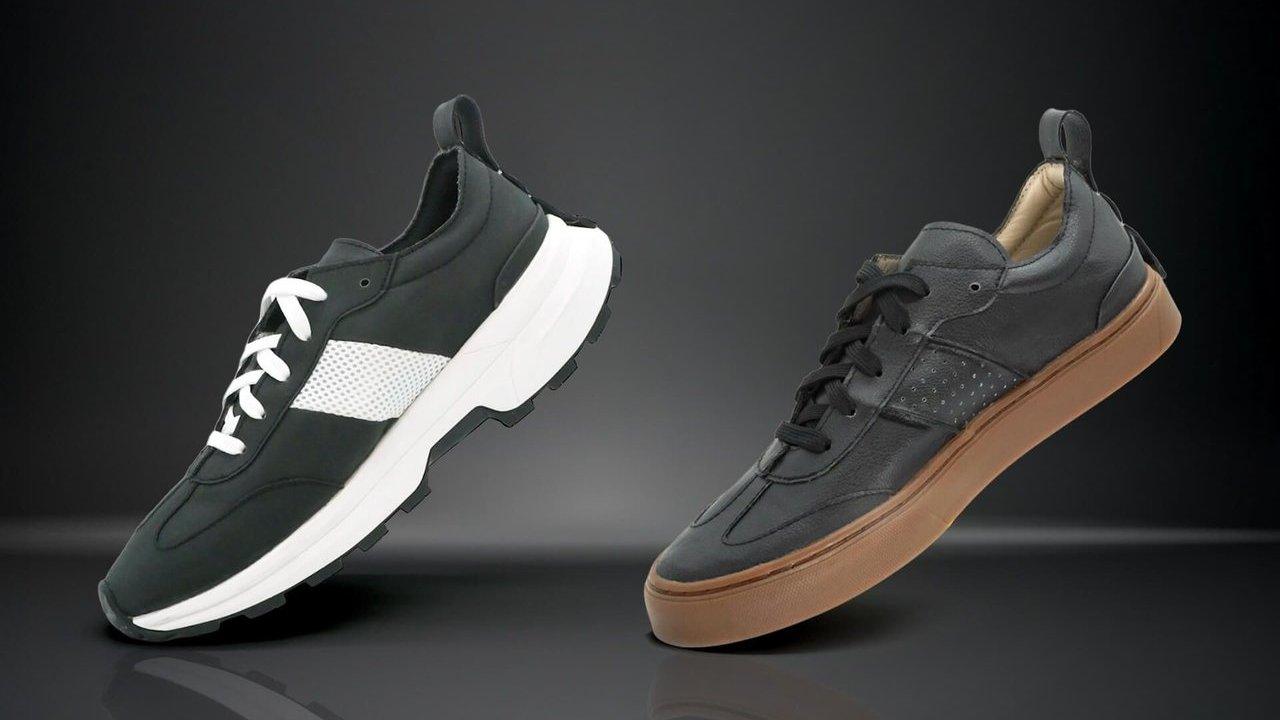
Rheom Materials has launched a biobased materials platform for footwear, bringing together Benree™ for hard plastic shoe components and Shorai®Dura for footwear uppers. The company is positioning the two-material offering as a practical route for footwear brands seeking lower-impact components without replacing their existing supply chains. Benree™ is a 100% biobased, biodegradable bioplastic comparable to ABS for internal shoe parts, while Shorai®Dura contains 76-83% biobased content. Both materials have passed footwear specifications, including testing for high-heel and upper applications. The launch expands Rheom’s proposition beyond a single alternative material into a more rounded component portfolio for shoe design.
Two Materials For Footwear
Footwear construction requires materials with very different properties, from rigid internal structures to flexible, abrasion-resistant outer surfaces. Rheom’s platform addresses both areas through Benree™ and Shorai®Dura, creating a complementary set of biobased options for brands working across shoe categories.
Benree™ is intended for hard plastic components used within footwear. Its comparison with ABS, a widely used plastic in durable applications, signals its role in parts where structural performance is required. The material is also described as biodegradable, pairing biobased composition with an end-of-life characteristic that is still uncommon among conventional hard plastics.
Shorai®Dura, meanwhile, is designed as a leather alternative for footwear uppers. With 76-83% biobased content, it is intended to provide a durable outer material capable of meeting the technical expectations placed on shoes in regular use.
Testing For High Heels
Rheom has validated Benree™ in a high-heel application with Bared Footwear. The material passed SATRA testing, giving the launch a useful commercial reference point in a demanding footwear format where component strength and reliability are central to product performance.
The test result is particularly relevant because material innovation can face a lengthy route from prototype to adoption. By demonstrating performance against footwear specifications, Rheom is seeking to reduce uncertainty for brands considering biobased alternatives for established component designs.
Rather than asking manufacturers to build entirely new production systems around a single experimental material, the platform approach is intended to support substitution within existing footwear supply chains. That focus on practical integration could make the materials more accessible to brands assessing how to change material choices while maintaining their product requirements.
Durability For Shoe Uppers
For uppers, durability remains a central requirement. Shorai®Dura has achieved 500,000 Bally Flex cycles and 70,000 Martindale abrasion revs, two measurements that indicate resistance to repeated bending and surface wear.
These results place performance at the centre of Rheom’s material proposition. Footwear uppers must retain their appearance and function through frequent movement, contact and abrasion, meaning biobased content alone is not enough to support broader product adoption.

By presenting a leather alternative that has been tested for flexibility and abrasion resistance, Rheom is addressing a key question for footwear designers and product teams: whether a material can meet both environmental ambitions and the physical expectations of an everyday shoe.
A Broader Materials Proposition
Many next-generation materials businesses focus on a single product category. Rheom’s new platform takes a broader view of footwear construction, covering both internal hard plastic parts and visible upper materials. That combination gives the company a more complete offering for brands examining biobased inputs across several elements of a shoe.
The distinction matters because footwear products are assembled from numerous materials with different mechanical demands. A brand may need robust internal components alongside flexible exterior surfaces, and the availability of options within one materials portfolio may simplify early conversations around sourcing and product development.
Rheom’s launch also reflects a considered shift from material demonstration towards application-led validation. Benree™ has been assessed in a high-heel use case, while Shorai®Dura’s performance data speaks directly to the wear conditions associated with footwear uppers.
Supporting Material Change
Rheom’s biobased footwear platform offers a focused response to a persistent materials challenge: finding alternatives that can fit into product development without compromising practical requirements. Benree™ and Shorai®Dura serve distinct functions, but together they give footwear businesses options for internal components and exterior construction.
With verified testing results and specified biobased content, the launch provides a credible foundation for brands looking to assess alternatives to conventional plastics and leather-style materials. The partnership testing with Bared Footwear adds further relevance, demonstrating how performance evaluation can connect new material development with real footwear applications.