TrusTrace has launched a new platform designed to turn supply chain data into operational intelligence and automated compliance action. The Stockholm-based traceability and compliance specialist is beginning the phased rollout with Supply Chain Intelligence and a programme builder for supplier compliance workflows. Built and validated with leading global brands over the past year, the platform draws on a data foundation covering more than 120,000 suppliers in over 80 countries. TrusTrace says a new programme can go live in as little as three days, with the first supplier data request issued in week one.
From Evidence To Action
For brands managing multi-tier supply chains, collecting supplier evidence is only one part of the compliance task. The next challenge is interpreting that information across products, materials, facilities and sourcing relationships, then organising the assessments, requests and corrective actions needed to address identified gaps.
TrusTrace’s new platform is intended to bring these activities together through a shared traceability and compliance data foundation. Its real-time, lot-level forward traceability is combined with AI-powered backward chain-of-custody data across materials and sourcing models, providing the information base for insight and decision-making.
Shameek Ghosh, CEO and Co-Founder of TrusTrace, said:
“Every regulation ultimately asks the same question: can you prove it? But proving compliance starts much earlier, with understanding your supply chain, knowing where the gaps are and acting before they become problems,”
The release comes as mandatory sustainability and due diligence requirements place greater emphasis on demonstrable supply chain evidence. Rather than treating data collection as a standalone process, TrusTrace is positioning its platform around the reuse of validated information across different compliance programmes and requirements.
Natural Language Supply Chain Queries
Supply Chain Intelligence is the first newly launched solution area within the platform. It allows brands to ask questions in natural language about suppliers, facilities, products, materials and supply chain relationships, producing insights and reports based on their own TrusTrace data.
The capability is designed to help teams identify patterns and information gaps more quickly, without relying on manual analysis across fragmented files and systems. Planned future phases will add regulatory intelligence and enterprise intelligence, connecting external requirements alongside a brand’s internal policies and standards with supply chain data.
This aims to give organisations clearer visibility over which requirements affect their operations, where potential issues may be emerging and what work is required before a compliance failure occurs. The platform’s intelligence function sits alongside Supplier Compliance, which manages whether suppliers meet brand requirements, and Product Compliance, which assesses whether individual products meet applicable requirements and provides supporting evidence.
Automating Supplier Programmes
Alongside the intelligence capability, TrusTrace is introducing a programme builder and orchestrator for the workflows that sit behind its existing Supplier Compliance solution. Brands can use it to run vendor onboarding, continuous supplier monitoring, assessments, evidence requests, follow-ups and corrective actions across their supplier base.

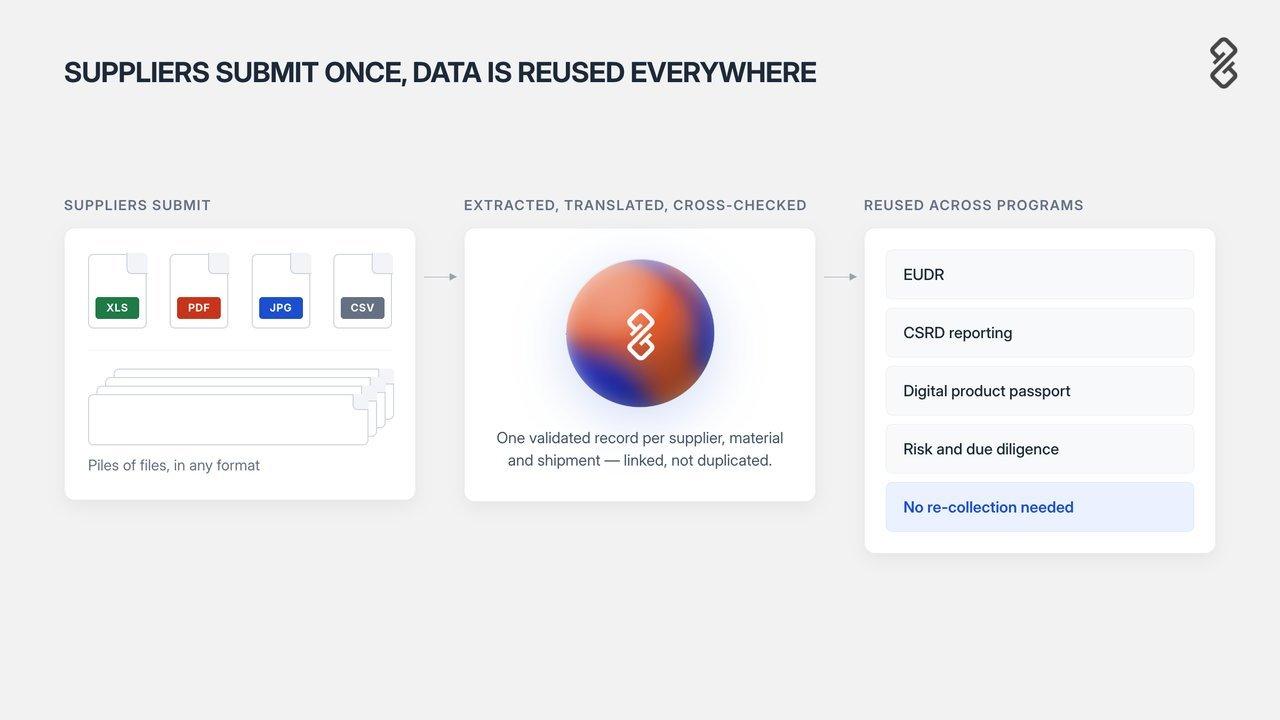
The platform is structured around four pillars: a unified data foundation, Supply Chain Intelligence, automated operations and connected supplier, regulatory and product compliance. Suppliers can submit information in any format or language, after which TrusTrace extracts, validates and links it into a common foundation. Data and evidence can then be reused across programmes, reducing repeat requests to suppliers.
That reuse is particularly relevant for businesses working with large supplier networks, where duplicate questionnaires and fragmented evidence requests can add administrative workload for both brands and their supply partners. AI is used throughout the platform, from extraction and validation through to natural-language access and workflow automation.
Scaling Compliance Capacity
TrusTrace’s platform is intended for global enterprises as well as mid-sized companies developing compliance programmes with lean teams. By linking intelligence with operational workflows, the company aims to help users direct staff time towards decisions rather than repetitive programme administration.
Shameek Ghosh, CEO and Co-Founder of TrusTrace, said:
“We have spent years helping brands build trusted supply chain data. Now we are making that data work harder, turning it into intelligence, decisions, and action,”
“The goal is to help brands scale increasingly complex compliance programs without scaling their teams at the same rate, so they can spend more time on the decisions that matter.”
The company has been recognised by the World Economic Forum as a Top Innovator supporting the UN Sustainable Development Goals. With the new platform, TrusTrace is extending its established traceability offering into a connected system that links supply chain evidence with the programmes acting on it.
A Connected Data Foundation
The significance of the launch lies in the connection between supplier data, intelligence and compliance execution. A brand can use the same evidence foundation across supplier requirements, regulatory obligations and product compliance needs, rather than building separate information flows for each process.
As the phased rollout continues, further intelligence and automation capabilities are planned. For companies seeking a more practical route from supply chain visibility to measurable compliance activity, TrusTrace’s platform offers a focused model: collect information once, validate it, make it accessible and use it to run the actions that follow.