Christophe Williams discusses solar thermal innovation, energy security, and the role of clean heat in the global energy transition
Naked Energy is a clean technology company that produces solar thermal collectors designed to generate renewable heat for commercial buildings. CEO and founder Christophe Williams established the business in 2009, growing it into an internationally deployed solution backed by major investors including E.ON Energy Infrastructure Solutions and Barclays.
In this Q&A, Williams explores the UK’s energy security challenges, the limitations of fossil fuel reliance, and the economic case for renewables. He also discusses the overlooked role of heat in decarbonisation, infrastructure constraints, and how domestic clean technology manufacturing can strengthen long-term resilience.
Please introduce yourself and explain your role at Naked Energy.
My name is Christophe Williams and I am the CEO and founder of Naked Energy. We produce solar thermal collectors, which harness the sun’s energy to generate clean, instant heat for commercial buildings.
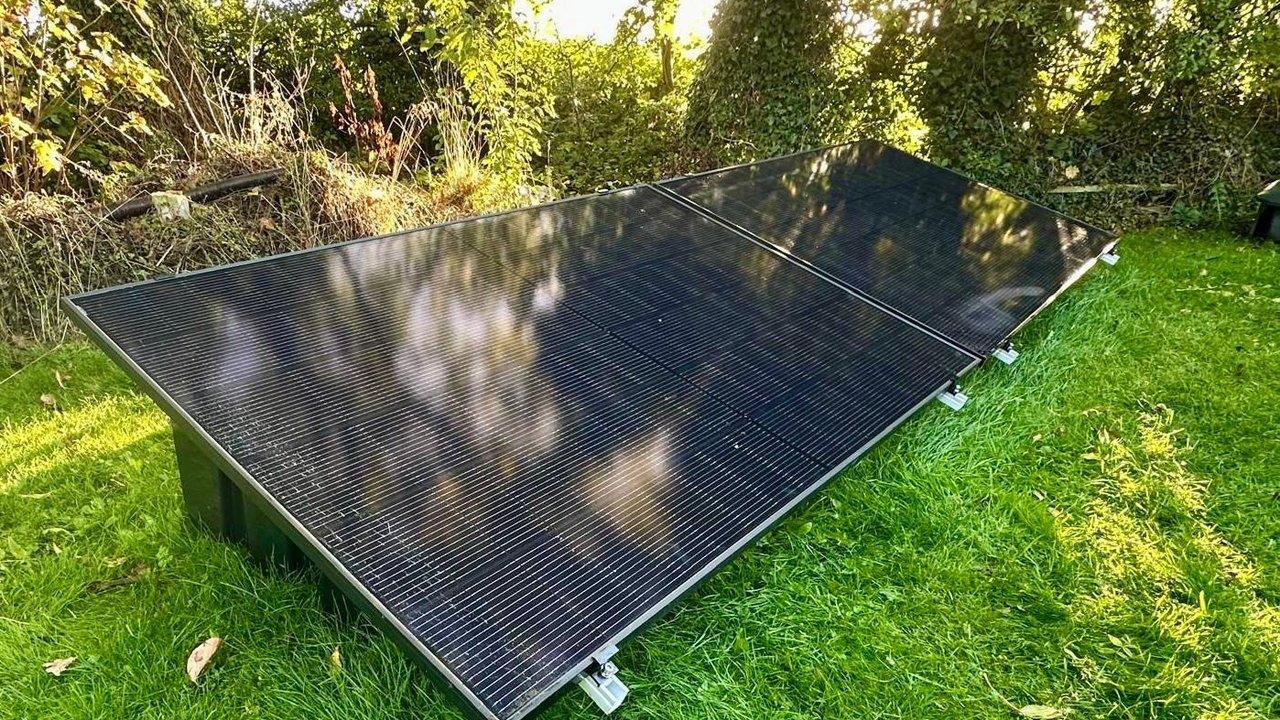
Solar thermal is different from conventional solar PV panels in that it generates renewable heat rather than electricity. Our Virtu collectors have the highest energy density across conventional solar thermal and solar PV panels, and are up to ten times more efficient than traditional PV panels.
I started the business in 2009 in my garage. I was inspired by my grandfather, who was a pioneer in clean energy. He worked with Stephen Salter on his famous “Edinburgh duck,” an early form of renewable energy generation in the 1970s.
The business is backed by £17m from E.ON Energy Infrastructure Solutions and Barclays and has installed Virtu projects in 11 countries, including the largest UK solar thermal project on the roof of the British Library.
Our Virtu collectors have the highest energy density across conventional solar thermal and solar PV panels.
What does the recent escalation involving Iran reveal about the UK’s dependence on gas and energy security?
Escalation involving Iran is yet another reminder that dependence on gas weakens our energy security. UK wholesale gas prices have risen by around 90% in the week after the war started, and that volatility feeds straight through to businesses and households.
Dependence on gas weakens our energy security.
Why does increasing North Sea gas production not necessarily protect the UK from global energy price shocks?
Calls to ‘just use more North Sea gas’ are false comfort. UK-produced gas is sold at international prices, so it does not insulate us from global shocks. And the remaining reserves are nowhere near large enough to protect the UK from disruption in global supply routes.
UK-produced gas is sold at international prices, so it does not insulate us from global shocks.
What has former Energy Secretary Claire Coutinho said about the impact of expanding North Sea oil and gas on energy bills?
Shadow Energy Secretary Claire Coutinho admitted in 2023 that relying on North Sea oil and gas “wouldn’t necessarily bring energy bills down”. It’s an odd decision to sacrifice the energy security that comes with domestic renewable energy sources if gas won’t actually reduce energy bills.
Relying on North Sea oil and gas “wouldn’t necessarily bring energy bills down”.
Why does Naked Energy argue that doubling down on fossil fuels will not deliver long-term stability or lower costs?
Focusing on fossil fuels puts us back on the path to more extreme weather and global disasters driven by worsening climate change. This would have disastrous economic consequences in the long-term.
One study found that if climate change was left unchecked it could cost the global economy $178 trillion over the next 50 years.
What the UK – and the world – needs is an unwavering commitment to renewables. That same study found that if global leaders united to control climate change now, we could see a five-decade gain of $43 trillion to the global economy. Renewable energy is the only protection we have against global market shocks and real energy security.
Renewable energy is the only protection we have against global market shocks and real energy security.
Why is heat considered the biggest gap in the global energy transition?
Heat is responsible for 50% of global energy emissions, of which roughly 75% is provided by fossil fuels. While electrification is very important, power grids don’t have enough capacity for us to electrify everything.
Heat decarbonisation has also often been left in the too hard box as heat generation requires different heat sources, with different temperatures and various applications from low to very high temperatures.
In the UK, current plans by the National Grid to upgrade its network across the country are set to cost up to £35 billion from 2026 to 2031. With electricity demand set to increase by 50% over the next decade, it’s clear that electrification alone is either practically unfeasible or economically unaffordable. In this sense, heat is a big gap.
Heat is responsible for 50% of global energy emissions.
How could clean heat technologies manufactured in the UK and Europe help strengthen energy security?
Renewables are not just about cleaner energy, they’re about building industries here at home. If we prioritise investment in British and European clean technologies, we can generate thousands of jobs across engineering, manufacturing and installation.
It also has the effect of decreasing our reliance on global markets for essential renewable technologies. Solar thermal is a great example of a technology like this. In Europe this technology is a net exporter, with a trade balance of +EUR550 million, whereas solar PV is almost exclusively imported from Asia, with a trade balance of -EUR5 billion.
Additionally, the majority of resources needed to manufacture solar thermal technologies are sourced within Europe with an existing and very agile local manufacturing base. Over 90% of Europe’s demand for solar thermal is met by production within the continent.
Geopolitical events over the last few years have shown that boosting domestic manufacturing, particularly in the renewables space, is the way to create domestic energy security.
Boosting domestic manufacturing, particularly in the renewables space, is the way to create domestic energy security.