Sustainable business is no longer a fringe concept — it’s fast becoming the foundation of modern corporate success. As the world faces mounting environmental, social, and economic challenges, companies are embracing sustainability as a core element of long-term value creation.
What Is a Sustainable Business?
A sustainable business actively minimizes its environmental footprint while maximizing social and economic value. These businesses integrate sustainability into their operations, from sourcing and logistics to leadership and innovation.
Organizations are increasingly expected to align with the United Nations’ Sustainable Development Goals (SDGs), which outline global priorities such as responsible consumption, climate action, and social equity. As highlighted frequently in Sustainable Business Magazine, businesses are rising to meet these goals through forward-thinking strategies.

Sustainability as Business Strategy
Sustainability is more than a moral imperative — it’s a business strategy with measurable results. Companies that align their goals with sustainable outcomes often see increased brand loyalty, greater investor confidence, and operational efficiencies.
Incorporating sustainability into core business strategy allows companies to build long-term resilience and future-proof their operations in an increasingly regulated and environmentally conscious market.
Commercially Profitable and Environmentally Responsible
At Sustainable Business Magazine, we’ve consistently featured organizations that demonstrate how commercial success and sustainability go hand-in-hand.
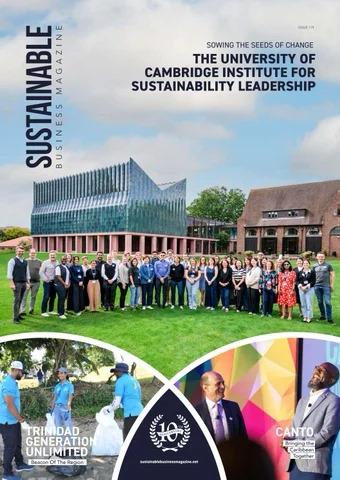
For instance, Too Good To Go, a company we’ve profiled, exemplifies how tackling food waste through tech solutions can open new markets while advancing sustainability. Similarly, the Cambridge Institute for Sustainability Leadership (CISL), which we’ve featured regularly, continues to pioneer cross-sector partnerships and executive education programs that help redefine leadership in sustainable business.
These examples reinforce a growing truth: sustainability is not just the right thing to do — it’s also smart business.
Leadership and Innovation in Sustainable Business
Effective leadership drives the integration of sustainability into business models. Organizations that prioritize sustainable leadership foster innovation, transparency, and lasting cultural shifts.
CISL empowers global leaders through interdisciplinary learning, helping companies embed sustainability at the highest levels of strategy and governance.
Green Business Models: Building for the Future
Green business models prioritize long-term ecological health and community well-being. From zero-waste systems to digital carbon tracking, innovation is enabling businesses to measure and reduce their environmental footprint more effectively than ever.
These models are rooted in strategy, with business models designed to create shared value — both economically and environmentally.
Driving Change Through Research and Learning
Research continues to play a vital role in how sustainable business evolves. Institutions like CISL are helping bridge academia and practice by developing sustainable business frameworks grounded in the latest research.
Learning programs, sustainability-focused courses, and cross-sector collaboration all support the upskilling needed to meet global sustainability goals.
Sustainable Business Examples That Lead the Way
Several organizations set the standard for sustainable business practice:
- Too Good To Go shows how digital innovation can dramatically reduce food waste while building a passionate consumer base.
- Fairtrade, appearing in our next edition, remains a leading example of how ethical supply chains can protect human rights and drive systemic change.
- Earthday.org, the lead article in our upcoming issue, continues to energize millions globally through climate advocacy, grassroots education, and environmental campaigns.
- CISL continues to equip leaders and organizations with the insights and tools to embed sustainability deeply and strategically across sectors.
Each of these organizations embodies the values and vision of sustainable business — balancing environmental integrity, economic viability, and social equity.
Embedding Sustainable Business in Supply Chains
One of the most significant areas where sustainable business strategy delivers impact is in the supply chain. Companies are realizing that sustainability cannot be confined to internal operations — it must be embedded across supplier networks.
Supply chains that prioritize ethical labor practices, low-emission transportation, and responsibly sourced materials reduce environmental and social risks. Businesses that take a lifecycle approach to their products — from raw materials to disposal — are more likely to meet consumer expectations and regulatory requirements.
Organizations like Fairtrade ensure that producers in developing countries are paid fairly and operate under safe, environmentally conscious conditions. Fairtrade certification is one of the most recognized tools for building trust and transparency across global supply chains.
Digital Tools and Data for Sustainable Business
Digital transformation plays a key role in sustainable business. From cloud-based resource planning tools to emissions-tracking dashboards, companies are using data to make sustainability visible, measurable, and actionable.
For example, businesses now use AI-powered systems to track their carbon output in real time. These insights are being used to inform energy-saving strategies, reduce waste, and adjust sourcing to favor lower-impact suppliers.
In Sustainable Business Magazine, we’ve featured companies adopting blockchain to verify ethical sourcing, platforms that help customers choose greener shipping options, and systems that integrate with government reporting tools for ESG compliance.
Employee Engagement in Driving Sustainability
No sustainability strategy succeeds without people. Sustainable businesses foster cultures where employees are empowered to participate in the company’s mission — whether through green initiatives, volunteer programs, or sustainability training.
This internal engagement not only improves morale and retention but also brings fresh ideas to the surface. From grassroots green teams to executive-level innovation councils, involving employees ensures buy-in and long-term commitment.
In one Sustainable Business Magazine feature, a global logistics company created an employee-led waste reduction challenge that cut warehouse waste by 37% over six months — with minimal cost to implement.
Sustainability Reporting and Transparency
Transparent sustainability reporting is becoming essential for building trust with stakeholders. Whether through integrated annual reports, dedicated ESG reports, or sustainability dashboards, companies that share their progress openly are better positioned in the market.
Frameworks such as GRI, SASB, and the UN SDG Compass guide businesses in sharing information about emissions, resource usage, social impact, and governance.
Regulators and investors increasingly demand data-driven sustainability metrics — and businesses that can produce credible, timely, and complete disclosures are more likely to gain investment and consumer confidence.
The Role of Certification in Sustainable Business
Certification programs signal credibility. For a business to be recognized as sustainable, it must meet specific, transparent standards — whether in product lifecycle, labor rights, or environmental impact.
Programs such as Fairtrade, B Corp, ISO 14001, and LEED help businesses demonstrate alignment with sustainability goals. These certifications also influence purchasing decisions: increasingly, customers choose companies that can prove their commitments.
In our upcoming issue of Sustainable Business Magazine, we spotlight Earthday.org, which continues to amplify the global conversation around standards, policy, and environmental action, influencing both consumers and corporations alike.
Community Impact and Local Sustainability Efforts
Sustainable businesses also focus on their impact at the community level. Whether it’s sourcing from local suppliers, supporting local education initiatives, or investing in green infrastructure, local actions contribute to the global sustainability agenda.
Companies that partner with schools, nonprofits, or local governments can generate powerful shared outcomes. A growing number of businesses are aligning their missions with community wellbeing, promoting inclusive economic growth while reducing inequality.

Global Trends in Sustainable Business
The global landscape for sustainable business is evolving rapidly. As climate-related risks rise, and social inequality becomes more visible, businesses must respond with decisive action.
International agreements such as the Paris Agreement and the SDGs provide a policy backbone, while consumer movements and activist investors hold companies accountable.
Regions like the EU are enacting sweeping sustainability directives, and supply chain due diligence laws are beginning to reshape global sourcing. The U.S., meanwhile, is offering incentives for green innovation and low-emissions infrastructure.
Sustainable Business Is No Longer Optional
As Sustainable Business Magazine continues to document, sustainability is becoming an essential business function. Regulatory frameworks, consumer expectations, and environmental realities are converging — and businesses must evolve or be left behind.
By embedding sustainability into company mission, operations, and culture, today’s businesses are creating long-term value for all stakeholders — and ensuring their place in a sustainable future.
Investor Expectations and ESG Integration
Investors are increasingly making capital allocation decisions based on environmental, social, and governance (ESG) performance. Sustainable businesses that can demonstrate long-term resilience, transparent reporting, and ethical practices are attracting attention from institutional investors, ESG funds, and retail investors alike.
Asset managers now demand data-driven ESG disclosures, and failure to provide them can lead to reputational damage or divestment. On the flip side, companies that score well on ESG indices may benefit from higher valuations and greater access to capital.
A robust sustainability strategy that integrates ESG across departments — from operations to HR — is now a key differentiator in the market.
Sustainable Innovation in Product Design
Design plays a fundamental role in sustainable business. From material selection to packaging, product lifespan, and end-of-life reuse, product design decisions affect environmental impact from the outset.
Brands are investing in modular, recyclable, and biodegradable designs that support circular economy goals. Others are introducing take-back programs, rental options, or refill systems to reduce single-use waste.
These approaches don’t just reduce environmental impact — they also enhance brand loyalty and appeal to eco-conscious customers. For businesses, sustainable design can create new revenue streams while lowering long-term operational costs.
Policy, Regulation, and Corporate Responsibility
The policy landscape is shifting rapidly to demand more from businesses on sustainability. Governments around the world are introducing stricter environmental laws, mandatory emissions reporting, and climate-related risk disclosures.
In the EU, for instance, the Corporate Sustainability Reporting Directive (CSRD) requires detailed ESG disclosures from large companies. Similar moves are underway in the U.S., Canada, and Australia.
Proactive companies are not only complying but going beyond — lobbying for ambitious sustainability policies and collaborating with regulators to set industry standards. These businesses are leading the way in shaping a sustainable, transparent economy.
The Economics of Transition: Risk and Opportunity
Transitioning to a low-carbon economy is not without cost — but the cost of inaction is far greater. Sustainable businesses are evaluating climate-related financial risks, from stranded assets to supply chain disruptions, while simultaneously identifying new markets.
Green finance, carbon trading, and renewable energy investments are becoming mainstream, with trillions of dollars now flowing into clean technologies. For many businesses, the sustainability transition presents not just a challenge but a significant opportunity to innovate, differentiate, and lead.
The Long-Term View
A long-term mindset is essential for any business seeking to be sustainable. Quarterly results matter, but so do the decades ahead. Customers, regulators, and investors are increasingly aligning around this reality.
The companies that understand this — and act now — will be those who endure, thrive, and lead in the new global economy built on sustainability
Leading Examples of Sustainable Businesses
Cambridge Institute for Sustainability Leadership (CISL)
The Cambridge Institute for Sustainability Leadership (CISL) is a globally recognized center within the University of Cambridge that equips leaders across industries to drive systemic change. Through tailored executive education and cross-sector partnerships, CISL helps organizations embed sustainability into business strategy. Its customized programs have supported banking professionals in promoting green, inclusive growth in Africa — a powerful example of sustainability leadership influencing financial systems at scale.
Too Good To Go
Too Good To Go is tackling one of the most urgent sustainability challenges: food waste. The company connects consumers with surplus food from local retailers via its app, offering “Surprise Bags” of unsold items at discounted prices. This model has helped save over 250 million meals across 17 countries, significantly reducing the carbon emissions associated with wasted food while also strengthening local businesses and supporting food affordability.
Fairtrade Foundation
The Fairtrade Foundation champions fair pricing, better labor conditions, and environmental sustainability across global supply chains. Its certification system helps consumers make ethical choices, while ensuring farmers and producers in developing countries are treated equitably. For example, Fairtrade-certified cotton farmers in India earn significantly more and follow safer farming practices — demonstrating the economic and ecological benefits of responsible sourcing.
Earthday.org
Earthday.org has been a leading voice in global environmental advocacy since launching the first Earth Day in 1970. Today, the organization mobilizes more than a billion people each year through campaigns like “Planet vs. Plastics,” which aims to reduce plastic production by 60% by 2040. Earthday.org’s efforts emphasize the importance of global coordination, education, and policy in addressing environmental threats.
Key Global Associations Driving Sustainable Business Development
United Nations Global Compact
The United Nations Global Compact is the world’s largest corporate sustainability initiative, uniting over 20,000 companies in more than 160 countries. It calls on businesses to align their operations with ten universally accepted principles in the areas of human rights, labor, environment, and anti-corruption. The Compact also supports broader UN goals, particularly the Sustainable Development Goals (SDGs). Its influence is especially powerful through its network of local chapters, which help businesses translate global sustainability targets into actionable national strategies.
World Business Council for Sustainable Development (WBCSD)
The World Business Council for Sustainable Development (WBCSD) is a CEO-led organization that brings together over 200 international companies committed to accelerating the transition to a sustainable world. WBCSD provides frameworks and platforms for businesses to develop scalable solutions in areas like decarbonization, biodiversity, circular economy, and inclusive growth. Through collaborative work programs and global thought leadership, WBCSD supports member companies in embedding sustainability across their value chains and business models.
Global Reporting Initiative (GRI)
The Global Reporting Initiative (GRI) is the world’s most widely used sustainability reporting standard. It enables businesses, governments, and organizations to communicate their environmental, social, and governance (ESG) performance in a consistent and transparent way. GRI’s standards empower stakeholders to make informed decisions and compare sustainability progress across sectors. Its open-access reporting framework has become a cornerstone of corporate accountability, and it plays a vital role in integrating sustainability into financial systems and regulatory environments.
International Chamber of Commerce (ICC) – Commission on Environment and Energy
The International Chamber of Commerce (ICC) plays a critical role in shaping global business responses to sustainability challenges through its Commission on Environment and Energy. Representing over 45 million businesses in more than 100 countries, the ICC provides a unified voice for the private sector in international climate negotiations and environmental policymaking. It helps companies align with global agreements like the Paris Accord while promoting tools for green finance, low-carbon innovation, and responsible resource use. The ICC’s guidance ensures that sustainability remains a core pillar of global trade and investment frameworks.