Written by Glen Westall
Sustainable Business Magazine speaks to Zac Hembry, founder and CEO of recycled fashion company Messina Hembry, about returning unwanted textiles to the UK market and why that’s important for our environment.
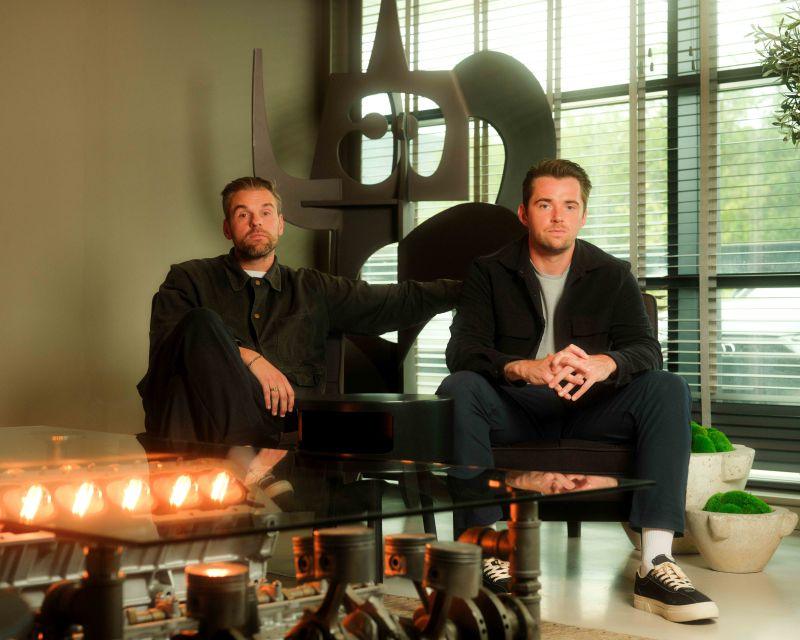
What began as a university side hustle has evolved into one of the UK’s most innovative sustainable fashion enterprises. Messina Hembry was founded by Zac Hembry during his university years, with his brother Josh coming onboard soon after. The company transforms the way used clothing finds new life, intercepting textiles before they’re shipped abroad or end up in landfill. Through a comprehensive approach to sustainability, the company has become a beacon for environmentally conscious clothing and escaping the harmful cycles of fast fashion.
The core of Messina Hembry lies in recognizing untapped potential within existing textile ecosystems. Mr. Hembry’s entrepreneurial journey begins with a simple observation about inefficiencies in the charity shop sector:
“I started the business when I was at university. It basically came from not hugely enjoying my course and wanting to source a bit of extra money to pay for uni. I’d always liked e-commerce, I liked selling on eBay. I’d been buying and selling things for a while. I saw that, when I was going to charity shops, there was a lot of things they were missing. There was a large information gap on how they would market products, what they would sell them for, just because there’s so much data out there in fashion with different brand values and things like that. So the idea stemmed from just seeing a gap in how charity shops were marketing their products.”
This initial insight led to a deeper understanding of the textile supply chain and the massive volumes of clothing that never reach consumers. Messina Hembry’s approach has evolved beyond simple reselling to addressing inefficiencies in how second-hand clothing is processed and valued.
“Primarily, we source from textile recyclers, which are entities that work with charities in order to process some of the stock that they collect,” Mr. Hembry explains. “They also do things like clearing brand overstocking. So there’s a variety of ways that they get stock in. To be honest, if you’re giving clothes to a charity shop, if it doesn’t sell in there, the shop will send it to a textile recycler. That is the stage that we’re primarily dealing with.
“I found out about them whilst I was doing uni, and I don’t think it’s a market a lot of people know about. That was a bit of a learning curve for me, to learn about how the industry worked because, you know, like many other people I had in the past just handed a bag to a charity shop and not thought any further about it.”
Extending Textile Lifecycles
Central to Messina Hembry’s sustainability mission is its comprehensive approach to textile recovery and processing. Rather than simply accepting items as they arrive, the company invests heavily in infrastructure to restore and repair clothing, extending a lifecycle that is otherwise typically cut short.
“Firstly, we try to save garments before they progress onto the second step of the process,” explains Mr. Hembry. “We have cleaning equipment, washing equipment, and a repairs team, and we’ll do our best to try and repair an item before anything else. That means, based on the resale value of the product, we make a decision as to whether we do particular repairs or not.
“If we don’t do those repairs, the item will then go to a partner that we work with. That partner shreds the textile and then puts it into new products. That means things like the infill for boxing bags, pet bedding, gym mats, and many other things.”
This circular approach ensures that virtually nothing of disposed clothing goes to waste, with textiles finding new purposes other than as clothes.
Environmental Operations Strategy
Beyond product recovery, Messina Hembry also implements comprehensive environmental practices across its operations. Mr. Hembry outlines how his company’s approach to supplier selection prioritizes environmental considerations alongside business efficiency:
“We don’t only work with suppliers who ozone sanitise, but we prefer ordering from our suppliers that have a process of ozone sanitisation. That is a process of removing any bacteria from the garments before they come to us. Ozone sanitisation is an extremely efficient and environmentally friendly way to sanitise garments before preparing them for washing or dry cleaning. When a supplier sanitises their stock for us, it generally indicates that they take greater care with their products as a whole—resulting in cleaner items for our clients.”
This preference for supply chain sustainability is reflected in the company’s packaging decisions and even beyond, to the customers themselves.
“We want the whole sort of environment of the business to be consistent throughout. We don’t want to have any gaps where perhaps we’re not being as environmentally friendly as possible. So in terms of things like packaging, all of our mailers are made from recycled material.
“In our marketing materials that we send out, we make sure to inform and educate customers on the benefits of shopping secondhand. I think it’s important that our customers know how much CO2 and water it takes to produce a new garment, just because I think part of the problem is if the customer doesn’t know the environmental impact of buying a brand new item, it’s harder to understand why they need to stop. Information is crucial.”
Hembry goes on to acknowledge that sustainable fashion requires more effort than traditional retail models. Nonetheless, he sees this as fundamental to the company’s mission.
“We didn’t get into this because it was an easy journey. Selling new stuff is a far easier way to exist as a fashion retail company. There’s not that many businesses doing what we do, and every business in this industry has to invent a number of things for themselves. So in terms of, for example, the burden of having to photograph every item in order to bring it back to life, that’s a huge burden we face compared to businesses selling new clothes that can rely on stock imagery.”
Preventing International Waste
Perhaps most significantly, Messina Hembry’s work addresses a largely invisible aspect of the UK’s textile waste problem: the export of unwanted clothing to developing countries. The company positions itself as a crucial intervention point in this process.
“In terms of our whole process, we are kind of like the last port of call before stock ends up getting shipped abroad,” Mr. Hembry elaborates. “Most textiles in the UK will eventually get sent abroad, so anything that we’re retailing back in the UK is essentially a bonus. It’s one less movement, and that one movement is incredibly environmentally harmful international shipping.
“The clothing generally gets sold to this huge secondhand market in Africa, while Pakistan takes a lower grade of stock then resells it in a market there. Essentially, as soon as products go to a textile recycler, they’ve basically lost all of their sellable data because the brands get mixed up. There’s no shoppable outcome unless someone’s going through it again, which again is expensive to do in the UK.”
As a result, the company’s process of data restoration includes photographing items, researching brands, and creating detailed product listings. This represents a significant investment in bringing discarded textiles back to market standards.
“Our process is essentially about giving the products back the data that they’ve lost and putting them out there to UK consumers. We do also ship worldwide, but our priority is giving them a second chance at life here in the UK.”
Sustainable Technologies
Looking towards the future, Mr. Hembry sees technology as key to scaling sustainable fashion practices and making the industry more viable:
“We are constantly trying to improve our software and IT infrastructure to ensure we’re able to offer customers as much information about items as possible. We also have to make sure our team are working as efficiently as possible because of that operational burden of necessarily processing every item again. In terms of improvements moving forward, then, the more we can lean on things like AI and technology, the more we’re going to be able to grow and the more this industry is going to be able to grow. That’s where the gap is at the moment in selling new and selling secondhand.
“In terms of concrete plans, we just want to keep growing our product base and keep offering our customers a more and more diverse selection of products. The best way we can do that is by growing. If we’re not doing that then you’ve got products going to landfill and products being shipped abroad. In returning more and more textiles to the domestic market, we can provide a more sustainable future for the country at the heart of what we do.”