Global supply chains are facing unprecedented challenges due to climate change, increasing regulatory requirements, and ethical concerns surrounding labor practices. As disruptions intensify, Businesses are turning to supply chain modeling as a strategic approach to enhance efficiency and sustainability. Supply chain modeling strategies that enhance resilience, sustainability, and ethical responsibility. Recognizing that no single company or producer can tackle these issues alone, the Fairtrade Foundation is championing pre-competitive collaboration as a viable solution.
The Role of Fairtrade’s Shared Impact Model
To address these concerns, Fairtrade has introduced Shared Impact, an initiative designed to unite UK retailers in collectively sourcing cocoa, bananas, and coffee from certified producers. Approved by the UK Competition and Markets Authority (CMA) in 2023, this collaborative model enhances supply chain stability, supports fair pricing, and enables long-term sustainability investments.
Kerrina Thorogood, Partnerships Director at the Fairtrade Foundation, underscores the urgency of this approach:
“Ahead of The Economist’s 10th Anniversary Sustainability Week, where I’ll be speaking on 12th March, it’s clear that businesses are under increasing pressure to navigate global supply disruptions while ensuring their supply chains are resilient, sustainable, and ethically responsible. Climate change, regulatory pressures, and ethical concerns pose growing risks that businesses must address. However, tackling these challenges alone can be both costly, complex and incredibly difficult.”
With supply chain vulnerabilities exacerbated by extreme weather events, geopolitical instability, and shifting consumer expectations, businesses must look beyond traditional competitive strategies. Shared Impact promotes a cooperative approach, enabling companies to mitigate risks collectively while fostering ethical and sustainable sourcing practices.
Long-Term Sourcing Commitments in Supply Chain Modeling
At its core, Shared Impact helps UK grocery retailers pool sourcing of additional Fairtrade-certified volumes, reducing risks associated with human rights and environmental due diligence (HREDD). By committing to longer-term sourcing agreements (typically between three to five years), businesses can offer farmers greater income stability while investing in climate resilience strategies such as agroforestry.
Thorogood explains:
“At the Fairtrade Foundation, we believe that pre-competitive collaboration is key to strengthening supply chain resilience. Our newly launched Shared Impact model enables UK grocery retailers to work together to pool sourcing of additional Fairtrade volumes from certified producers, reducing HREDD risks and ensuring supply continuity during disruptions while lowering costs through shared responsibility. By making longer-term sourcing commitments (3-5 years), businesses can help stabilise farmer incomes and mitigate supply-chain vulnerabilities through longer-term programme interventions such as agroforestry. This, in turn, ensures that farmers have the resources to withstand economic and environmental volatility.”
Beyond risk mitigation, supply chain modeling helps businesses assess and optimize sourcing strategies while pre-competitive collaboration opens avenues for businesses to drive systemic change in global trade practices. Issues such as forced labor, deforestation, and poor value-chain management can only be addressed effectively when companies adopt a holistic, industry-wide approach. Equipping teams to execute these strategies can start with upskilling through flexible online programs that enable professionals to pursue a degree in supply chain management, developing competencies in modeling, ethical sourcing, and resilient logistics.
Regulatory Support for Ethical Collaboration
A longstanding barrier to corporate collaboration has been the concern over competition law restrictions. However, the CMA has clarified that businesses can now legally cooperate on sustainability initiatives without violating competition regulations.
Thorogood highlights this shift:
“Issues such as poor value-chain management and exploitative labour practices demonstrate the urgent need for businesses to adopt a holistic approach to risk, sustainability, and resilience. Until recently, concerns over competition law had prevented collaboration, but that is changing. The UK Competition and Markets Authority (CMA) has provided guidance supporting the Shared Impact model, confirming that businesses can work together to drive sustainability without breaching competition law.”
With regulatory backing, businesses now have greater confidence to engage in collective action to improve supply chain ethics and sustainability.
Industry Leaders to Discuss Solutions at Sustainability Week
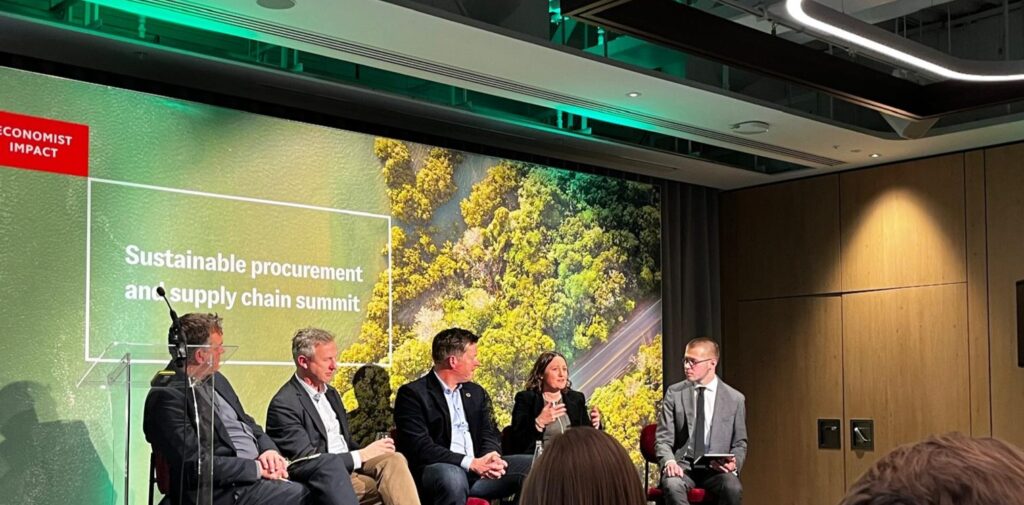
The global supply chain crisis will be a central theme at The Economist’s 10th Anniversary Sustainability Week, taking place on March 12th. Thorogood will be participating in a panel discussion titled:
“New Perspectives on Old Problems: Navigating Global Supply Disruptions and Building Resilience.”
The panel will explore critical challenges in global supply chains and present strategies for tackling them through:
- Collaborative sourcing models
- Ethical supply chain management
- Pre-competitive cooperation among industry leaders
Thorogood expresses her anticipation for the discussion:
“At Sustainability Week on 12th March, I will be speaking on the panel ‘New Perspectives on Old Problems: Navigating Global Supply Disruptions and Building Resilience,’ where we’ll explore the critical pinch points in global supply chains and how businesses can tackle them through collaboration, ethical sourcing, and shared responsibility. I look forward to the discussion and to highlighting how innovative models like Shared Impact can help businesses strengthen their supply chains while exercising responsibility to stakeholders, investors and consumers.”
The Future of Supply Chain Modeling
As businesses navigate the complex landscape of supply chain disruptions, collaboration rather than competition may hold the key to long-term sustainability. The Fairtrade Foundation’s Shared Impact model represents a forward-thinking approach that aligns business goals with global social and environmental priorities.
By embracing collective responsibility, companies can not only fortify their supply chains against future shocks but also uphold ethical standards that benefit producers, consumers, and the planet. As sustainability continues to dominate boardroom discussions, cooperative sourcing strategies may soon become an industry norm rather than an exception.