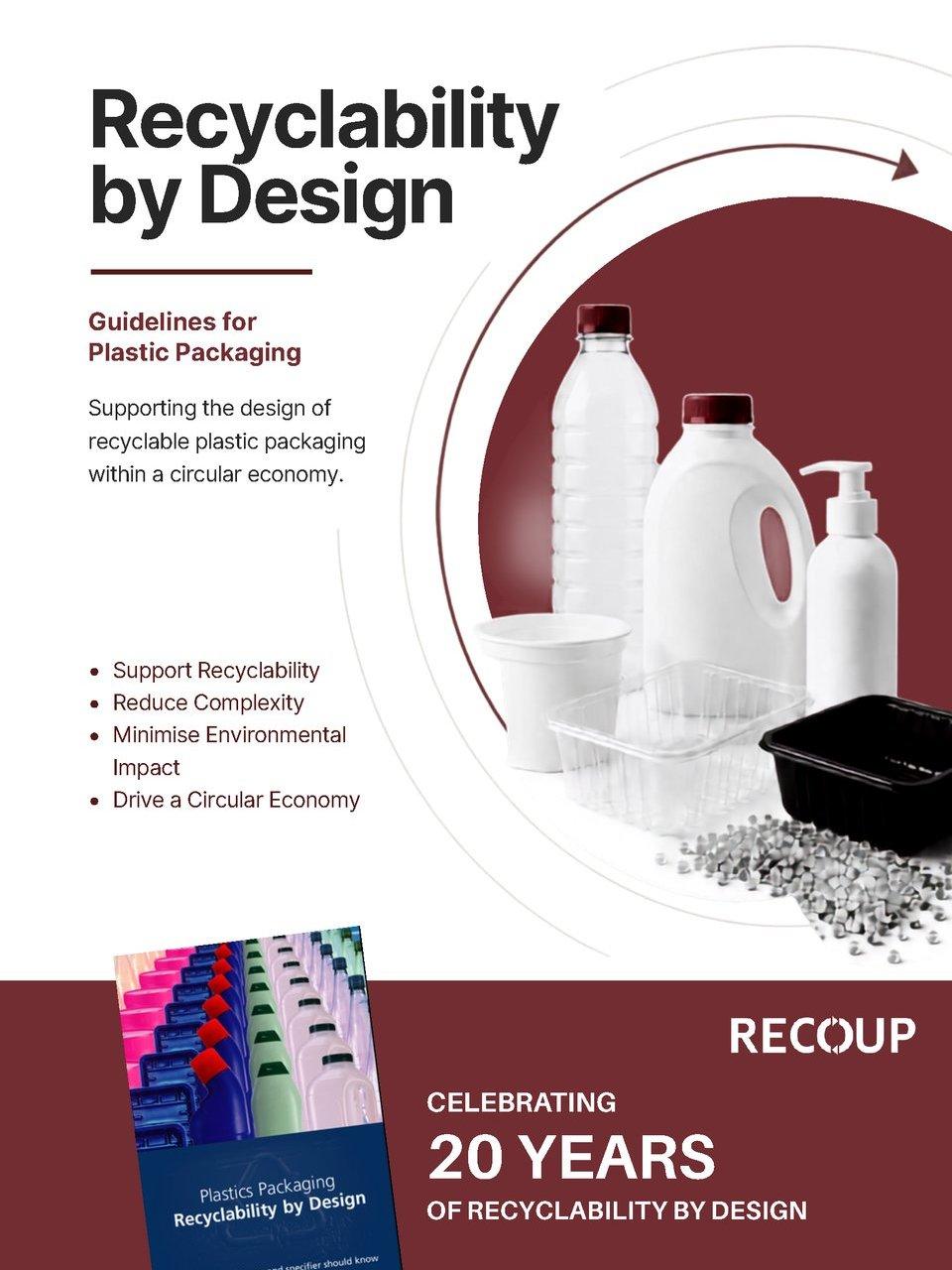
RECOUP has released Recyclability by Design 2026 v12.0, updating its flagship packaging guide as the organisation marks 20 years of work on plastic packaging recyclability. The free resource is intended for packaging designers, specifiers, brands and retailers seeking to improve recycling outcomes through material and component choices. It brings together practical recommendations for materials, colours, labels, closures and sleeves, while reflecting the UK’s changing policy environment. The latest edition also addresses the implementation of the Recyclability Assessment Methodology and future modulated packaging fees, placing recyclability considerations closer to core packaging decisions.
Two Decades Of Guidance
Recyclability by Design has become a longstanding reference point for businesses assessing how plastic packaging choices interact with collection and recycling systems. Its 2026 edition marks two decades since the guide began supporting the sector with evidence-led information on designing plastic packaging for recycling.
RECOUP describes the publication as a practical tool for organisations developing new formats as well as those reviewing established packaging portfolios. That dual purpose is particularly relevant where packaging components can add complexity to an otherwise recyclable format, from the selection of labels and sleeves to closures, colours and material combinations.
The guide’s central focus is to help users make decisions that work within today’s recycling infrastructure. Rather than treating recyclability as a final-stage consideration, it sets out recommendations intended to inform the initial design and specification process.
Practical Design Recommendations
The updated document covers the individual features that can influence a package’s route through the recycling system. Materials remain a central consideration, but the guidance also considers the role of colours, labels, closures, sleeves and other components that can affect sorting and processing.
This emphasis on the full packaging format offers a useful reminder that recyclable design depends on more than the main pack material alone. A container may be made from a recyclable polymer, yet still present avoidable challenges if the other design elements make it more difficult to identify, sort or process.
For product teams, the guide is positioned as a route to reducing unnecessary complexity while retaining a clear connection to existing recycling systems. It is designed to support informed decisions by the businesses responsible for specifying packaging, from brand owners and retailers to packaging professionals working on new product development.
Responding To Policy Change
The 2026 update arrives as packaging businesses prepare for a changing regulatory environment in the UK. RECOUP has included consideration of the Recyclability Assessment Methodology, known as RAM, alongside future modulated packaging fees.
That policy context makes accessible technical guidance increasingly valuable for organisations that need to understand the implications of packaging design choices. By pairing detailed design recommendations with current recycling infrastructure considerations, the publication provides a timely resource for teams reviewing both compliance readiness and material efficiency.
The guide was developed through consultation with experts across the plastics and recycling value chain. This collaborative basis reflects the fact that effective packaging design requires an understanding of how products move from manufacture and use through collection, sorting and recycling.
Supporting Circular Packaging Systems
RECOUP’s latest publication is centred on a straightforward proposition: packaging should be designed with its recovery route in mind. The guide seeks to support a circular economy by helping businesses maximise the recyclability of plastic packaging and avoid complexity that can compromise recycling performance.
For brands and retailers, this can provide a practical starting point for portfolio reviews, particularly where existing formats contain multiple components or where design decisions were made without a clear view of current recycling infrastructure. For designers and specifiers, it offers evidence-based recommendations that can be applied during the development of new formats.
The launch reinforces the value of clear, technically grounded resources in a sector where packaging outcomes depend on decisions made well before a product reaches consumers. Organisations can access the new edition through RECOUP’s Recyclability by Design 2026 page, where the guide is available as a free download.