Sustainability in the tile industry isn’t a marketing buzzword anymore — it’s a profit strategy. In the complex world of U.S. construction and interior design, the conversation has moved well beyond greenwashing and feel-good certifications. The distributors who are pulling ahead in 2026 are the ones who’ve realised that environmental responsibility and economic efficiency aren’t competing priorities. They’re the same thing.
INSCA, a leading European company headquartered in Spain, has been quietly proving this point across the American market. With a consolidated, comprehensive service model built specifically for the United States, the firm now partners with some of the most influential distributors in the country. These partners haven’t chosen European infrastructure because it looks good in a brochure. They’ve chosen it because European durability is their strongest financial asset for long-term cost reduction.
What exactly makes sustainable showroom design the smartest investment a modern distributor can make? Here are the six pillars that answer that question.
1. FSC-Certified Sustainable Materials — Where Credibility Begins
Everything starts with raw materials. It sounds obvious, but the reality is that most showroom fixtures are built from sources that wouldn’t survive a single sustainability audit. That’s a problem — and an increasingly expensive one.
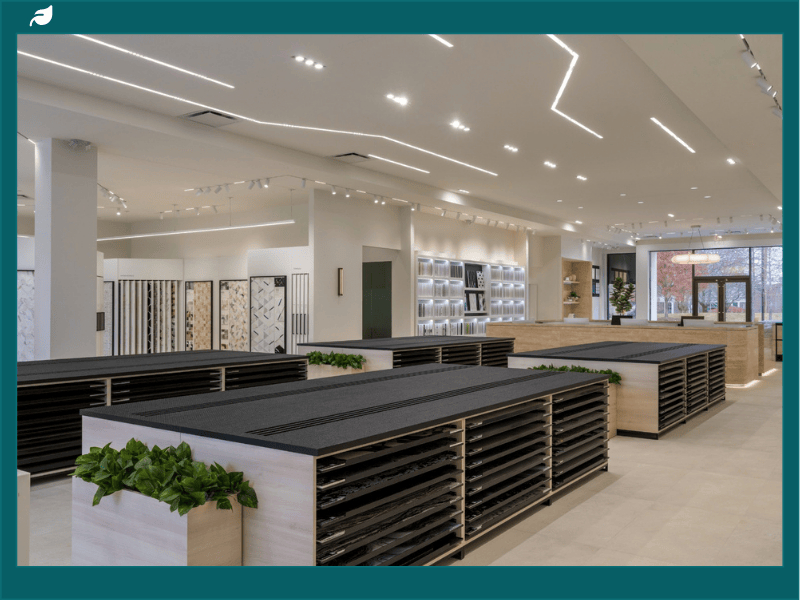
INSCA takes a fundamentally different approach. The firm prioritises FSC-certified wood, ensuring that its professional tile display systems originate from responsibly managed forests. Every component carries traceability that can withstand scrutiny.
Why does this matter commercially? Because architects and specifiers working on LEED or WELL-rated projects need certified suppliers. They aren’t just looking for nice tiles — they’re looking for partners whose entire supply chain supports their sustainability credentials. A distributor who can demonstrate FSC certification at the showroom infrastructure level immediately elevates their status. The showroom stops being a sales floor and becomes an ethical design hub — exactly the kind of environment that attracts high-value specification work.
2. Engineering for Decades — Not Just a Few Seasons
Here’s a question worth asking honestly: how often have you replaced showroom fixtures in the last ten years? For most American distributors, the answer is uncomfortable. Conventional systems degrade. Mechanisms jam. Finishes wear. And every replacement cycle means capital expenditure, downtime, and disruption.
Spanish-engineered systems are designed around a completely different philosophy — longevity measured in decades, not years. The mechanical precision, material quality, and structural integrity built into these systems means they withstand intensive daily commercial use without losing functionality or appearance.
The financial impact is significant. When you amortise an infrastructure investment over fifteen or twenty years instead of four or five, the cost-per-year drops dramatically. Recurring capital expenditures disappear. The total cost of ownership of the exhibition shrinks to a fraction of what conventional alternatives demand.
Put simply: buying once and buying well is always cheaper than buying repeatedly and settling for less.
3. Circular Modularity — Adapt Without Demolishing
The American tile market moves fast. Trends shift, new collections launch quarterly, and what sells in Miami may not resonate in Chicago. Distributors need showrooms that can keep pace — but traditional renovation approaches make that painfully expensive.
This is where modular, circular design principles change the equation entirely. INSCA’s systems allow distributors to update their inventory displays seamlessly, swapping out samples and reconfiguring tile display stand layouts without discarding the base framework. The structural bones of the showroom stay. Only the surface-level presentation changes.
The practical benefits are immediate. No demolition costs. No construction waste heading to landfill. No weeks of downtime while contractors tear things apart and rebuild. A distributor can respond to a market shift in days rather than months — and do so at a fraction of the cost.
In a market that punishes rigidity, this kind of adaptability isn’t a luxury. It’s a survival mechanism.
4. Maximising Space and Energy Efficiency — Every Square Foot Counts
Ask any distributor in New York, Los Angeles, or Dallas what their biggest overhead is, and the answer is almost always the same: rent. Commercial real estate in major American cities is brutally expensive, and every square foot that doesn’t contribute to revenue is a square foot eating into margins.
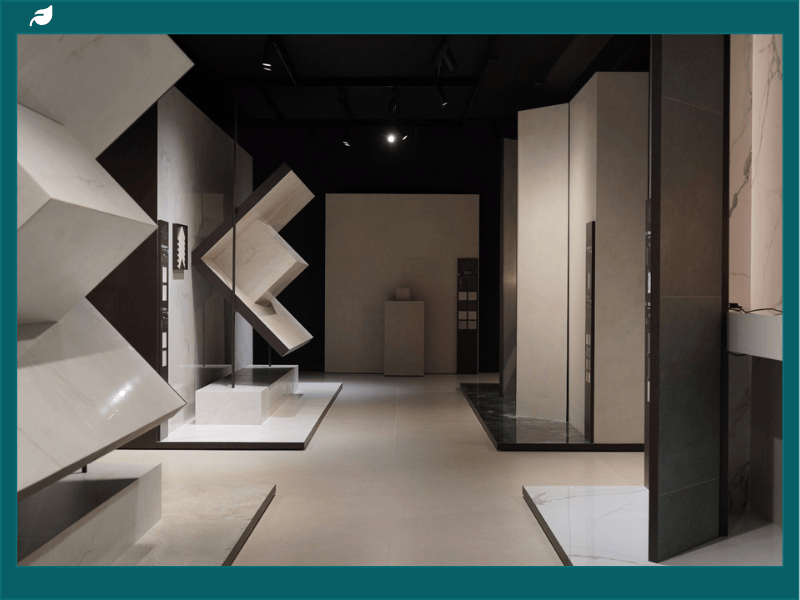
High-density engineering addresses this challenge head-on. Thoughtfully designed display systems allow an extensive catalogue to be showcased within a significantly reduced physical footprint. More products visible, less floor space consumed. The maths is straightforward and compelling.
But the benefits extend beyond rent savings. A smaller active showroom footprint also means reduced energy consumption — less lighting to power, less HVAC to run, lower utility bills month after month. In an era where energy costs continue to climb, this efficiency compounds over time into meaningful savings.
The smartest showrooms in America aren’t the biggest. They’re the most efficiently designed.
5. Social Sustainability and Ergonomics — Taking Care of the Team
Sustainability conversations tend to focus on materials and energy. But there’s a human dimension that’s equally important — and equally connected to the bottom line.
Showroom staff spend entire days pulling out samples, sliding panels, and physically handling heavy materials. Poorly designed systems make this work exhausting. Over time, that physical strain leads to fatigue, reduced productivity, and in worst cases, workplace injuries that carry real legal and financial consequences.
Smooth-glide mechanisms and ergonomically designed display systems change this dynamic completely. When presenting a sample requires minimal physical effort, the sales team stays fresher throughout the day. They can focus on what actually generates revenue — technical consultation, relationship building, and closing deals — instead of wrestling with stubborn fixtures.
There’s a talent angle here too. In a competitive labour market, an ergonomic, well-designed work environment is genuinely attractive to skilled salespeople. It becomes a retention tool. People want to work in spaces that respect their physical wellbeing, and the businesses that provide those spaces hold onto their best people longer.
6. European Innovation with Dedicated U.S. Service — The Best of Both Worlds
One of the historical hesitations American distributors have had about European suppliers is the service question. Beautiful products, certainly — but what happens when something needs adjusting, replacing, or scaling up? Is there someone in the same time zone who can help?
INSCA has addressed this directly by building a logistics and service model tailored specifically for the North American market. The result is a genuine best-of-both-worlds proposition: the vanguard of Spanish design innovation, backed by localised service that understands American timelines, expectations, and the particular demands of the luxury market.
For the distributor, this means access to infrastructure that represents the pinnacle of European craftsmanship, combined with the practical reassurance that projects will be executed with precision, on schedule, and with responsive support when needed.
That combination — innovation plus reliability — is remarkably rare. And it’s exactly why the partnership model works.

Conclusion: Sustainability as a Strategic Competitive Edge
Choosing sustainable, high-performance showroom design isn’t an environmental statement. It’s a business strategy built for long-term resilience in a market that’s getting more demanding every year.
American distributors who partner with a European leader committed to manufacturing excellence and responsible sourcing gain something their competitors simply cannot replicate overnight. They gain infrastructure that lasts decades, adapts effortlessly, reduces operating costs, protects their teams, and positions their showroom as a destination for the architects and specifiers who drive the most profitable projects.
They’re not buying displays. They’re investing in a high-performance sales environment where durability drives profitability — proving that exceptional design and environmental responsibility are two sides of the very same coin.