A local environmental campaigner from Penrith has been shortlisted for a European award recognising the impact of Strategic Lawsuits Against Public Participation (SLAPPs), drawing attention to the legal pressures faced by individuals raising environmental concerns.
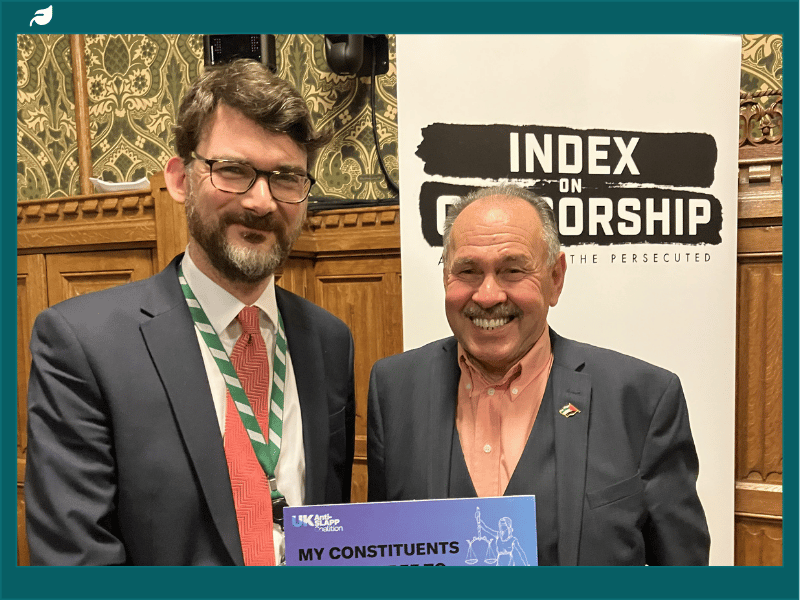
Jeff Thomson, founder of the resident-led group ‘Fresh Air for Penrith’, has been named a finalist for ‘The Green Gag Award’ at the 2026 European SLAPP Contest. The awards, organised by the Coalition Against SLAPPs in Europe (CASE), aim to highlight the use of legal action to silence public participation across the continent. Winners are set to be announced this week.
Thomson’s shortlisting follows a prolonged legal dispute linked to his campaigning activity in the town. In February 2023, he received a legal threat after launching a Facebook group to share information about persistent odour issues locally known as the “Penrith Pong”. The smell has been associated by campaigners with the Omega Proteins rendering plant operated by Leo Group Ltd, located on the western side of the town near the Lake District National Park.
The Facebook group, ‘Fresh Air for Penrith’, was created as a platform for residents to discuss and document the issue. Thomson has since faced legal threats alleging defamation and harassment in relation to posts shared through the group. Three years after the initial legal correspondence, the case remains ongoing.
SLAPPs are legal actions typically brought by corporations or individuals against critics, often framed as defamation or similar claims. Critics of such lawsuits argue that they are used not primarily to win cases, but to impose financial and psychological pressure on defendants, discouraging public scrutiny or protest.
Thomson’s case is one of several across Europe recognised by this year’s contest. Other shortlisted individuals include environmental campaigners from Italy who have also faced legal action linked to their work challenging corporate or institutional practices.
Speaking about his experience, Jeff Thomson said:
“No one should be targeted for speaking out in the public interest to help their neighbours and wider community. There needs to be greater awareness of the tactics used by big organisations to silence those who speak out. Being on the receiving end of abusive legal threats can make you forget that there are many others across the UK and internationally going through the same experience. Their chilling effect means so many cases never reach public light, but the European SLAPP Contest is an important reminder of how widespread this issue is and the impact it can have on people’s lives.”
Campaigners and legal experts have raised concerns about the broader implications of SLAPPs for environmental governance and public accountability. Local opposition to industrial activity, particularly where environmental or public health concerns are raised, often relies on community-led efforts. Legal challenges of this kind can create barriers to participation, particularly where individuals face high legal costs.
The UK has been identified by advocacy groups as a jurisdiction where SLAPPs have been used in a range of contexts, including against journalists, activists and community groups. While government proposals to address the issue have been discussed in recent years, campaigners argue that existing protections remain limited.
Nik Williams, co-chair of The UK Anti-SLAPP Coalition, said:
“The different categories highlighted in this year’s European SLAPP Contest reflect the wide-ranging impact of SLAPPs. Far from being a niche media issue impacting only journalists, the cases nominated show that anyone can be touched by abusive legal threats. The UK is a particular hotspot for SLAPPs, and the Government must do more to protect those holding powerful actors to account, including environmental and local campaigners like Jeff. Robust and universal anti-SLAPP legislation is urgently needed”.
The European SLAPP Contest forms part of wider efforts to raise awareness of the issue at both EU and national levels. The European Commission has taken steps in recent years to introduce measures aimed at protecting individuals from abusive litigation, particularly in cross-border cases. However, implementation varies between countries, and campaigners continue to call for stronger, more consistent legal safeguards.
For local communities, cases such as Thomson’s reflect the intersection of environmental concerns, industrial operations and access to justice. Odour complaints linked to rendering plants and similar facilities are not uncommon across the UK, often leading to tensions between residents and operators. These disputes can involve environmental regulation, planning oversight and corporate accountability, alongside questions of public participation.
Thomson’s nomination brings renewed attention to these dynamics, particularly in smaller communities where individuals may have limited resources to respond to legal challenges. The recognition by a European body also places the issue within a broader international context, where similar cases have been reported across multiple sectors.
As the outcome of the European SLAPP Contest is announced, campaigners are expected to continue pressing for legal reforms aimed at preventing the misuse of litigation. For those involved in environmental advocacy, the case highlights ongoing concerns about the balance between corporate rights and the ability of individuals to raise issues affecting their communities.