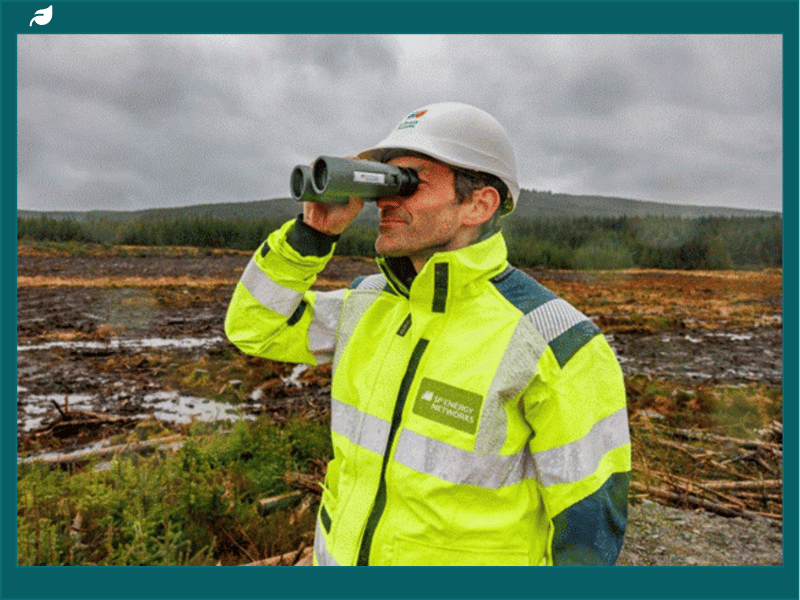
SP Energy Networks is redefining how electricity network operators approach environmental stewardship through a groundbreaking peatland restoration project in Scotland’s Dumfries and Galloway region. Their latest success story involves the Galloway Fisheries Trust and Forestry and Land Scotland in restoring 22.5 hectares of peatland around Loch Moan to improve the health of the River Cree. This project highlights how infrastructure investment can be integrated into nature positive development, covering an area roughly equivalent to 32 football pitches and delivering long-term environmental benefits for both communities and ecosystems. The initiative demonstrates the company’s commitment to achieving no net loss of biodiversity by 2028 and becoming nature positive by the end of the decade.
Revitalising Critical River Ecosystem
The restoration project focuses on rewetting previously forested peatland to allow water to flow more naturally into the River Cree, improving water quality and creating stronger conditions for wildlife. The river serves as a popular angling destination famed for its salmon and trout populations, whilst also providing habitat for one of only three remaining populations of sparling in Scotland, a rare species that depends on clean, healthy water to survive.
Healthy peatlands store significant amounts of carbon, which can be released into the atmosphere if the peatland becomes drained or damaged. The restoration returns waterlogged ‘anoxic’ conditions and reduces the potential for carbon emissions whilst simultaneously improving water quality and supporting local wildlife including black grouse, reptiles, amphibians and numerous other species that depend on rich, undisturbed natural habitats.
Strategic Partnership Approach
The collaborative effort between SP Energy Networks, Galloway Fisheries Trust, and Forestry and Land Scotland represents a model for effective partnership in environmental restoration. The site already demonstrates promising signs of recovery, with strong storage of sphagnum moss serving as a key indicator species for healthy peatland condition.
Gill Renwick, Sustainability Manager for SP Energy Networks, said:
“Our communities are at the heart of everything we do, and we have a clear strategy for how we will minimise our impact on nature, first, ensuring no net loss of biodiversity by 2028 and then becoming nature positive by the end of this decade. Projects like this – improving natural habitats – are key to how we will get there and it’s been great to work with Galloway Fisheries Trust and Forestry and Land Scotland to make this happen.”
Long Term Environmental Impact
The restoration work forms part of SP Energy Networks’ Action Plan for Nature, ensuring that network investment supports Scotland’s natural environment alongside powering homes and businesses. The project’s impact extends beyond immediate habitat improvement, with the restored peatland expected to play a vital role in strengthening the wider ecosystem for years to come.
Dr Ed Turner, Planning & Environment Manager at Forestry and Land Scotland, expressed:
“A huge thank you to SP Energy Networks for backing this work. Peatland restoration is an important part of FLS’ land management strategy, and in the right place, makes a long-term impact on carbon storage, water quality, and habitat provision. The partnership approach by SPEN and GFT at Loch Moan has resulted in a really successful project delivery mechanism that we hope to continue to build upon.”
Building On National Recognition
The restoration work contributes to Galloway Fisheries Trust’s wider ‘Flowing Forward: Restoring Galloway’s Rivers’ programme, which was selected by the Scottish Government as one of Scotland’s nine landscape-scale nature restoration exemplars. This recognition highlights how national ambitions for nature restoration are being delivered through practical local action.
Kacie Jess, Project Manager at Galloway Fisheries Trust, stated:
“The River Cree is a special place, and work like this helps it in the ways that matter: cleaner water running off the land, more stable conditions, and a healthier river for fish and other wildlife. It’s great to partner with an organisation that’s not just talking about being ‘nature positive’ but backing it with real support on the ground.”
Model For Future Infrastructure Development
The Loch Moan project establishes a blueprint for how energy infrastructure operators can integrate environmental restoration into their operational strategies. The initiative demonstrates that network development and nature conservation can work in tandem to deliver positive outcomes for both electricity supply and ecosystem health.
Gill Renwick reflected:
“It’s wonderful to see our efforts are already having an impact. By bringing this area back to life, we’re making a positive and long-lasting impact that will continue to ensure we provide a modern, reliable and resilient electricity network that works for both people and planet.”
The site’s recovery indicates that the land will continue to become greener, richer and more alive with every passing season, establishing a template for future nature positive infrastructure projects across Scotland’s energy sector.