A Landmark for Northern England’s Green Future
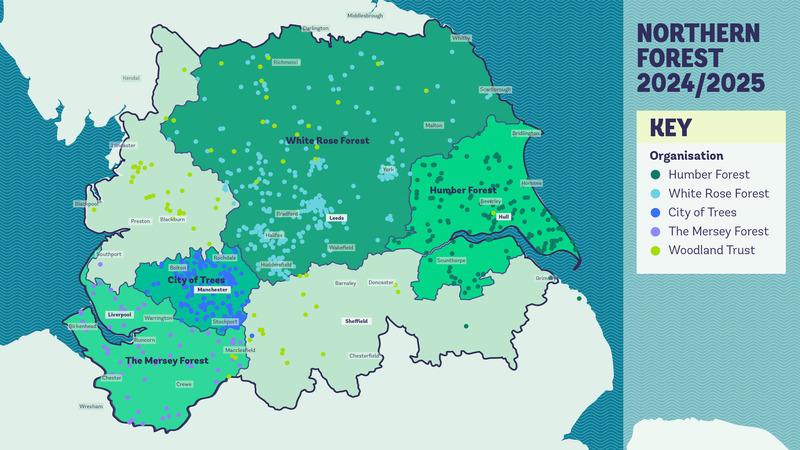
More than 10 million trees have now taken root across the North of England, a milestone for the Northern Forest project launched in 2018. Spanning from Liverpool to Hull, the collaborative initiative is reimagining landscapes across the region, integrating urban greening, rural restoration, and climate resilience into one ambitious programme.
At its heart, the Northern Forest is a strategic partnership between the Woodland Trust, The Mersey Forest, Manchester City of Trees, the White Rose Forest, Humber Forest, and the Community Forest Trust. Together, they are working towards a long-term goal of planting at least 50 million trees, in what may be one of the UK’s most transformative environmental projects to date.
Economic and Ecological Impact
According to an impact report covering 2018–2023, the Northern Forest is already delivering measurable returns. Every year, the new woodland generates £43 million in economic uplift for the North. It has sequestered an additional 19,000 tonnes of carbon annually and expanded access to woodland for 300,000 households, including 87,500 in some of the country’s most deprived communities.
These benefits are more than statistics. They represent a shift in how trees are integrated into infrastructure and daily life.
“Delivering woodland at this scale involves working with a whole range of partners, funders, community groups, businesses, contractors, thousands of volunteers and an incredible amount of sweat and graft,” said Nick Sellwood, Northern Forest Programme Director for the Woodland Trust.
“But it is so rewarding to think of all the families and communities who now live just a short walk from a woodland as a result… They will be able to enjoy all the benefits of trees, from cleaner air to improved mental health, and from flooding reduction to the sound of birdsong.”
Tree Equity and Climate Resilience
Tree equity — the principle of ensuring that all communities, regardless of income or geography, have access to green space — has become a core tenet of the Northern Forest’s work. When the programme began, tree cover in the region sat at just 7.6%, well below the national average of 13%.
With more than 2.2 million trees planted in the 2024–2025 season alone, the programme is rapidly closing this gap. The mix of saplings, standard trees, and hedgerows planted on farms also reflects a broader effort to integrate ecological function into land use.
Paul Nolan, Director of The Mersey Forest and Chair of England’s Community Forests, underscored the role of urban and community forestry in climate adaptation.
“Our woodlands and greenspaces are essential to help us adapt to changing climates, to help us live happy, healthy lives and provide neighbourhoods that we’re proud to call our home,” he said.
Government Backing and Green Finance
The Northern Forest has been bolstered by central government investment, particularly through Defra’s Nature for Climate Fund. Programmes such as Grow Back Greener and Trees for Climate have helped scale up delivery.
Nature Minister Mary Creagh noted the wider momentum: “With this Government, tree planting rates are now at the highest level in over 20 years… We are investing over £800 million to plant trees across the country as part of our Plan for Change.”
Sellwood added that while government support remains vital, there is also a growing push to involve corporate partners and expand green finance models to sustain long-term goals.
Case Studies in Rewilding and Resilience
The Northern Forest’s scope extends from city fire stations to ancient moorlands. In Greater Manchester, City of Trees partnered with the fire service to plant trees at eight fire stations, using teams recruited through a green jobs initiative. In Liverpool, more than 10 hectares of new woodland have been introduced across city greenspaces, with attention to biodiversity, community engagement, and climate adaptation.
In Hull’s Oak Road Playing Fields, flood-prone land has been planted with wet woodland species to create both shade and natural water management. Meanwhile, in the South Pennines, 65,000 trees were planted at March Haigh on protected moorland, a project involving the National Trust, Yorkshire Water, and the White Rose Forest.
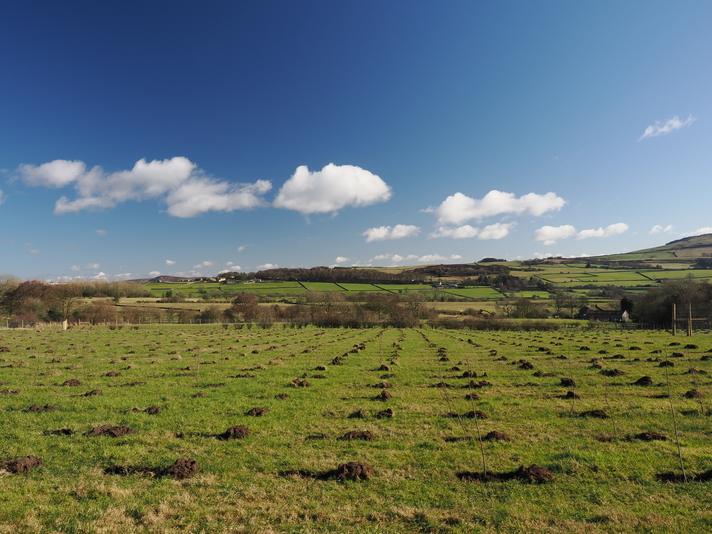
One of the most ambitious recent undertakings has been the transformation of Hayhills Farm in West Yorkshire. Once nature-poor farmland, the 98-acre site is now becoming a high-canopy woodland. More than 1,600 volunteers planted 38,000 trees, linking the new woodland to four other habitats and forming a larger ecological corridor.
Looking Ahead: 50 Million in Sight
While hitting the 10 million mark is cause for celebration, it is only a fifth of the final target. The next phase will require continued collaboration between local authorities, landowners, communities, and private investors. Yet the vision is clear: to create a thriving Northern Forest that connects people to nature, boosts biodiversity, and builds climate resilience into the physical and social fabric of the North.
“It’s quite breathtaking,” said Sellwood. “Just imagine the number of species of fungi, lichens, insects, birds and other wildlife that will thrive because of these 10 million trees being planted… Work doesn’t stop here though. We will keep striving towards our goal of at least 50 million new trees.”
As the project continues to scale, its success will likely serve as a blueprint for reforestation and nature-based solutions across the UK and beyond.