Who Gives A Crap has built a growing presence in the household essentials market by combining product design with a defined social mission. Founded in Australia in 2012, the company set out to address the global lack of access to clean water and sanitation by committing 50% of its profits to support water, sanitation and hygiene services worldwide.
That commitment remains central to the business. More than a decade after launch, the company has raised over £11 million globally, while expanding its footprint across international markets including the UK. Its approach reflects a shift in how everyday consumer goods can be positioned, linking routine purchases to wider environmental and social outcomes.
The business entered the UK in 2016 as a direct-to-consumer subscription service, at a time when online purchasing of household essentials was still uncommon. Subscriptions were largely associated with media and personal care, not products such as toilet paper. Early traction suggested that the category had been slow to change rather than resistant to it.
Since then, Who Gives A Crap has expanded into a multi-channel model. Alongside its subscription offering, the company has established retail partnerships with major supermarkets including Waitrose and Ocado, and more recently secured a national listing with Tesco. This shift reflects an effort to increase accessibility while maintaining its original purpose-led positioning.
The company’s growth has also extended into the business-to-business market. It now supplies more than 1,800 UK organisations across offices, hospitality venues, hotels and gyms. In these settings, procurement decisions around everyday items are increasingly linked to corporate values and environmental commitments.
For many businesses, switching suppliers for products such as toilet paper offers a straightforward way to reduce plastic use and align with stated sustainability goals. The appeal lies in minimal operational disruption combined with clear, traceable standards. This has contributed to demand for alternatives that combine functional performance with verified environmental credentials.
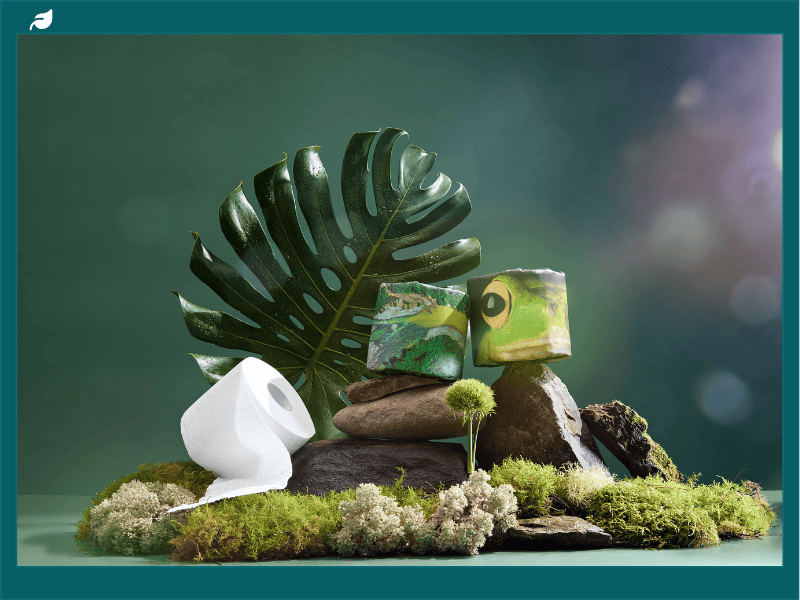
Product design plays a visible role in this strategy. Who Gives A Crap’s packaging uses bold colours and patterns, positioning the product as something to be displayed rather than stored out of sight. This contrasts with traditional category norms and supports a broader effort to make everyday consumption more intentional.
This approach is reflected in the company’s limited edition releases, which combine design with messaging. The Earth Edition, for example, features packaging that highlights natural environments and is intended to draw attention to the environmental pressures affecting them. The product uses bamboo as a raw material, aligning with the company’s focus on renewable inputs.
Seasonal and themed releases have also contributed to customer engagement. Products such as “Gnome on the Throne,” the purpose-led “Dream Edition,” and the Christmas “Sweet Edition” have been introduced as part of a wider strategy to attract new customers and reinforce brand identity. The Sweet Edition delivered 47% incremental sales to the category, with 35% of purchases coming from shoppers new to the aisle in the previous six months.
Alongside branding, the company maintains a set of environmental and sourcing standards across its product range. It is certified as a B Corp, indicating that it meets defined benchmarks for social and environmental performance. Its toilet paper products are made from either 100% recycled paper or sustainably sourced bamboo, while its wider range includes kitchen roll, tissues, bin bags and compostable food waste bags.
The business also states that its shipping is carbon neutral and that it operates in nearly 40 countries. FSC certification supports its sourcing claims, providing assurance around responsible forest management. As scrutiny of environmental claims increases, such certifications play a role in supporting credibility with both consumers and commercial buyers.
The donation model remains a defining feature of the company’s structure. In the 2025 financial year alone, £1.27 million was distributed to partner organisations, contributing to the total of over £11 million donated to date. These funds support a range of organisations working in sanitation and water access.
Partners include Fresh Life, Water For People and WaterAid Australia. Fresh Life operates in Kenya, providing sanitation services in urban areas where traditional sewer infrastructure is limited. The organisation runs nearly 9,000 container-based toilets, supporting more than 309,000 people and addressing both public health and environmental challenges.
In parallel, Who Gives A Crap has begun to support market-based approaches within the sanitation sector. This includes investment in methane-avoidance sanitation carbon credits, where waste is processed into fertiliser and animal feed. The model links emissions reduction with resource recovery, reflecting a broader shift towards integrated solutions.
This combination of philanthropy and investment points to a wider change in how companies engage with social impact. Rather than relying solely on donations, there is an increasing focus on supporting systems that can scale and sustain themselves over time.
Anna Dominey, UK General Manager at Who Gives A Crap, said: “Our ambition is to make sustainable household essentials the norm, not the niche. As we expand our retail footprint and strengthen our subscription offering, we’re focused on making lower-impact choices easier and more accessible for more people – while continuing to grow the positive impact we can have globally.”
The company’s trajectory reflects a broader trend in consumer goods, where differentiation is increasingly tied to purpose as well as price and convenience. In a category defined by routine purchasing, changes in product design, distribution and messaging have created space for new entrants.
At the same time, the scale of the underlying issue remains significant. An estimated 3.5 billion people worldwide still lack access to safe sanitation. Efforts to address this gap continue to require both funding and new delivery models.
Within this context, Who Gives A Crap’s model links everyday consumption with global infrastructure challenges. Its continued growth suggests that even low-interest product categories can play a role in wider sustainability and development efforts when paired with clear commitments and accessible products.