Introduction to the Great Barrier Reef
Roughly the size of Japan, visible from space, and older than most of human civilization: the Great Barrier Reef is not a place that needs dressing up. The numbers do the work. Stretching more than 2,300 kilometres along the northeast coast of Queensland, the Great Barrier Reef is the world’s largest coral reef system, a UNESCO World Heritage site, and one of the most biologically complex ecosystems on the planet. Australian Institute of Marine Science (AIMS) reports that hard coral cover experienced its largest annual decline in two of the three monitored regions since AIMS began monitoring 39 years ago, dropping by a quarter in the northern region (from 39.8% to 30%) and almost one-third in the southern region (from 38.9% to 26.9%) following the 2024 mass bleaching event. And right now, it needs more attention than it’s getting.
This is not just a postcard destination. The reef is a living, breathing machine that drives marine biodiversity, filters water, shelters coastlines, and supports entire economies. Understanding it, visiting it responsibly, and fighting for it matters well beyond Australia’s borders.
The Unique Ecosystem of the Reef
Stand at the edge of a reef pontoon off Cairns and look down. What you see in those first few metres barely hints at what lies beneath. The Great Barrier Reef marine park spans the northeast coast and contains approximately 600 types of coral, more than 1,500 species of fish, and over 30 species of whales and dolphins. That is not a typo.
Thirty species of cetaceans share this one system.
The reef runs on relationships. Corals feed on nutrients carried in by Pacific Ocean currents. Four hundred types of sponges filter the water column, keeping it clear enough for coral to photosynthesize and grow. Mollusks, sea turtles, dolphins, and seabirds layer on top of that foundation, each species occupying a role that took millions of years to evolve.
The biodiversity here is genuinely staggering. The barrier reef marine park is home to species that exist nowhere else on Earth. That alone makes every bleaching event, every temperature spike, every runoff plume a global loss rather than a local one. Conservation science uses this reef as a living reference point precisely because it is still, despite everything, the most intact large coral system in the world.
What makes the management challenge so difficult is the system’s sheer scale. The Great Barrier Reef marine park covers 344,400 square kilometres of ocean. Managing that area means managing fishing fleets, tourism operators, water quality from agricultural runoff hundreds of kilometres inland, global carbon emissions, and the day-to-day behaviour of millions of visitors. Every one of those pressures touches the same fragile coral polyps.
Importance of the Reef to Global Biodiversity
Here’s the thing that does not get said often enough: more than a quarter of all marine species spend some part of their life cycle in or around coral reefs. The Great Barrier Reef, as the largest coral reef system on the planet, carries a disproportionate share of that load. Strip it away and the ripple effect runs through ocean food chains that feed hundreds of millions of people worldwide.
The reef’s role in global biodiversity is not symbolic. It is structural. Species found here support genetic diversity that marine scientists are only beginning to map. Evolutionary biology, disease resistance, climate adaptation: researchers working on all of these problems use the barrier reef marine environment as their primary data source.
Beyond the science, the reef delivers what economists call ecosystem services. Things nature does for free that would cost billions to replicate. Carbon dioxide absorption. Shoreline protection from storm surge.
Nutrient cycling that sustains commercial fisheries across an enormous stretch of the Australian coast. Coastal communities in Queensland rely on these services even when they never set foot in the water.
The threat picture is not abstract either. Climate shifts, agricultural runoff, illegal fishing, and anchor damage all chip away at reef health simultaneously. Addressing any single threat without the others gets you only so far. That is why management of this world heritage site requires coordinated action from local fishers, national policymakers, international climate negotiators, and millions of individual visitors making small daily choices.
The species diversity of the reef depends on all of them. The world heritage listing itself, granted in 1981, was meant to trigger exactly that kind of coordinated global responsibility, and the pressure it places on Australian federal government policy has been one of the reef’s most important protections.
Exploring the Marine Wonders
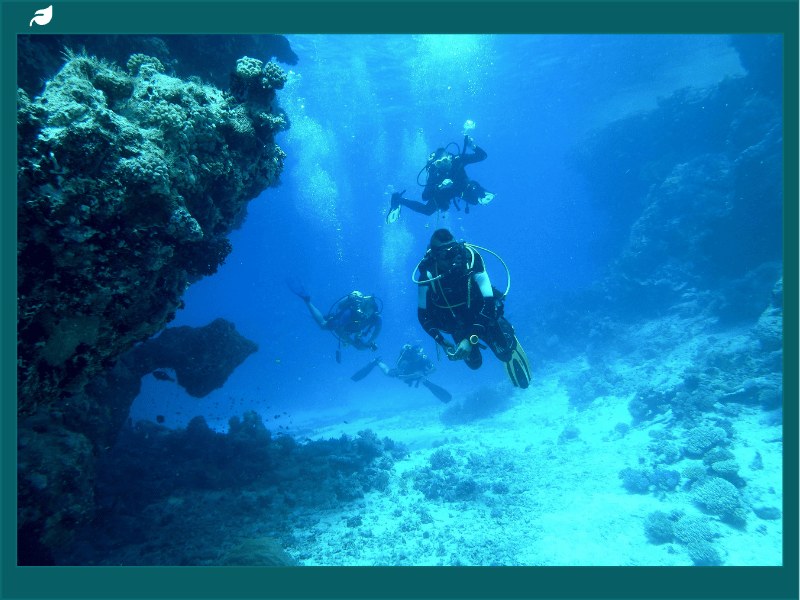
You do not need to be a certified diver to feel the reef get under your skin. A snorkel and a mask is enough. But whether you are three metres down or thirty, the Great Barrier Reef marine park delivers an experience that resets your sense of scale and colour. This is one of those rare places where the reality beats the photographs.
Top Spots for Diving and Snorkeling
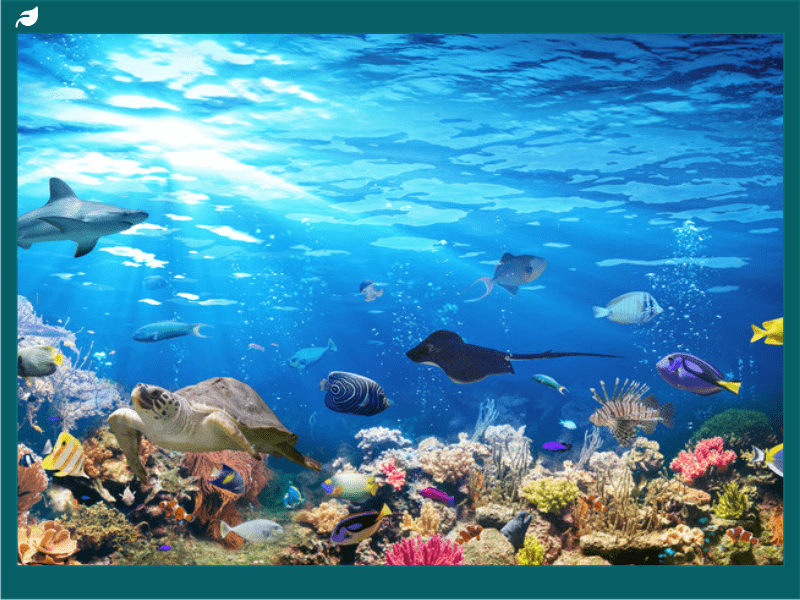
The Outer Reef is where serious divers want to be. Sites like Osprey Reef and the Ribbon Reefs sit in waters so clear that visibility can stretch beyond 30 metres on a good day. You will swim through schools of tropical fish, watch reef sharks move through the blue with zero urgency, and, if you time it right, drift alongside manta rays the width of a small car. The coral formations out here are architectural: massive bommies rising from the sand, walls dropping away into darkness, gardens of staghorn coral spreading across the floor.
Not every great spot requires deep water, though. The Low Isles, a short boat ride from Port Douglas, are ideal for families and first-time snorkelers. The shallows are calm and clear, the coral is healthy, and giant clams sit on the sand floor like something from a children’s illustration. Clownfish dart in and out of anemones.
The marine park authority has kept this area well-protected, and it shows in the reef health. The Low Isles are also a reminder that the reef system encompasses not just submerged coral gardens but vegetated coral cay islands, sand islands, and mangrove islands scattered along more than 2,300 kilometres of coast, each one a distinct habitat supporting its own community of species.
Agincourt Reef sits further out on the ribbon of reef that runs parallel to the coast and offers both divers and snorkelers something worth the journey. Visibility hits 30 metres or more regularly, and the coral bommies here are covered in a diversity of coral species that makes every turn worth stopping for. More than 1,500 fish species swim through this system, and on any given dive you will encounter a fraction of them, which is enough to leave you wanting more. Every corner of the barrier reef, from close to the coast to the deep outer edge, has something different to offer, and that variety is exactly why the Great Barrier Reef keeps drawing people back year after year.
The Whitsunday Islands sit roughly midway along the reef system and deserve their own mention. These 74 continental islands, fringed by coral and surrounded by marine park waters, give visitors a base for exploring reef sites that range from sheltered bays to exposed outer reef walls. The combination of island landscapes above the waterline and reef ecosystems below it makes the Whitsundays one of the most complete reef experiences available anywhere in the marine park. Sailing between the islands and dropping anchor in a protected bay, then snorkeling straight off the back of the boat, is the kind of access that makes the reef feel genuinely personal rather than just spectacular.
What to Expect Underwater: Colors and Creatures
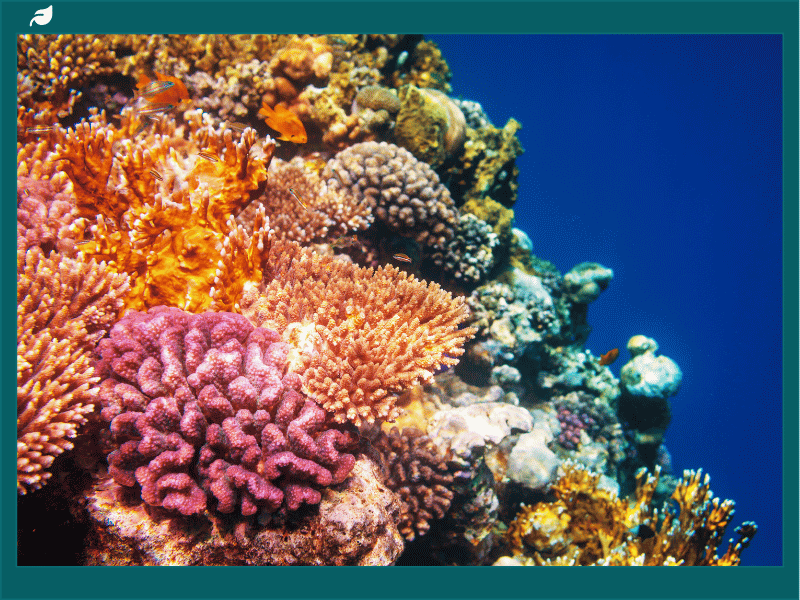
Nothing quite prepares you for the colour. The first time you put your face in the water over a healthy coral garden, you genuinely stop breathing for a second. Purple sea fans. Neon parrotfish.
The deep orange of a clown triggerfish. The 600 coral species in this system range across a spectrum that starts at cream and runs through vivid reds, yellows, and electric blues. The corals are not decoration: they are architecture, habitat, and food source all at once.
The fish respond to that architecture. Parrotfish graze the coral surface, grinding it into the white sand that gives reef beaches their colour. Angelfish move through gaps between coral heads with the precision of something that knows exactly where it is going. Reef sharks cruise the mid-water with no particular interest in you.
Dolphins occasionally follow dive boats in, curious and fast.
Look more closely and the story gets even better. Sponges, all 400 species of them in this system, filter the surrounding water and keep it clean enough to support coral photosynthesis. Nudibranchs, which are tiny sea slugs, crawl along the sand in colours that seem computationally generated. Clownfish press themselves into the stinging tentacles of anemones that would paralyze anything else, a relationship so tightly evolved it looks like a magic trick.
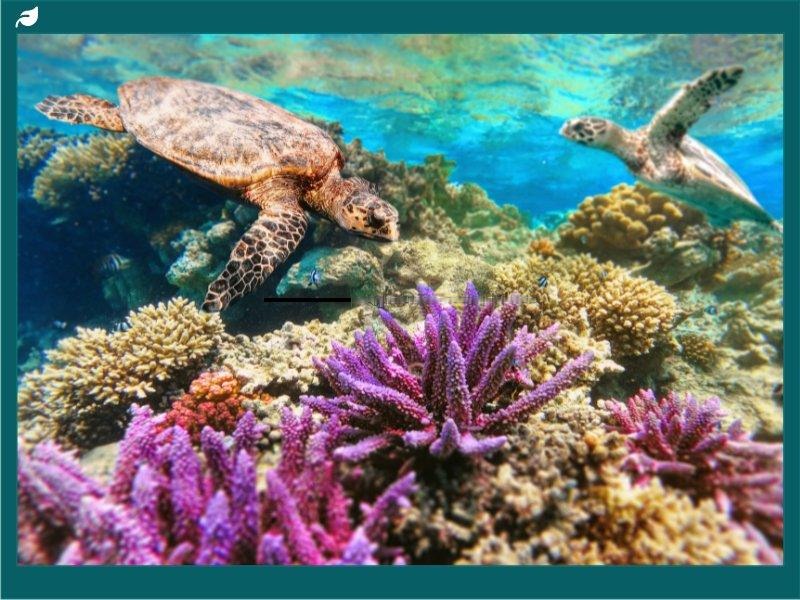
Sea turtles cruise overhead, completely unbothered, following routes they have used their whole lives.
This level of marine diversity is not accidental. It is the result of millions of years of evolution in a stable, nutrient-rich environment, and it is maintained right now by rigorous management of the barrier reef marine park. The moment that management lapses, or the moment water temperatures spike for too long, the colour drains out. Coral bleaching is not a metaphor.
It is the reef going white because the symbiotic algae that give coral its colour have been expelled under heat stress. Reefs can recover from a single bleaching event if they get time. Repeated events, with no recovery window, are a different problem entirely.
Conservation Efforts in the Park
The Role of Marine Park Management
The Great Barrier Reef Marine Park Authority, known as GBRMPA, manages one of the most complex marine conservation challenges in the world. The marine park covers 344,400 square kilometres and sits adjacent to an intensively farmed coastline, a major shipping lane, and one of Australia’s biggest tourism industries. Balancing all of that requires a management framework that is constantly adapting.
At the centre of that framework is continuous reef monitoring. Regular snapshot surveys give managers real-time data on coral cover, coral bleaching extent, fish population dynamics, and water quality. Without that data, management decisions would be guesswork. With it, the Great Barrier Reef marine park authority can target resources where they are needed most: deploying reef rehabilitation teams to a bleached section, tightening fishing restrictions in a depleted zone, or flagging a stretch of reef that is recovering faster than expected.
Management also means enforcement. The barrier reef marine park has strict rules around anchoring on live coral, trawling in protected zones, and commercial fishing in high-sensitivity areas. Permits are required for many commercial activities, and operators who break the rules lose them. That system only works if it is actively policed, which is a real challenge across hundreds of thousands of square kilometres of open ocean.
The world heritage listing adds an international accountability layer to domestic management. When UNESCO expresses concern about reef health, as it has done in formal correspondence with the Australian government, it creates political pressure that domestic advocacy alone cannot always generate. The world heritage framework obligates Australia to report on the reef’s condition and to demonstrate that management is keeping pace with threats. That reporting obligation has, on multiple occasions, pushed reef management funding and policy commitments that might otherwise have been delayed or weakened.
Heritage protection is not just a badge: it is leverage.
The most progressive element of current marine park management is the integration of Indigenous ecological knowledge. Traditional owners of sea country along the Queensland coast have been reading these waters for tens of thousands of years. Their observations of seasonal changes, species movements, and reef behaviour complement satellite data and scientific surveys in ways that neither could achieve alone. Management strategies that incorporate this knowledge are proving more effective and more culturally grounded than those that ignore it.
Reef rehabilitation sits at the sharp end of conservation. Coral planting programs, where fragments of heat-tolerant coral are grown in nurseries and transplanted to damaged sections of the reef, are scaling up rapidly. These are not cheap or easy operations, but they are producing measurable results in targeted areas. The management challenge now is taking those results from pilot scale to something that can realistically address damage across a reef the size of the Great Barrier Reef.
Initiatives to Protect Coral Ecosystems
The Reef Guardian Program is one of the most effective community engagement initiatives running anywhere in the world’s marine conservation space. It brings schools, local businesses, and fishing communities into active reef protection roles, shifting the conservation dynamic from top-down regulation to bottom-up stewardship. Schools in the program run water quality monitoring. Farmers in the catchment area work to reduce fertilizer runoff.
At the technological end, coral nurseries and artificial reef structures are providing new habitat for species displaced by bleaching events. Researchers are identifying coral genotypes that show greater tolerance to elevated water temperatures and breeding those into nursery stock for transplantation. This is selective breeding applied to conservation, and while it is not a silver bullet, it is expanding the genetic diversity of reef corals in ways that may improve resilience across the whole system.
The International Coral Reef Initiative connects the Great Barrier Reef’s management experience to reef systems in the Pacific, Indian Ocean, and Caribbean. Sharing monitoring data, rehabilitation techniques, and policy frameworks across borders makes every national program stronger. Australia’s scale of experience in marine park management gives it an outsized voice in those global conversations, which is both an opportunity and a responsibility.
Reducing carbon emissions is the thread that runs through every other initiative. Coral bleaching is a temperature problem. Temperature is a carbon problem. Without meaningful progress on emissions, all the coral nurseries and monitoring programs in the world are working against an accelerating tide.
Marine park management can protect reefs from direct human damage, but it cannot lower ocean temperatures on its own. That requires policy change at a national and international level, and the pace of that change remains frustratingly slow relative to what the reef actually needs.
Cultural and Economic Significance
The Connection Between Aboriginal Culture and the Reef
Indigenous Australians have maintained a relationship with the sea country that includes the Great Barrier Reef for tens of thousands of years. This is not heritage in the museum sense. It is a living, active relationship expressed through ceremony, story, sustainable practice, and custodianship that has outlasted every other form of management the reef has ever seen.
For Aboriginal and Torres Strait Islander peoples, the reef is not a resource to be managed from outside. It is ancestral country, inhabited by beings that appear in oral histories, rock art, and ceremony. The marine species of the reef are embedded in kinship systems that connect people to place in ways that Western ecological frameworks are only beginning to appreciate. Sea turtles, dugongs, fish, and coral formations all carry cultural meaning that extends far beyond their biological function.
The practical knowledge that comes with this relationship is extraordinary. Indigenous communities along the Queensland coast have tracked seasonal fish movements, tidal patterns, and reef health across generations of observation. That accumulated knowledge gives marine park management something no satellite survey can fully replicate: a long baseline of ecological memory. What did this section of the reef look like fifty years ago?
A hundred? Traditional custodians know. Their input into world heritage site management is not a courtesy: it is a genuine scientific asset.
Custodianship also means responsibility. Many Indigenous communities along the coast are deeply engaged in conservation activities, running their own monitoring programs, advocating for stronger reef protection policies, and working with the marine park authority to integrate sea country management into formal governance structures. These partnerships are producing some of the most innovative management approaches in the Australian marine conservation space, combining traditional ecological knowledge with contemporary science in ways that strengthen both. The reef’s world heritage status makes these contributions visible at an international level, which matters for the communities involved and for the quality of management the reef receives.
The cultural heritage of the reef is inseparable from its ecological heritage. When a bleaching event damages a coral formation that appears in a Dreaming story, the loss is not only biological. It is a loss of living cultural infrastructure, a severing of connection between people and place that has persisted for generations. Recognising that dimension of reef heritage changes the moral weight of management decisions.
Economic Impact on Tourism and Local Communities
Tourism tied to the Great Barrier Reef generates around 6.4 billion dollars annually for the Australian economy. More than 64,000 jobs depend directly or indirectly on the reef’s health and accessibility. Those are not abstract figures: they represent dive instructors in Cairns, boat crews out of Port Douglas, accommodation operators in the Whitsunday Islands, and the marine biologists who guide visitors through what they are seeing. The reef’s economic value is inseparable from its ecological value, because without a healthy reef there is no tourism product worth selling. Great Barrier Reef Foundation reports that a 2025 report estimates the current economic, social, and icon asset value of the Great Barrier Reef has risen to $95 billion, underscoring just how much is at stake as reef health continues to come under pressure.
The numbers behind reef tourism are striking. Roughly two million people visit the reef each year. Day trips, liveaboard dive expeditions, scenic flights, glass-bottomed boat tours: the range of activities means the reef serves an enormously varied market, from backpackers spending fifty dollars on a snorkel trip to high-end travellers booking private charters for thousands. That breadth of access is both a strength and a management challenge, because the reef cannot absorb unlimited visitor pressure without consequences.
Marine park management responds to that pressure through zoning, permit systems, and carrying capacity limits. Not every section of the reef is open to every type of activity. High-use tourism zones are separated from scientific reference areas and no-take conservation zones. Operators working in sensitive areas need specific permits and must demonstrate compliance with reef-safe practices to keep them.
Local communities along the Queensland coast are acutely aware of how much they depend on the reef staying healthy. That awareness drives grassroots conservation efforts that complement the formal marine park management framework. Community-based water quality monitoring, reef clean-up activities, and local advocacy campaigns all reflect an understanding that the reef’s economic future and its ecological future are the same thing. Sustainable tourism is not just an ethical position out here: it is a financial survival strategy.
Planning Your Visit to the Great Barrier Park
A trip to the Great Barrier Reef rewards preparation. The reef is extraordinary, but the experience of being there, the depth of it, the meaning of it, depends heavily on the choices you make before you even board a plane. Getting those choices right is good for you and essential for the reef.
Recommendations for Sustainable Travel
Start with your operator. The marine park authority runs an eco-certification program for tourism operators, and choosing a certified operator is the single most effective thing you can do to ensure your visit does minimal harm. Certified operators follow strict guidelines on anchoring, waste management, reef interaction, and guest education. Many of them run programmes that actively contribute to reef monitoring and conservation activities, which means your tourist dollars are doing more than just funding a boat trip.
No chasing marine species for a photo. These rules exist because the cumulative impact of millions of visitors doing small amounts of careless damage adds up to something significant. Your individual choices matter more here than almost anywhere else you will visit.
Coral bleaching is a visible reality in parts of the reef right now, and a good guide will explain what you are seeing rather than steering you away from it. Understanding the threat makes the experience richer, not worse, and it turns visitors into advocates rather than passive consumers. Ask your guide about the reef health in the specific area you are visiting. Ask about the conservation activities they support.
Ask how their operation handles waste and anchoring. Good operators will have good answers.
Beach clean-ups and citizen science programmes run throughout the year in reef-adjacent communities along the coast. If you have extra time, joining one of these activities is a way to give something back to the world heritage site that will define your trip. Marine park management benefits from every additional pair of eyes on reef health, and citizen monitoring programmes feed real data into the management system. Some programmes run from the coral cay islands and sand islands within the reef itself, which gives participants a perspective on reef heritage that a day boat trip simply cannot match.
If you are travelling with children, the educational value of a reef visit is almost impossible to overstate. The reef is a living lesson in species diversity, ecological interdependence, the consequences of climate change, and the possibility of conservation at scale. A child who snorkels on a healthy section of the Great Barrier Reef and then learns about coral bleaching has a concrete reference point for abstract environmental issues that will stay with them for life. The continental shelf that the reef sits on is also a geography lesson in deep time, because the structure you are visiting took 20,000 years to build to its current form.
Plan your timing. The best visibility for diving and snorkeling generally falls between June and October, when the dry season keeps rainfall and runoff low and the water temperature sits in a comfortable range. Stinger season runs roughly from November to May in the northern sections, so if you are snorkeling without a stinger suit, check local conditions before you go. Water temperature affects coral bleaching risk too: the mass bleaching events of 2016, 2017, 2020, and 2022 all peaked in the southern summer, when ocean temperatures hit their annual high.
And when you leave, keep going. The Great Barrier Reef’s future is not settled by what happens on the reef itself. It is settled by decisions made in parliament buildings, corporate boardrooms, and individual households about carbon emissions, land management, and the political will to fund serious conservation at scale. Visiting the reef and then returning to your ordinary life without any change is a missed opportunity.
The marine park management system, the coral nurseries, the monitoring programs, the Indigenous custodianship networks: all of them are fighting hard for a reef that needs you fighting alongside them, well past the end of your holiday. The coral reefs Australia’s Great Barrier system contains are among the most irreplaceable things on this planet, and they are counting on every person who has ever looked down through clear water and felt their breath catch to remember that long after they get home.