The appetite for corporate clean energy buying, whether through Power Purchase Agreements (PPAs) or Energy Attribute Certificates (EACs) is increasing every year. Indeed, 2022 represented another record-breaking high with 36.7 GW of clean energy purchased by corporates.
The Greenhouse Gas (GHG) Protocol, a joint initiative of the World Resources Institute (WRI) and the World Business Council for Sustainable Development (WBCSD), has played an integral role in supporting this growth by defining global best practice and providing a model for emissions management across many sectors. Essential in empowering North American and European markets to take a more effective approach to reducing Scope 2 emissions, the GHG Protocol has built a culture of accountability in corporate emissions calculations with a strong focus on the co-location of energy consumption and production as a basis for purchasing clean energy and claiming emissions.
Such has been the success of this that, despite publishing its Corporate Standard in 2001, the Protocol has gone largely unrevised in that time. That is about to change, however, as it has concluded a public consultation for stakeholders’ proposals for suggested updates to the Corporate Standard, Scope 2 Guidance, and the Scope 3 Standard. In the last twenty years the investment preferences of international corporates have changed, and so too have the opportunities for supporting higher-impact projects that drive the energy transition where it is needed most.
Under the current guidelines, EACs cannot be accounted for across market boundaries, even if there are cross-boundary grid connections and electricity flows – the only exception being the European energy market. This presents a problem to a growing number of businesses who are seeking solutions to reduce emissions in areas where they consume energy either directly through their operations or through engagement with their supply chain partners. In order to realise their ambitions of emissions reductions in these locations and substantiate their climate goals they are compelled to ignore the Protocol’s criteria on market boundaries and Scope 3 eligibility of EACs that would otherwise restrict them.
According to the International Finance Corporation (IFC), traditional PPAs that add new renewables displace 402 gCO2e/kWh on average in the United States, and 255 gCO2e/kWh in Europe. By contrast, Distributed Renewable Energy (DRE) projects in southern Africa that displace coal-fired grid energy or diesel generators deliver 3-6 times this impact. What this shows is that there are greater opportunities for reducing emissions in the markets that are more difficult for international corporates to penetrate under the current limitations of the GHG Protocol.
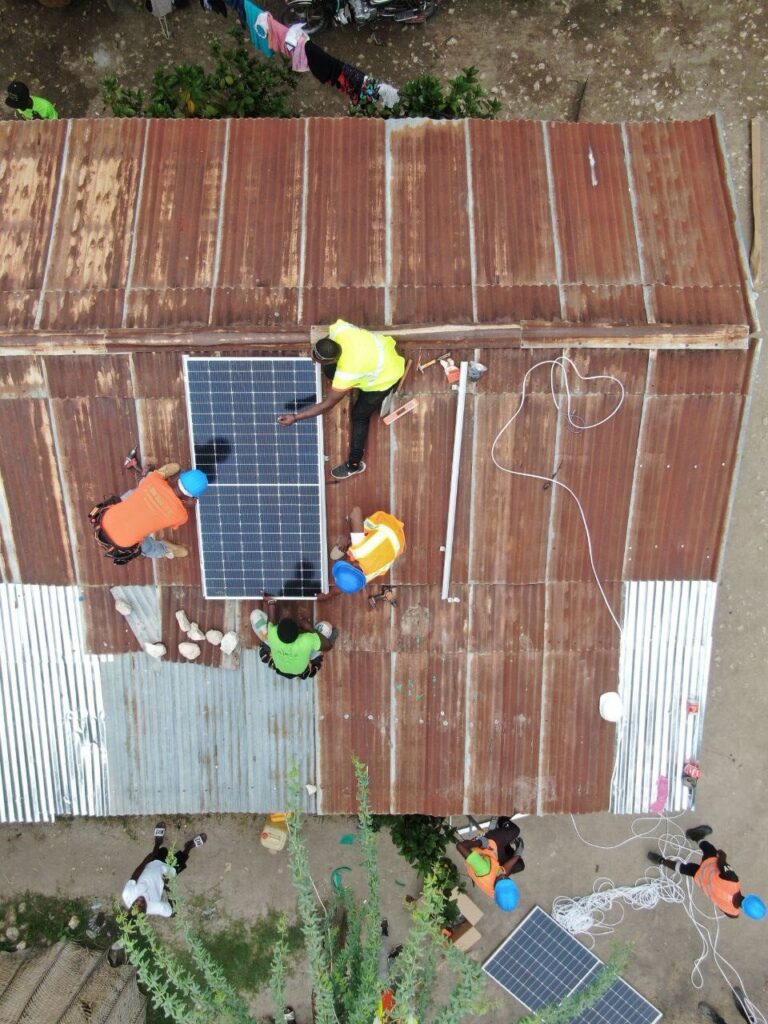
In practice, this can lead to a scenario where investment opportunities to finance solar projects, for example, in energy-poor communities in emerging markets are declined in favour of investing in domestic solar certificates in a mature market. Not only does this result in an inferior climate impact, it also impedes the possibility of contributing materially to several UN Social Development Goals as a by-product of providing an energy source where there wasn’t one previously.
The Protocol can address these problems with its upcoming revisions should it resolve to amend its eligibility criteria so that energy procurement in emerging markets can be recognised under less restrictive reporting frameworks. Many businesses regard this as the next step for meeting their GHG emissions objectives, while emerging markets highlight the critical need to open pathways that allow the flow of funding from the private sector into renewable energy projects if they are to meet their own net zero and energy access aspirations.
One of the largest hurdles to the global energy transition is bringing renewable energy to the traditionally underserved and fossil fuel-dependent communities in emerging economies. It is in the Protocol’s capacity to drive the energy transition in these areas if it now applies its success in European and North American markets to emerging markets around the world.
About D-REC
D-REC is a new type of energy attribute certificate that bridges corporate sustainable
finance from multinationals to the distributed renewable energy sector in emerging
markets. This catalyses new capital to provide access to affordable clean energy (SDG7).
D-REC is a market instrument that allows global businesses, who have committed to clean
energy targets, to reduce their carbon emissions. By focussing on distributed renewable
energy projects in communities with energy poverty, D-RECs go further than traditional
renewable energy certificates, as they provide a direct link to positive social development,
and clean energy additionality.
The D-REC Initiative is led by South Pole and Powertrust, with support from the Shell
Foundation, Good Energies Foundation, Signify Foundation, GIZ-DeveloPPP, the UK’s Foreign,
Commonwealth and Development Office (FCDO), International Finance Corporation (IFC),
British International Investment (BII), USAID and the Swiss Agency for Development and
Cooperation (SDC). D-REC will become a fully independent not-for-profit entity in 2023.