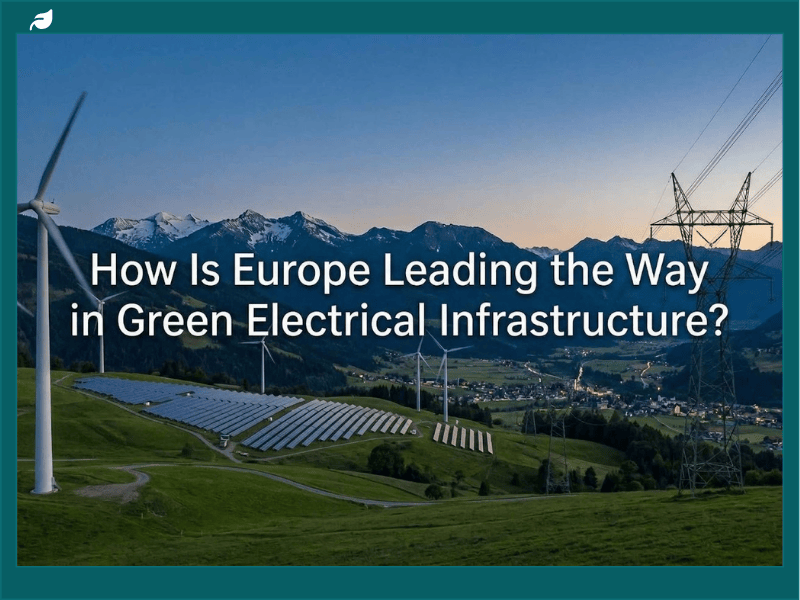
In recent times, with your attention on the news on energy, you have likely noticed that Europe has been appearing on top of every list, in regard to clean energy ambition. And it’s not just talk. Wind farms in the Danish offshore waters, solar streets across southern Spain, the continent is slowly (and not always so easily) rewiring itself to a greener future.
What is causing this change though? What of the industries, workers, and ordinary people who have been involved in it?
The Grid Is Getting a Makeover
The key phase of the green transition in Europe is a radical redesign of the electricity flow between the place of its production and the point of consumption. Classical power grids were constructed around large central coal or gas power plants – large sources that were predictable and emitted electricity in a single direction. This is not the case with renewable energy. Wind and solar are diffused, intermittent, and usually produced in remote locations.
There must be a kind of evolution of the grid itself. Europe has also been spending a lot on smart grid technology, cross-border transmission line systems, and offshore wind connections which connect countries in a manner they were not required to be or could not be many years ago.
Policy and Political Impetus
The REPowerEU plan initiated by the EU, some of which was in response to the energy crisis caused by the invasion of Ukraine by Russia, expedited much of this expenditure and generated actual political impetus behind some project initiatives that might otherwise have been aborted.
The Role of Electrical Components You Don’t See
There is one more thing that the vast majority of the population does not consider: behind any wind turbine, EV charging station, or solar installation, there is a grid of electrical parts that ensure everything works.
- Cables
- Connectors
- Control systems
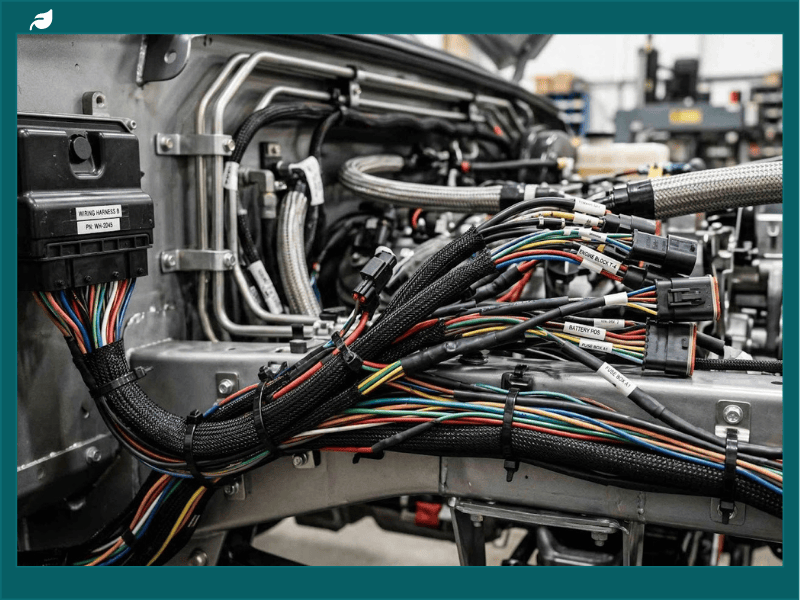
- Wire harnesses (The nerve system of any electrical network)
Due to the increased demand of green infrastructure, manufacturers of these components have been under pressure to match the demand. The gap has been occupied by countries that have good manufacturing cultures.
The Nordic Influence
Take Finland, for example. Finnish manufacturers are known to be very accurate in their engineering, as well as having an extreme focus on sustainability, and they have started getting engaged in the manufacturing of components in renewable energy systems. Wire harness Finland production has become part of a broader Nordic push to support the electrification wave sweeping across the continent combining technical quality with environmentally responsible processes.
Southern Europe Is Part of the Story Too
One might be tempted to think that the green infrastructure is a primarily northern European narrative that is Scandinavia, Germany, the Netherlands. However, southern Europe is having a larger role to play as many people do not know.
Italy, especially, has been making a big push as regards investing in renewable energy. The nation has been ambitious on solar expansion and its industrial sector, which has been traditionally powerful in terms of manufacturing and engineering, is adjusting to the new demands.
- Manufacturing: Wire harness Italy production reflects this shift, with manufacturers supplying components not just for domestic projects but for export across the EU.
- Geography: The geography of Italy is also favorable to it: there is much sunshine there, the coast is long enough to host offshore wind, and the location of Italy in the middle of the Mediterranean makes it a possible energy transit point between North Africa and northern Europe.
This type of geographic diversity is important. An actual robust green grid cannot rely on a single area. The power here is that Europe is decentralized with each country bringing various resources and capabilities and infrastructure to bind it together.
EVs and the Charging Challenge
Electric vehicles cannot be discussed as the green electrical infrastructure in Europe. The adoption of EVs has been steadily increasing, and there is a need to put up a charging network that is capable of supporting it.
This is harder than it sounds. It can’t be as simple as a plug in the wall to the fast charger, it needs:
- Upgraded grid connections
- Intelligent load management
- Completely new electrical infrastructure in apartment buildings and older commercial establishments
The cities in Europe have been getting creative to overcome this challenge, including shared charging systems in cities and a bidirectional charging system that allows the EV batteries to contribute electricity back to the grid during peak hours. The infrastructure construction is generating employment and supply chain operations throughout the continent, including hardware production, software development, installation and maintenance.
What is the Difference With the Approach of Europe?
A few things stand out:
- Regulatory Coherence: The EU is able to establish norms and goals that cut across 27 member nations and this establishes a scale that could not be realized by single nations.
- Long-term Orientation: Be it the Energiewende policy of Germany or decades-old commitment to hydropower and efficiency in Scandinavia.
- Popular Pressure: Climate action is always a priority to the European citizens and this provides the politicians with space to make decisions that would otherwise be hard to make.
All this does not imply that Europe has everything figured out. Actual obstacles include grid bottlenecks that accommodate delays and cost pressures. Nevertheless, the orientation of movement is evident.
A Greener Grid Is a Work in Progress and That’s Okay
The simple truth of the matter is that building green power infrastructures on a continental scale will be messy and expensive, full of tradeoffs. It will require cooperation between countries that do not always get along and investment in technologies that are only now starting to mature, as well as altering the systems that took decades to build.
But Europe is doing it imperfectly, incrementally, and with occasional setbacks. The investment in green electrical infrastructure on the continent is not a mere proclamation on the environment. It bets on energy security, industry competitiveness, and future strength. And more and more the rest of the world is waiting to see what happens to that bet.