Claire Racine, Head of Sustainablility for Buildings at Ramboll (UK), answers questions for the Sustainable Business Magazine about her role at the global sustainability consultancy. Ramboll was founded in Copenhagen in 1945 as a direct response to the destruction of war, and the values of sustainability lie at the heart of its practice. Claire heads up the UK Buildings team, and ensures alignment with the goals of carbon reduction, circular economy and strengthening resilience.
Could you provide a brief overview of your organisation’s history and your current role?
Ramboll is a global sustainability, architectural and engineering consultancy. It was founded in Copenhagen following the destruction of The Second World War by Børge Rambøll and Johan Hannemann. They founded Ramboll to rebuild society and shape a better future, and that is the foundation stone of all our work today.
The cultural values of trust, tolerance, openness, equality and respect for individual rights permeates all our work, as does our Nordic heritage. We’re also foundation-owned, which means that our value and purpose drive our organisation, not profit. As such, instead of striving to deliver shareholder returns, we’re focused on creating sustainable impact for our stakeholders: clients, people, society, and the company.
Today, we have more than 18,000 experts globally, developing standalone and multidisciplinary solutions across Buildings, Transport, Energy, Environment & Health, Water, Management Consulting and Architecture & Landscape.
My role is Head of Sustainability for Buildings in the UK. I act as the partner for sustainable change for clients in the built environment, delivering sustainable building solutions that meet their needs. I develop a deep understanding of their commercial drivers and apply a holistic design approach to help clients realise their sustainability ambitions. In short, designing buildings that maximise sustainable outcomes, while driving the greatest commercial value.
How is sustainability embedded across Ramboll’s various areas of expertise?
Sustainability is encoded into Ramboll’s DNA and is embedded into every aspect of our work. It is written into the mandate of the Foundation, which means everything we do is for the betterment of society for both people and nature.
We act as the Partner for Sustainable Change to our clients, and we also behave responsibly toward our other key stakeholders, employees, society and the company, supporting ambitious Paris-aligned carbon reduction targets. Sustainability is embedded across all our business areas – from transport and energy to environment and health – and within buildings it is applied through a holistic, whole-life approach.
For our work in buildings, that means considering every aspect of sustainability within the built environment. To begin with, buildings are responsible for around 40% of global energy-related CO₂ emissions, so ensuring new developments and refurbishments push as far as possible towards net-zero carbon is crucial to global decarbonisation goals.
And there is much more to sustainability than carbon: supporting nature recovery and ensuring buildings are resilient to climate impacts are also key. For example, a building could be net zero but worsen biodiversity loss through its supply chain. We actually just released a study on measuring embodied ecological impacts in construction supply chains, which explores whether Life Cycle Assessments (LCA) can quantify embodied ecological impacts for both nature impacts reporting and long-term asset value. Importantly, it provides guidance on how to integrate biodiversity into procurement specifications.
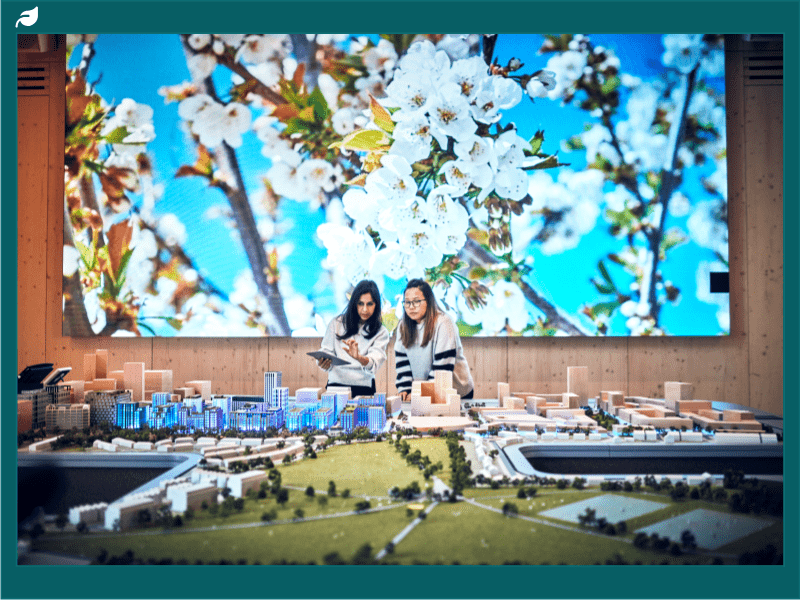
We prefer to take a holistic approach when designing solutions to ensure that related issues like net zero and biodiversity are not treated in isolation, and that their wider applicability is considered. That means examining how a project level solution can be meaningfully scaled in order to help the wider industry achieve sustainability goals. Our recent work with Canary Wharf Group at One North Quay is a good example of this. The building design is due to reduce operational carbon by 38% and embodied carbon by 50% compared to baseline structures. We’re also mapping our materials’ region of origin in response to increasing interest in the ecological impact of resource extraction. These examples are solutions that can be delivered on the macro level, rather than just having niche applicability.

How do your management consultants leverage the use of AI to track improvements in sustainability?
The way we use AI is much like how we use any other tool, which is to consider what potential it has to help and support our clients, and the best practical applications to enable them to have more positive impact in whatever they are doing. Within Ramboll, we have people dedicated to AI research and application and those who have integrated it into their day-to-day work, as well as those who are still getting used to it. For my team, that generally means using it to improve the buildings they’re developing and operating. We’re very practically focused: our people are studying the innovations being made in AI and translating that into meaningful, real change on the ground.
Another aspect is not just using AI to track improvements in sustainability but finding solutions to solve the challenge of making AI use sustainable. We’re doing a lot of work with data centres to help them become more sustainable. We’ve created a strategic roadmap to address the environmental impact of data centres, which offers tangible ways to reduce negative impacts related to carbon emissions, water, biodiversity and material use.
We’re also foundation-owned, which means that our value and purpose drive our organisation, not profit. As such, instead of striving to deliver shareholder returns, we’re focused on creating sustainable impact for our stakeholders: clients, people, society, and the company.
Can you provide some examples of how data collection has translated into green action at Ramboll?
The key is ensuring that the data is sufficiently high quality and reliable. Having the intended action front of mind in the first place is key to ensuring that the data being collected is fit for purpose. To be most effective, data needs to be comparable across the whole industry and not just to one organisation’s specific reporting requirements. There’s been great progress towards this in carbon but still needs addressing in areas like climate resilience and the nature crisis.
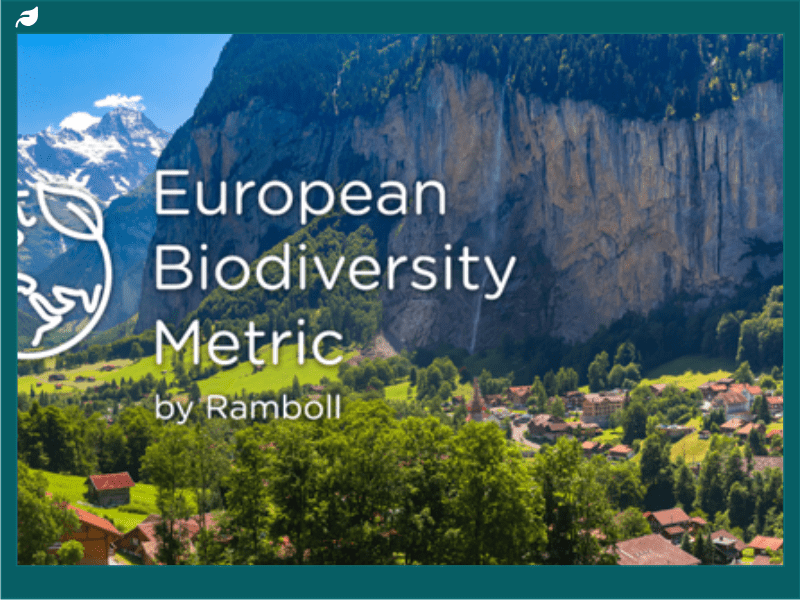
We’re taking efforts to solve this, like our recently launched European Biodiversity Metric. It is an open-source, standardised, transparent and scientifically robust tool aligned directly with EU policy frameworks and datasets, which enable organisations to measure and improve the biodiversity value of their sites. It is designed to fill a critical gap by offering a means to quantify biodiversity gains, losses and compensatory actions for businesses at the European levels. It effectively enables green action to take place in biodiversity by allowing impacts, positive and negative, to be tracked. Without this, it is difficult to set robust goals or measure progress against them.
We’ve made similar efforts in carbon for buildings with our carbon assessment database, CO2mpare, which allows industry and governments to explore and compare data for carbon emissions across more than 300 building carbon assessments. This informs decision-making, allowing comparisons to be made and sustainability benchmarks to be set for specific types of building. One of the key challenges is the lack of uniformity in data across countries and regions making it difficult to set benchmarks. We launched C02mpare to address this by helping to standardise building data. It’s the start of a collaborative effort with industry, which we hope will encourage uniformity of standards. Anyone can access it and use the data to inform what they should be targeting and focus their own improvements.
What ESG commitments are in place across your own value chain?
It’s not so much the ESG commitments in our own value chain, but in our clients’ because that is where we can make the most difference. Our value creation begins with our clients’ and society’s need for sustainable change, so we act as partners to help clients define their own ESG goals and provide a tangible way of meeting them. Sustainability is embedded into all our projects, from the early-stage overall strategic, conceptual, and planning level to the more concrete detailed design level, all the way to the later stage operational, maintenance and decommissioning level.
In buildings, we have seen great progress in carbon commitments and reductions. We’re very focused on helping our clients move beyond carbon and broaden their commitments to nature and resilience.
What future projects or goals do you have planned as head of sustainability for buildings?
We have three sustainability focus areas in the Buildings team: Build resilience, cut carbon and reimagine resources. Above all, my main goal is to create value for clients that delivers lasting benefits for communities and the world we share.
It’s a particularly important time for resilience because climate impacts are now being felt in the UK. With floods, wildfires and extreme weather events on the rise, there is a growing awareness of the need to adapt as well as mitigate climate change. The UK is far behind where it needs to be in terms of adaptation, so I’m really focused on accelerating progress here.
For example, there has been much focus on mitigating through reducing operational and embodied carbon. But this may result in many buildings being at risk of overheating as temperatures rise. We are also now experiencing tangible losses in asset value resulting from climate impacts and it is focusing minds to act. As a result of the recognition of these and other climate related risks, resilience is becoming a compelling topic.
We prefer to take a holistic approach when designing solutions to ensure that related issues like net zero and biodiversity are not treated in isolation, and that their wider applicability is considered. That means examining how a project level solution can be meaningfully scaled in order to help the wider industry achieve sustainability goals.