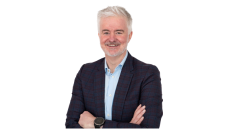
In her role as Partner and Head of ESG and Sustainability at Meridiam, Ginette Borduas embodies the company’s belief that sustainability must be embedded at every stage of infrastructure development. Overseeing a long-term investment model that spans decades, she ensures that environmental, social, and governance considerations are not only integrated into decision-making, but also actively shape the way projects are conceived, implemented, and managed. From sustainable mobility and the energy transition to essential social infrastructure, her work reflects Meridiam’s mission-driven approach: building resilient assets that deliver tangible, lasting value to communities. In this interview, she discusses the centrality of ESG within the organisation, the tools and standards that guide Meridiam’s work across diverse geographies, and the company’s commitment to setting ever-higher benchmarks for responsible investment.
You lead ESG and Sustainability at Meridiam, a company particularly committed to these issues. Could you tell us more about what your role involves?
This role has become essential within investment funds and other financial organisations. At Meridiam, ESG issues and resilience permeate all operational processes, ensuring that every investment aligns with the organisation’s sustainability objectives. Meridiam’s expertise lies primarily in infrastructure, with a focus on sustainable mobility, the energy transition, and innovative solutions such as electric vehicles charging stations. Meridiam also invests in social infrastructure, including hospitals, schools, care centres and health centres, as well as fibre-optic projects that provide essential services to communities.
Because of the nature of these infrastructures, our approach is inherently long term. We invest for periods of twenty or thirty years, sometimes longer. This long-term commitment allows us to be directly involved in each project to ensure it is developed in line with our vision and sustainability objectives, and that it ultimately delivers the services it is intended to provide.
My role is to ensure the implementation and coordination of Meridiam’s ESG and sustainability policies and requirements across the organisation. With the ESG Team, I ensure that the organisation has the right procedures and processes in place to identify and manage sustainability risks, as well as issues related to the opportunities and projects in which we invest. Another key aspect of my role involves engaging with our investors—explaining our approach, how we address the various sustainability challenges we face, and outlining the initiatives we are implementing to continuously improve our performance in a constantly evolving context. This part of my work is therefore centred on communication, stakeholder engagement, and the development of robust internal frameworks.
The second area is more technical, as the ESG Team provides guidance to the investment teams on how ESG issues should be managed. This is also something that also differentiates Meridiam from other investment funds, as we take a very hands-on approach with the assets in which we invest. We are often involved in developing projects from their inception, which allows us to maintain control and to be directly involved in how projects are designed, implemented, and operated over the long term.
How do you ensure that ESG criteria are effectively integrated into the projects developed and managed by Meridiam?
Compliance with ESG criteria is the responsibility of all teams, but the role of the ESG Team is to ensure that the most relevant frameworks, procedures, templates, and tools are available and used consistently across the organisation. These tools help the investment teams identify the risks and opportunities associated with each project and understand how they will be addressed throughout the development phase. This phase can span from a few months to several years, particularly when we act as the project sponsor and develop the project from the ground up. We also commission all the necessary studies and participate in designing the infrastructure to ensure that everything is done to optimise the project, minimise its environmental and social impacts, and plan appropriate mitigation and compensation measures for both the construction and operational phases
We also work closely with our partners to ensure that the construction and operation of each asset are properly structured and agreed upon. We then remain involved in the operation and long-term management of the asset. Here again, we plan early how this will unfold and how we will monitor the asset’s ESG performance over time, focusing on the specific environmental, social and climate-related issues associated with the asset.
A significant part of our work also involves training and engaging with both the investment teams and the asset management teams. These teams are responsible for implementing the procedures and for addressing sustainability-related issues. It is part of their role, and their performance is directly tied to their ability to manage ESG and sustainability matters effectively. This ensures that sustainability is fully integrated into both the investment process and the management of the assets.
ESG standards and regulations can vary widely between countries and sectors. How does Meridiam maintain consistency and high standards across such different contexts?
Our commitment and ambition regarding sustainability and resilience remain unchanged, no matter the country or region in which we operate. In some places, standards may be less stringent or the context slightly different, but this does not alter Meridiam’s approach. Our model has always been based on developing and investing in assets that are resilient, sustainable and provide essential long-term services to communities. The mission and overall vision remain the same everywhere we work.
Of course, each country has its own regulations, norms, and standards relating to different sustainability issues. We fully comply with all national requirements and ensure that every project is developed in line with the applicable standards and regulations. While these can vary depending on the geography—some regions being more advanced and stringent than others—we remain committed to going further where needed. For example, we have dedicated three funds to developing projects in Africa, where major infrastructure development can be particularly challenging. Even when regulations and standards are robust, it remains essential to manage risks carefully and ensure that projects are resilient, respectful of the environmental and social context, and financially bankable.
We are also committed to aligning with various international principles. For instance, for our three funds for the African market, we comply with the IFC Performance Standards, which address all environmental and social issues. Developed by the International Finance Corporation—part of the World Bank Group—these standards support private-sector development in emerging markets. By embedding them into our funds and making them part of our core commitments, we demonstrate our dedication not only to meeting national laws and regulations, but also to going beyond them where necessary.
Applying these international requirements ensures that our projects are well developed, well designed, and responsibly implemented. This encompasses all elements of environmental and social management: biodiversity and nature, stakeholder engagement, indigenous peoples where relevant, and issues affecting vulnerable groups. In other words, these standards provide comprehensive coverage of all key environmental and social dimensions.

Measuring impact is often a challenge for responsible companies. What tools or methodologies has Meridiam developed to assess and track the real contribution of its projects to the sustainable development goals?
Meridiam has developed several tools to measure the performance of our assets and funds. The tool dedicated to assessing contributions to the UN Sustainable Development Goals (SDGs) is called SIMPL®. Created in 2018, SIMPL provides a highly visual way to demonstrate the benefits our commitments bring to both communities and the environment.
It is based on a detailed questionnaire that gathers the information and data required for regulatory reporting and for responding to investors’ enquiries. More importantly, it enables us to evaluate the performance of each asset in terms of its contribution to the UN SDGs. The tool also aggregates results at the portfolio level, allowing us to assess the performance of each fund—and of Meridiam as a whole. By updating this assessment annually, we can track progress and define action plans to identify where improvements can be made at the asset level.
The tool has proved so effective that, in 2023, it became a standalone SaaS commercialized and available to other companies.
We have also provided active support to the development of another tool, in partnership with Carbone4, a firm specialising in climate and carbon analysis. This tool, called CIARA®, measures the temperature alignment of our funds against the 2°C trajectory. It provides a powerful framework for understanding how each fund aligns with, exceeds, or falls short of this pathway, enabling us to plan the actions needed to align as closely as possible with the Paris Agreement. The tool also includes strategic modules to identify physical and transition risks associated with climate change and monitor the GHG emissions of assets.
Public-private partnerships are central to Meridiam’s business model. What lessons have you drawn from this experience to foster long-term and balanced collaboration with public stakeholders?
As far as Meridiam is concerned, public-private partnership projects (PPPs), concession projects, or any long-term agreements are essential when dealing with infrastructure, because they allow us to remain involved for an extended period and therefore to genuinely influence long-term outcomes.
They also offer a real opportunity to engage with stakeholders. When you are present over many years, you can observe changes, understand how conditions evolve, and ensure that assets are designed, operated, and adapted with a long-term perspective. We have assets that were initially designed and built according to a specific set of requirements and specifications, but that we then continued to oversee and optimise over time. Staying involved for the long term means we can identify opportunities to improve the performance of each asset. We can work with the public authorities to determine how best to implement new measures that were not necessarily planned at the outset. This is the type of partnership that becomes possible when you commit long term.
For us, resilience and sustainability are essential components of this approach. When you build infrastructure and remain responsible for it for thirty years or more, you must consider the long-term implications, the evolving context, and what sustainability truly means in practice.
As sustainable investment attracts an increasing number of players, how is Meridiam adapting its approach to maintain the relevance and impact of its mission-driven model?
From my perspective, this is more than an adaptation; it’s simply our way of doing business. It has always been this way, and it will continue to do so. It ties back to everything I mentioned earlier: our goal isn’t just to adapt, but to constantly improve the way we operate. We are always looking for ways to boost the performance of our projects, supported by increasingly sophisticated tools. This enables us, as an investment fund and asset manager, to identify the right opportunities and make a meaningful contribution to how infrastructure should be developed and managed.
Our DNA must remain unchanged, and certain projects—such as those in the oil and gas sector—will never be part of our portfolio, no matter how profitable they may appear. We take our commitments seriously, and we advocate for better solutions and practices when we know it can help our partners reach the next level.
A great example is the electric bus system we manage in Dakar (Senegal). It’s a highly compelling asset because it addresses issues like traffic congestion and carbon emissions. These are electric buses operating in a densely populated city. The first tender issued by the Senegalese authorities, however, called for diesel buses. We saw the project’s potential, but not under those conditions. We engaged in discussions with the authorities, who eventually revised the requirements. We then submitted our proposal—among other competitors—and ultimately won the mandate, which now involves electric buses, making it fully aligned with Meridiam’s values.
When we identify a project with potential that doesn’t meet our sustainability standards and shows no sign of evolving in the right direction, we simply walk away.