COP30 host city positions itself as a model for climate aligned travel
Belém do Pará, fresh from hosting the 30th United Nations Conference on Climate Change, is rapidly emerging as a focal point for sustainable tourism in Brazil. Situated at the gateway to the Amazon Rainforest, the city is working to translate the momentum of COP30 into long term benefits for the region, showcasing how cultural heritage, community partnerships and environmental stewardship can coexist in a destination that is both ecologically sensitive and economically ambitious.
As the capital of Pará, Belém has long been known for its mix of riverfront landscapes, Indigenous influence, and a culinary tradition shaped by Amazonian biodiversity. What COP30 has done is move the city onto the global sustainability stage, turning it into a symbol of Brazil’s attempt to align tourism growth with forest protection and low carbon development.
Marcelo Freixo, President of the Brazilian Tourist Board, described the moment as a turning point.
“Brazil has taken a global leadership role in key agendas at the center of discussions on today’s most pressing challenges, especially sustainable development. Tourism is a key sector contributing to this dialogue. With its lush biodiversity, breathtaking landscapes, and rich culture, Brazil is ready for this.”
He added that the event positions Pará as an emblem of Brazil’s climate ambitions.
“COP30 in Belém is the stage for Brazil to show the world that the solution to the climate crisis runs through the Amazon. Pará is the showcase of this new Brazil, and sustainable tourism, which is central to our Plano Brasis, is the most effective tool for generating a low carbon economy that keeps the forest standing and improves people’s lives. We will promote, internationally, a destination that protects the planet.”
This framing reflects a broader strategy. Brazil’s tourism leaders are taking steps to strengthen the sector’s contribution to conservation by expanding local value creation, diversifying visitor experiences and deepening engagement with communities who have long been stewards of the region.
Sustainable travel in the heart of the Amazon
For international visitors, Belém’s appeal lies in its proximity to the rainforest and the immediacy of its cultural connections to the river ecosystems that define much of life in northern Brazil. While COP30 drew policymakers and climate negotiators, the city’s tourism legacy will depend on how well it channels that attention into sustainable travel demand.
One of the most emblematic examples is Combu Island, a short 15 minute boat trip from Praça Princesa Isabel. The island offers a microcosm of Amazonian life, with forest trails, floating restaurants and riverside settlements where daily routines remain deeply tied to the environment. Visitors are introduced to Pará cuisine through dishes built around local ingredients such as açaí and river fish, reinforcing the link between food culture and ecological health.
Combu is also home to one of Belém’s most recognised community enterprises: Dona Nena’s organic chocolate factory, Filha do Combu. The business has gained visibility for its role in preserving traditional cocoa cultivation while creating income opportunities for women in the region. Guided visits show how cacao is grown and processed, turning a forest product into a premium chocolate with cultural and economic significance. A key pillar of Belém’s sustainable tourism positioning involves elevating these community led initiatives.
The centrality of markets, cuisine and cultural heritage
Belém’s sustainability narrative is inseparable from its food systems. The city has been recognised as a UNESCO Creative City of Gastronomy, reflecting the diversity of Amazonian ingredients and the longstanding relationship between cuisine and ecological knowledge. For many visitors, the most visible expression of this connection is the sprawling Mercado Ver o Peso, Latin America’s largest open air market.
Designated as Brazilian Cultural Heritage by Iphan, the market features everything from Marajoara handicrafts and jambu cachaça to medicinal herbs and river grown produce. It provides a living example of how traditional supply chains can support cultural resilience and local livelihoods. Visitors encounter regional staples such as duck in tucupi, fried fish with açaí, maniçoba and fruits that rarely appear outside the Amazon basin.
These culinary traditions have become an important part of Brazil’s sustainable tourism plans. They are tied to biodiversity, informal economies and Indigenous knowledge, making them central to strengthening local value creation as visitor numbers rise.
Waterfront regeneration and climate conscious urban revitalisation
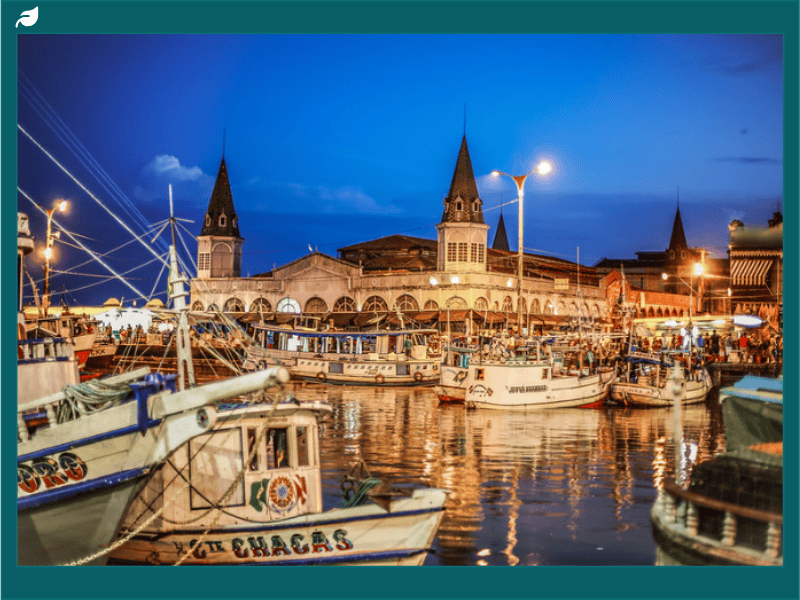
Belém’s riverside landscape has undergone a transformation over recent years, with the Estação das Docas complex becoming a flagship for urban regeneration connected to cultural identity and low impact tourism.
The former port warehouses have been repurposed into a mixed use complex featuring restaurants, cultural spaces and craft stores, all set along the banks of Baía de Guajará. The area illustrates how cities can reuse industrial infrastructure to attract visitors without expanding land use. It is also a reminder of the central role that rivers play in Belém’s ecosystem and mobility patterns.
Visitors can take boat tours along Baía de Guajará and Rio Guamá, an experience often accompanied by live music and traditional dance presentations. These tours provide a low carbon way to explore urban waterways while supporting local operators.
Preserving cultural assets in a changing climate
Among Belém’s most significant heritage sites is the Theatro da Paz, inaugurated in 1878 and considered the largest theatre in northern Brazil. Its neoclassical architecture, inspired by Milan’s Teatro Scala, stands as a symbol of cultural investment during the Amazon rubber boom.
Today, the theatre is both a tourist attraction and a reminder of the importance of safeguarding cultural institutions in a region where climate impacts, such as changing rainfall patterns and more intense weather events, are increasingly visible. Guided tours allow visitors to explore the building’s restored interiors while learning about its role in the cultural development of the region.
Strengthening connectivity for sustainable growth
Belém International Airport serves as the main entry point for visitors and now offers direct flights from Lisbon alongside connections from major Brazilian cities. Improved access is seen as essential for supporting sustainable growth, particularly for international travellers drawn by the Amazon’s global significance.
The challenge ahead lies in ensuring that increased connectivity does not compromise environmental goals. Policymakers and tourism officials emphasise that growth must remain tied to investments in community led tourism, conservation finance and low impact visitor infrastructure.
A legacy shaped by climate leadership
What sets Belém apart at this moment is its positioning at the intersection of global climate politics and regional tourism development. COP30 has amplified its profile, but the long term test will be its ability to anchor tourism in a model that protects the rainforest, supports local communities and showcases the cultural richness of the Amazon.
As Brazil expands its sustainable tourism strategy, Belém is seeking to act as a laboratory for new approaches. The city’s commitment to aligning tourism with ecological and cultural preservation offers a roadmap that other destinations across climate vulnerable regions may look to in the years ahead.