As hybrid working, flexible commuting and short-haul business travel continue to reshape professional life, demand is growing for products that can adapt seamlessly between work, travel and everyday use-without adding unnecessary environmental cost. The launch of the Jersey Travel Backpack reflects this shift, positioning sustainability and practicality as complementary rather than competing priorities.
Designed for professionals who move fluidly between office, home and travel settings, the Jersey Travel Backpack brings together weather protection, device security and organisational efficiency, while embedding recycled materials at the core of its design. It arrives at a time when sustainability is no longer a niche expectation, but an increasingly standard requirement for consumers and businesses alike.
A Backpack Built for Modern Mobility
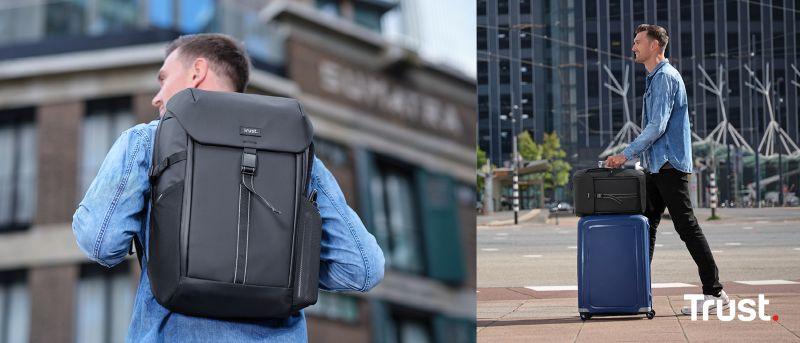
At the heart of the Jersey Travel Backpack is a 25-litre capacity that balances generous internal space with a compact commuter-friendly profile. This reflects the evolving needs of workers who may commute several days a week, travel intermittently, or navigate urban environments where bulky luggage is impractical.
The backpack’s IPX4 water-resistant PU-coated materials, sealed zippers and protective top cover are designed to guard against sudden weather changes-an increasingly important feature as climate volatility affects daily travel patterns. For professionals carrying essential technology, the shock-proof laptop compartment accommodates devices up to 17 inches, providing protection without sacrificing accessibility.
Beyond device storage, the Jersey’s fully opening main compartment, four internal zippered pockets and multiple quick-access sections support structured organisation. Separate side pockets secure water bottles, while a trolley strap allows the bag to integrate easily with wheeled luggage, reinforcing its role as a hybrid commuter-travel solution.
Comfort and security are also prioritised. Adjustable padded shoulder straps, an additional chest strap and a built-in AirTag pocket respond directly to real-world travel frustrations-whether that’s carrying weight comfortably over long days or avoiding the stress of lost belongings.
Sustainability as a Design Foundation
What distinguishes the Jersey Travel Backpack within a crowded accessories market is not just its functionality, but how sustainability is embedded into its construction. The bag is made using fabric crafted from 19 recycled PET bottles, aligning with broader efforts to reduce reliance on virgin plastics and support circular material flows.
This approach mirrors a wider industry trend, as brands move beyond surface-level sustainability claims toward measurable material choices. Recycled PET has become a key material in the transition toward lower-impact manufacturing, particularly in products designed for durability and daily use.
Commenting on the product release, Arjan Steenbergen, ESG Manager at Trust International, says:
“Integrating recycled materials into our products is a key step in our ESG strategy to reduce our environmental footprint. Every choice we make impacts the planet, and the Jersey Travel Backpack proves that sustainability can be smart, sustainable, and stylish. It demonstrates just how circular design principles can be applied without compromising on quality and functionality.”
His remarks reflect a growing emphasis on environmental accountability within consumer electronics and accessories-sectors historically challenged by short product lifecycles and material waste.
Aligning With Broader Sustainability Trends
The launch of the Jersey Travel Backpack aligns with several macro-level sustainability trends shaping business and consumer decision-making. First is the increasing scrutiny of product supply chains. As extended producer responsibility regulations expand across Europe and beyond, brands are under pressure to demonstrate tangible reductions in environmental impact.
Second is the shift toward “buy better, buy fewer” consumption patterns. Professionals investing in durable, multifunctional products are seeking items that can replace multiple single-use or short-lived alternatives. A backpack that transitions from commute to business travel to everyday errands supports this mindset.
Finally, the rise of ESG-driven purchasing-both at individual and corporate levels-means products are increasingly evaluated not just on price and performance, but on how well they align with environmental and social values. Accessories used daily by employees can become visible markers of organisational sustainability commitments.
Implications for Businesses and Professionals
For businesses, products like the Jersey Travel Backpack highlight how sustainability can be integrated into everyday operational choices, from employee equipment to corporate gifting. Choosing accessories made with recycled materials supports ESG objectives while meeting practical workplace needs.
For professionals, the appeal lies in convenience without compromise. The backpack’s design acknowledges the realities of modern work-carrying technology, moving frequently, adapting to unpredictable schedules-while offering a way to reduce personal environmental impact through material choice rather than behavioural sacrifice.
This reflects a broader shift in sustainability strategy: removing friction from sustainable decisions so that responsible options become the default, not the exception.
A Signal of Where the Market Is Heading
Founded in 1983, Trust International B.V. has built its reputation as a global supplier of digital lifestyle accessories, with products available in 50 countries through retail and online channels. Its Clevergreen label underscores a strategic commitment to producing more sustainable products across its portfolio.
The Jersey Travel Backpack serves as a case study in how established brands are evolving to meet rising sustainability expectations without abandoning affordability or mass-market appeal. Priced at £59.99, it sits within reach of everyday consumers, reinforcing the idea that environmentally conscious design does not need to be premium-priced to be effective.
As sustainability continues to move from the margins to the mainstream, products like the Jersey Travel Backpack illustrate how thoughtful design, recycled materials and user-centred features can intersect. For an audience increasingly conscious of both environmental impact and everyday practicality, that balance may well define the next generation of travel and work accessories.