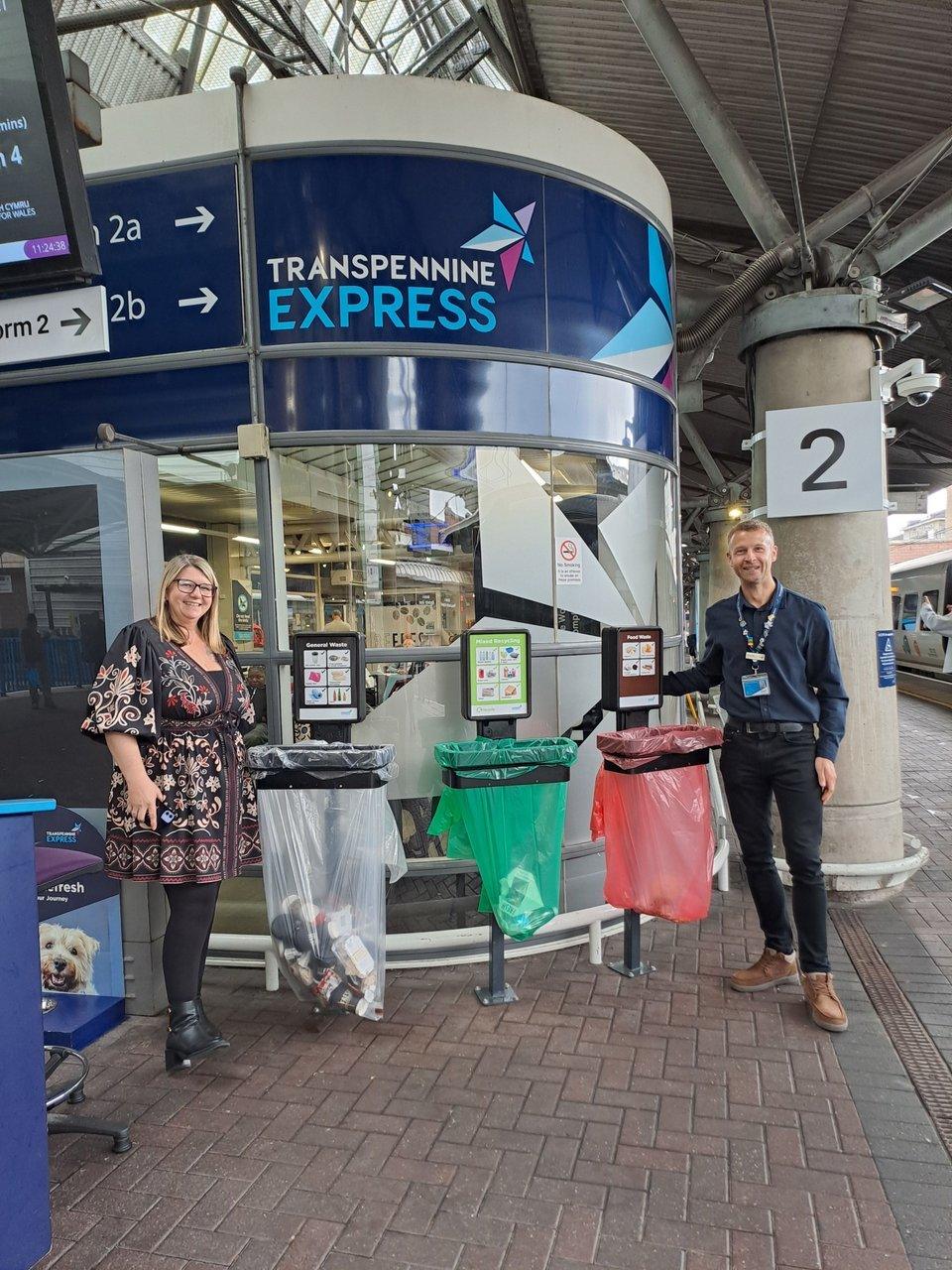
SUEZ and TransPennine Express have used interactive recycling roadshows at stations in Scarborough, Hull, Cleethorpes, Middlesbrough and Manchester Airport to encourage better waste sorting among rail passengers. Around one third of participants scored more than 75% in a timed recycling challenge ahead of National Recycling Week. The activity forms part of a wider waste and recycling service mobilisation that began in July 2025, covering stations served by TransPennine Express. New colour-coded bins, matched signage in staff facilities and passenger education are intended to make correct waste segregation more straightforward across the network.
Station Recycling Gets Interactive
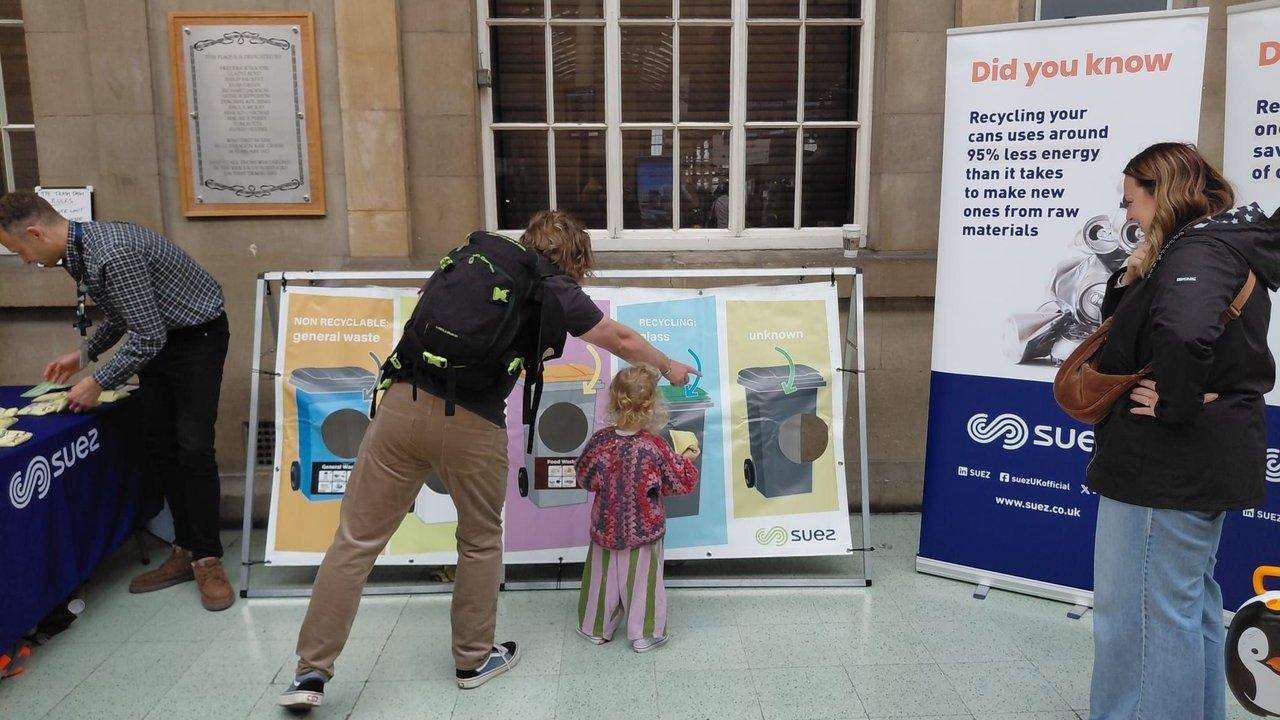
The roadshows brought together SUEZ and TransPennine Express staff at busy stations, inviting travellers to place 25 beanbags representing everyday items into the correct waste bins within two minutes. The items ranged from apple cores and pizza boxes to batteries, testing knowledge of material streams and contamination risks. Passengers who scored highly received free TransPennine Express rail tickets, while other participants were offered travel refreshments and giveaways.
The initiative places practical engagement alongside infrastructure upgrades. TransPennine Express has deployed bins designed around consistent colour coding and imagery, while station tannoy announcements are being used to reinforce recycling messages for passengers.
Steve Gilder, Environment Delivery Lead at TransPennine Express, said:
“These events are really important in driving behaviour change to increase recycling rates. We’ve already worked on the signage and colour coding of the bins to make it as easy as possible for passengers and staff alike, so our focus now is on helping to educate people about the importance of segregating their waste and events such as our Recycling Roadshows prove to be a really engaging way of doing that.”
Service Rollout Across Stations
SUEZ provides waste and recycling services for more than 60% of UK train operating companies, including more than 600 stations on behalf of TransPennine Express, Northern, Southeastern and LNER. As part of the TransPennine Express contract mobilisation, site audits were completed at 99% of locations to support the service rollout and identify opportunities for improvement.
The work combines passenger-facing bins with corresponding arrangements in staff areas. This consistency is designed to help people recognise the available waste streams wherever they are using station facilities, while supporting the quality of materials collected for recycling.
Education is particularly relevant in a transport environment where people are often disposing of food, drinks packaging and travel-related items quickly. The roadshow format offered an immediate way to clarify common points of confusion, including the handling of food-soiled cardboard and batteries.
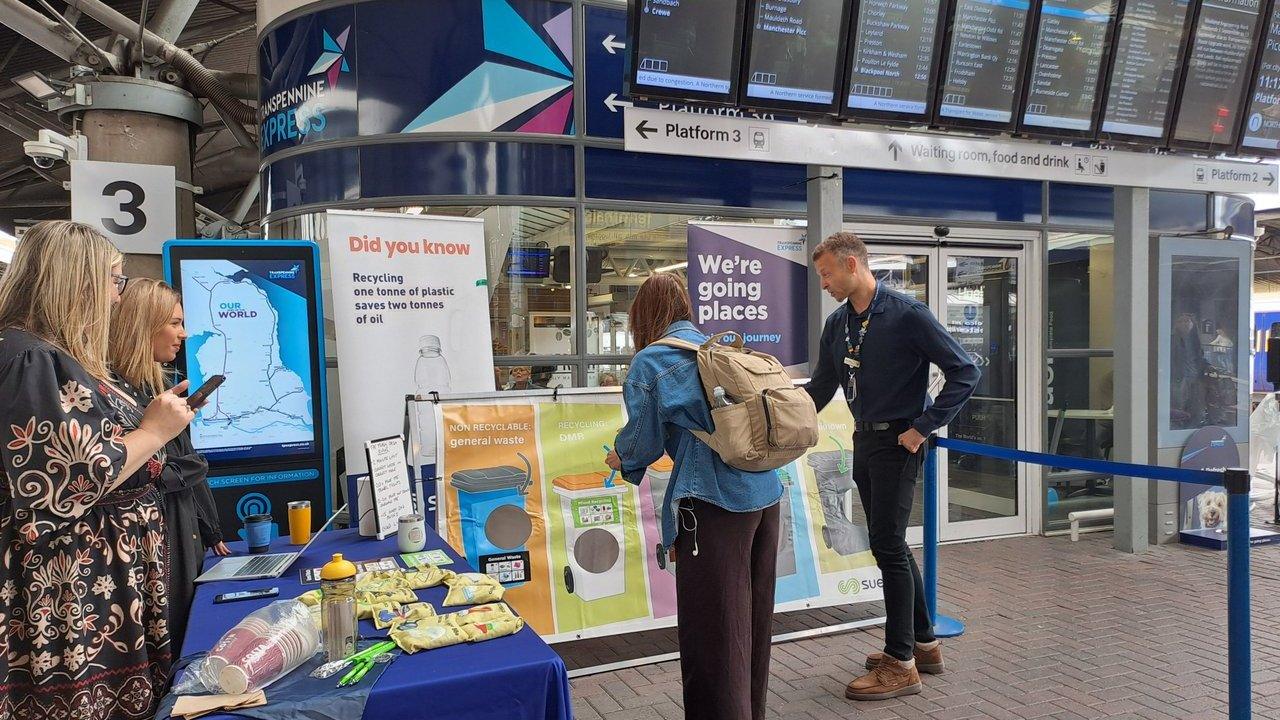
Eve, winner of tickets at Manchester Airport’s rail station, said:
“I didn’t realise that you shouldn’t put pizza boxes in with cardboard. It’s easy to think you don’t make a difference individually with your recycling, but this makes you realise that you really can!”
Building Awareness With Staff
The passenger sessions follow a similar recycling activity held earlier this year with colleagues at Northern’s Newcastle depot. That programme coincided with the introduction of new waste hubs in colleague areas, including food waste as an additional stream.
Extending recycling communications to railway employees as well as passengers can help reinforce the same sorting practices across station operations. The approach also recognises that effective recycling systems depend on both visible collection infrastructure and a clear understanding of what belongs in each bin.
Alex Fay, Energy and Environment Assurance Manager at Northern, said:
“The introduction of new waste hubs in our colleague areas, with food waste now added as an additional waste stream, gave a great opportunity to re-engage our staff about recycling!”
Reducing Contamination At Source
The challenge of improving recycling performance at stations often begins with the first disposal decision. SUEZ’s roadshow game was designed to make that decision more visible, using familiar objects that passengers may carry through the rail network every day.
With recycling rates influenced by the quality of sorted materials as well as the availability of collection facilities, the events provide a constructive complement to bin upgrades. Their presence at some of TransPennine Express’s busier stations also put the message in front of travellers, families and staff at the point where waste is generated.
Vicky Walshaw, Key Account Manager at SUEZ, said:
“A key challenge for us is influencing what people put in which bin and we’ve worked in partnership to now make this as simple as possible. The roadshow events were delivered at some of the busier TPE train station to help to raise awareness, with the sorting game always proving a hit with travellers, families and staff alike, and I saw firsthand the effect it had on people stopping to make sure they were using the right bins!”
Looking Beyond Station Bins
The partnership is also considering further routes for material recovery and reuse. Options under exploration include recycling train brake pads and reusing items such as staff personal protective equipment. These measures would broaden the focus beyond passenger waste, bringing operational materials into the conversation around resource management.
For TransPennine Express and SUEZ, the roadshows show how clear bin design and direct public engagement can work together. By turning sorting into a short, accessible activity, the partners are making the everyday act of disposing of waste more visible, while building awareness of the role each traveller can play in improving recycling outcomes.