Shifting Tides for Global Marine Restoration
At the 3rd UN Ocean Conference in Nice, France, the UN Environment Programme (UNEP) and the Food and Agriculture Organization (FAO) unveiled three new World Restoration Flagships on June 11, 2025. Spanning East Africa, Mexico, and Spain, these initiatives represent a coordinated global response to ocean degradation, biodiversity loss, and climate challenges.
The three selected initiatives restore almost five million hectares of marine and coastal ecosystems, an area approximately the size of Costa Rica. They join the growing list of flagship projects under the UN Decade on Ecosystem Restoration, supporting the ambitious goal to restore one billion hectares globally by 2030.
Inger Andersen, Executive Director of UNEP, emphasized the scope of the challenge. “After decades of taking the ocean for granted, we are witnessing a great shift towards restoration. But the challenge ahead of us is significant and we need everyone to play their part,” she said. “These World Restoration Flagships show how biodiversity protection, climate action, and economic development are deeply interconnected. To deliver our restoration goals, our ambition must be as big as the ocean we must protect.”
FAO Director-General QU Dongyu reinforced this call for action, adding: “The climate crisis, unsustainable exploitation practices and nature resources shrinking are affecting our blue ecosystems, harming marine life and threatening the livelihoods of dependent communities. These new World Restoration Flagships show that halting and reversing degradation is not only possible, but also beneficial to planet and people.”
Northern Mozambique Channel: Coral Reefs Under Siege
The Northern Mozambique Channel, a relatively small stretch of ocean, is home to 35 per cent of all coral reefs in the Indian Ocean. Its reefs serve as both a biodiversity reservoir and an economic resource. Yet agricultural runoff, overfishing, and warming seas have left the area vulnerable.
Governments from Comoros, Madagascar, Mozambique, and Tanzania have partnered with NGOs like the World Wide Fund for Nature (WWF) to manage, protect, and restore 87,200 hectares of interconnected landscapes and seascapes. Restoration work includes establishing ecological corridors that link mangroves, coral reefs, and blue and green forests, as well as improving fisheries management.
If fully funded, this regional initiative aims to restore 4.85 million hectares by 2030. These efforts are not only ecological but socio-economic. Madagascar’s mangroves already store more than 300 million tons of carbon dioxide equivalent (CO₂e), and restoration is projected to boost household incomes by 30 per cent in targeted areas. Over 2,000 jobs and 12 community-based enterprises are expected to emerge, integrating indigenous knowledge with modern sustainability strategies.
Mexico’s Islands: A 26-Year Conservation Journey
Mexico’s islands, recognized globally as seabird biodiversity hotspots, tell a different but equally urgent story. Invasive species had disrupted these fragile ecosystems for decades, threatening one-third of the world’s seabird species.
In 1999, Mexico’s National Commission for Natural Protected Areas (CONANP) and Grupo de Ecología y Conservación de Islas (GECI) initiated a multi-agency restoration program. Efforts include the removal of 60 invasive species populations and the re-establishment of native seabird colonies. The program now stretches across nearly 100 islands and covers more than 100,000 hectares. Notably, 85 per cent of seabird colonies that had previously disappeared have been restored, including species facing extinction. The initiative protects over 300 endemic species across mammals, birds, reptiles, and plants.
Collaboration with local communities is integral. These partnerships foster resilience to extreme weather events, encourage sustainable fisheries, and promote eco-tourism as alternative income sources.

Spain’s Mar Menor Lagoon: A Legal Milestone in Europe
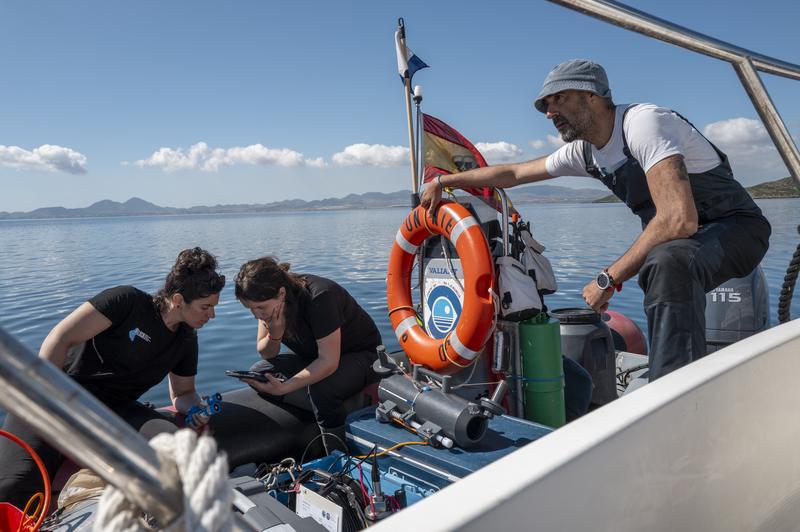
Spain’s Mar Menor lagoon is unique among the three new flagships for a reason beyond its ecological importance. It became Europe’s first ecosystem granted legal personhood following a grassroots Popular Legislative Initiative. Over half a million citizens rallied to secure this status after years of environmental degradation, most visibly through algal blooms and fish kills caused by agricultural nitrate discharges.
The Spanish Government has since launched the Framework of Priority Actions to Recover the Mar Menor (MAPMM). This comprehensive strategy spans 8,770 hectares, roughly 7 per cent of the basin that feeds into the lagoon. Measures include constructing wetlands, creating a wide green belt, cleaning polluted mining sites, improving flood risk management, and enhancing biodiversity.
The green belt alone is estimated to absorb more than 82,256 tonnes of CO₂ by 2040, contributing to Spain’s national goal of restoring 870,000 hectares by 2030.
Setting a Standard for Large-Scale Restoration
The World Restoration Flagship awards do more than honor existing efforts. They set a global standard for large-scale, long-term restoration projects vetted through a rigorous review process, applying 15 criteria and the UN Decade’s 10 Restoration Principles.
These newly announced flagships join a growing community. In 2022, the inaugural ten World Restoration Flagships were named. By 2024, seven more had been added. The inclusion of the Northern Mozambique Channel, Mexico’s islands, and Spain’s Mar Menor underscores both the variety of ecosystem challenges and the unifying thread of international cooperation.
In a sector where fragmented efforts often undermine impact, these projects represent scalable models. They illustrate how marine restoration links directly to economic development, carbon storage, biodiversity protection, and community resilience – essential concerns for governments, businesses, and civil society alike.
As the climate crisis intensifies, such flagship initiatives point toward what UNEP’s Inger Andersen called a necessary shift: ambition as vast as the ocean itself.