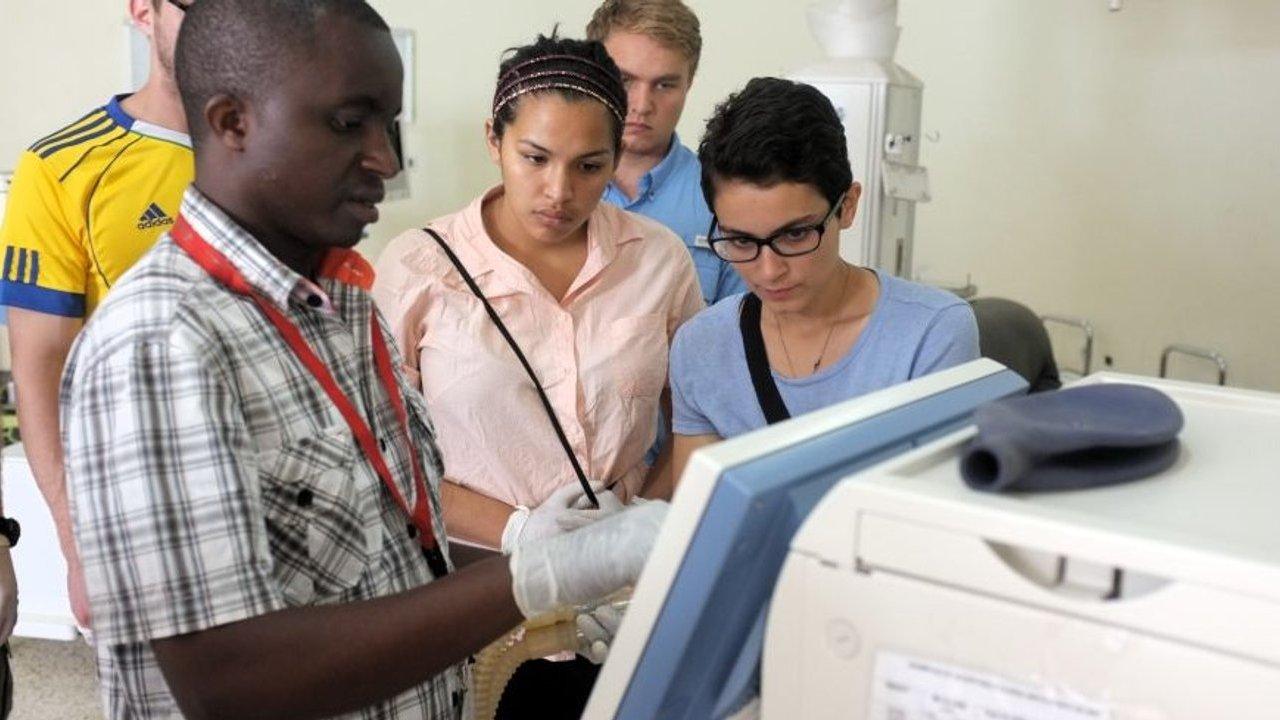
Engineers Without Borders USA has concluded its 2026 Community Health Institute in Guatemala after participants repaired 280 medical devices across seven hospitals in two months. The repairs exceeded $500,000 USD in value and involved five Guatemalan and 14 international participants. The programme combined biomedical engineering training with hospital-based repair work, supporting facilities where equipment can remain out of service because trained technicians, spare parts and maintenance resources are limited. Through the Institute, EWB-USA is pairing immediate equipment restoration with practical skills intended to remain with local healthcare teams.
Training Before Hospital Work
The first month of the intensive programme focused on preparing participants for hospital assignments. Visiting participants completed 64 hours of Spanish-language instruction alongside 64 hours of technical lessons and laboratory work before beginning hands-on repairs.
Participants then spent more than a month working at assigned hospitals across Guatemala. The placements gave engineers the opportunity to assess equipment in its operating context, work with on-site staff and understand the needs of the communities served by each facility.
The model addresses a persistent challenge for healthcare providers in low-resource settings. Obtaining medical equipment is only part of the task: devices can become unusable when technicians lack repair information, replacement parts or the resources required for regular maintenance.
Keeping Essential Equipment Working
Reliable medical technology supports safe treatment across hospital departments, from neonatal care to sterilisation. EWB-USA’s Community Health Institute focuses on restoring equipment while developing locally appropriate repair methods that can be repeated after the visiting cohort has left.
One neonatal intensive care unit had 11 infant warmers out of service, leaving staff reliant on incandescent bulbs to provide warmth. Participants developed replacement temperature sensors using locally sourced resistors costing less than $5 each, returning all 11 warmers to service within days.
Local technicians were also trained to carry out the repair themselves. That transfer of knowledge is central to the Institute’s work, allowing hospitals to maintain critical devices using materials and skills available in their own communities.
Biomedical Skills In Practice
The Institute gave participants direct experience of Guatemala’s public healthcare system and the practical constraints that shape equipment maintenance. It also demonstrated how biomedical engineering skills can contribute to care quality when engineers work alongside hospital personnel.
Fernanda Rivas, participant at EWB-USA, said:
“My experience with EWB-USA allowed me to gain a closer understanding of Guatemala’s public healthcare system and some of the challenges it faces. Being able to see these needs firsthand changed the way I view the role I can play as a future biomedical engineer,”
“This experience motivated me to continue looking for ways in which my knowledge and profession can contribute to improving access to and the quality of healthcare in my country.”
By asking participants to work with locally available materials and resources, the programme places repair decisions close to the conditions faced by hospital teams. The infant warmer repair illustrates how a low-cost replacement part can restore essential equipment when paired with technical knowledge and training.
Building Local Repair Capacity
The 2026 Community Health Institute’s impact extends beyond the 280 devices repaired during the programme. EWB-USA is using each cohort to strengthen technical skills, encourage knowledge sharing and support healthcare professionals responsible for maintaining equipment over the longer term.
The organisation aims to develop a global network of adaptable biomedical engineering technicians while helping address gaps in the healthcare technology workforce. For the seven hospitals involved, the combination of restored devices and trained local technicians offers a practical basis for continued maintenance.
As healthcare facilities depend on functioning equipment to deliver treatment, repair capability can be as important as access to the equipment itself. The Guatemala Institute shows how focused technical education and hospital collaboration can support more resilient healthcare infrastructure.