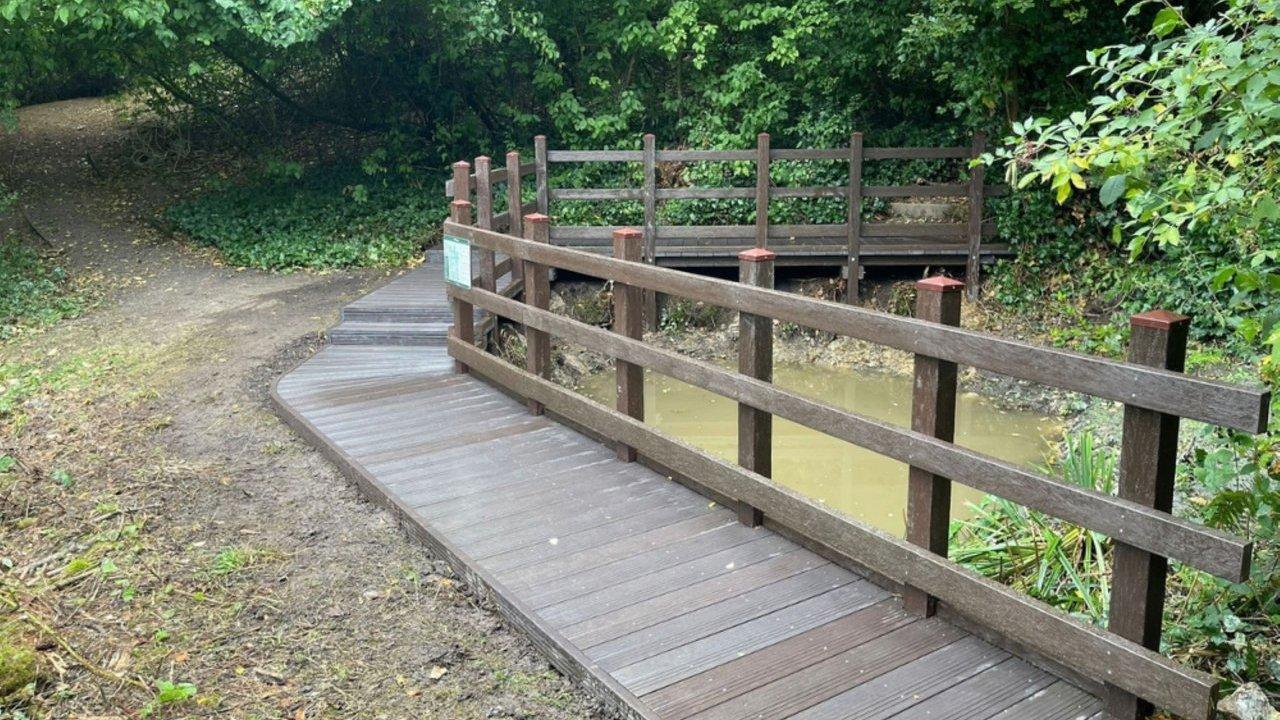
Amcor has helped Hepworth Junior and Infant School in West Yorkshire restore access to its wildlife pond and woodland learning area with a new boardwalk made from recycled plastic. The installation uses Plaswood, manufactured at Amcor’s Dumfries facility from at least 95% recycled plastic. It replaces a timber structure that had deteriorated in permanently damp conditions, where posts stand in water and the frame sits on mud. The project gives pupils renewed access to a setting used for nature, biodiversity and sustainability learning through the school’s Forest School programme.
A Route Back To Nature
The school’s wildlife pond and surrounding woodland are part of its curriculum, offering pupils hands-on opportunities to learn outdoors. Access had been limited after the existing timber boardwalk deteriorated following long exposure to wet conditions.
The completed installation has restored a route to the pond and woodland area, allowing pupils to make full use of the space again for Forest School activities and outdoor learning. The replacement also responds to the practical demands of a site where moisture can make conventional materials difficult to maintain.
Mark Crouch, Headteacher at Hepworth Junior and Infant School, said:
“Our woodland is now an essential element of our curriculum and our thriving Forest School programme. We chose Plaswood because the boardwalk is located in a permanently damp environment, with posts standing in water and the frame sitting on mud. We wanted a material that would last a long time and wouldn’t rot.
Materials Designed For Wet Conditions
The boardwalk was constructed using Plaswood, Amcor’s recycled plastic lumber brand. Manufactured in Dumfries, Scotland, the material contains recycled rigid plastic waste alongside a proportion of recycled agricultural stretch film.
For outdoor infrastructure such as boardwalks, the material is intended to offer a durable and low-maintenance alternative to traditional construction materials. Its use at Hepworth reflects the need for a surface able to operate in a permanently damp woodland environment.
Mark Crouch, Headteacher at Hepworth Junior and Infant School, said:
“The materials look good in our woodland setting. They aren’t as slippery as previous timber structures and have helped create a safer surface for our pupils to walk on. The finished project looks fantastic and fits naturally within the woodland. I believe it will last for many years and require significantly less maintenance than timber.”
Giving Recovered Plastics A Purpose
Amcor’s Dumfries site recycles agricultural plastics collected from farms across the UK. The site supports the recovery and reuse of material that can be incorporated into products for landscaping, boardwalks, marine, agricultural and public infrastructure projects.
At Hepworth, the installation provides a visible example of how recovered plastic can be used beyond its original purpose. The school selected the material in line with its environmental values, linking the practical replacement project with lessons about recycling.
Mark Crouch, Headteacher at Hepworth Junior and Infant School, said:
“As an eco-school, it was important for us to choose a product manufactured from recycled materials. This aligns with our environmental values and provides a practical example to pupils of the value of recycling.”
Community Infrastructure In Practice
The Hepworth project shows how recycled materials can support community facilities that need to withstand demanding conditions. Rather than treating recovered plastics as waste, the installation applies them in infrastructure designed for long-term use.
For the school, the result is an accessible woodland route supporting regular learning activities. For Amcor, it demonstrates a practical application for materials recovered through its UK agricultural plastics recycling activity.
Alistair Richardson, Sales Manager at Amcor, said:
“Projects like this demonstrate the value of recycled materials. By transforming recovered plastics into durable products for community and educational settings, we can help support practical infrastructure projects while extending the useful life of valuable materials.
Alistair Richardson, Sales Manager at Amcor, said:
“It’s particularly rewarding to see these materials being used in a way that helps young people engage with nature, biodiversity and outdoor learning.”
A Lasting Outdoor Learning Space
By restoring access to the pond and woodland, the boardwalk reconnects pupils with an established part of Hepworth’s curriculum. The project combines a safer route through the site with a material choice intended to reduce maintenance demands over time.
It also offers a clear local example of recycled plastic being put to use in an educational environment, where the infrastructure itself can support conversations about materials, recycling and the natural world.