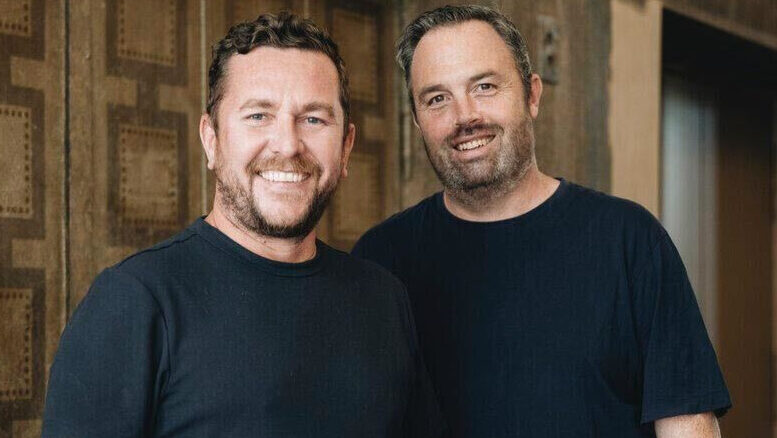
What motivated you, Andy Farnworth and Richard Rusling, to transition from working with major sports brands to founding Zen Running Club?
After decades of driving elite performance innovation for some of the world’s leading brands, we grew frustrated by the slow progress and lack of genuine innovation in sustainability within the footwear industry. Zen was created to address this gap—combining innovative sustainable solutions with a focus on high-performance.

How have your decades of experience in the sports industry shaped the core principles of performance, sustainability, and community at Zen Running Club?
Our combined experience across working at some of the biggest brands in the sports industry has given us unique insight into the intersection of innovation, athlete needs and consumer trends. We’ve witnessed the growing demand for more sustainable products, yet when it comes to footwear the industry has been slow to react – often making superficial changes without addressing the root issue when it comes to innovation. We wanted to re-imagine what a trainer could be, a product where performance and sustainability go hand in hand.
Community has also been central to Zen from the start. We want Zen to be more than a brand—it’s a movement for athletes who care about their performance and their planet. Our Amsterdam headquarters embodies this ethos: a diverse, inclusive, and vibrant space where ideas flourish and the future of running is being redefined.
What were the biggest challenges you faced as founders when creating a product that combines high performance with sustainable innovation?
Our biggest challenge has been finding the balance between sustainable manufacturing and the high-performance standards demanded by premium running shoes.
To address this, we embraced a comprehensive approach—developing innovative new materials, advancing bio-based midsole technology, and overhauling our supply chain by partnering with suppliers who align with our sustainability values. In the design process, we adopted a rigorous, iterative approach, continuously testing and refining our prototypes to ensure both sustainability and performance were optimised without compromise.
This journey has been transformative, pushing us to innovate in ways we never anticipated. The result is a product we’re immensely proud of—shoes that are both environmentally friendly and a pleasure to run in. Above all, we’ve learned the value of patience. Sustainable innovation takes time, and we’ve resisted the urge to rush products to market, ensuring they meet our high standards before they’re released.
What challenges in the running shoe industry were you aiming to solve with the development of the FUTUREOne?
Currently, the footwear industry is the 17th biggest polluter on the planet; so our mission is to bridge the gap between sustainability and high performance within this space.
Even trainers marketed as “eco-friendly” or made from recycled waste still contain oil-based components, meaning they’re non-recyclable, failing to address the global waste crisis. We wanted to create a brand that is committed to changing the way that shoes are made and the components they are built from, without falling behind the high performance trainers of competitors. Zen fills a critical gap in the market, combining outstanding performance with bio-based materials that dramatically reduce the impact on the environment.
Can you explain the significance of achieving 68% bio-content in the foam and how it sets FUTUREOne apart from other sustainable running shoes?
While your average running shoe is made up of oil-based components which will mean that it will spend anywhere up to 1,000 years in landfill; the FUTUREOne includes a 68% bio foam derived from plant sources and has enzymes in the formulation which help to expedite its end-of-life breakdown; meaning 60% of the midsole will dissolve in around 45 days once in landfill. This is a substantial innovation when you consider a traditional shoe has almost a zero breakdown for more than 200 years and this still will only ever break down into smaller particles – but will never truly disappear.
68% bio-content means that the FUTUREOne is a world leader in its sustainability and our ambition is to build 100% biobased and biodegradable products by 2027 – setting a benchmark that can not be beaten.
What specific materials and design choices make FUTUREOne environmentally friendly without compromising durability and performance?
Every component from the lace to the heel cap has been thoughtfully sourced with both the athlete and supply chain in mind. The knitted and seamless upper of Zen’s shoe is made from responsibly sourced eucalyptus fibres which are biodegradable and the cultivation of the raw materials relies on natural rainfall, which uses 95% less water than conventional cotton and has a carbon footprint that is one-third lower than virgin nylon.
The midsole is created from a base of 68% rapeseed oil to create a high performing unit with industry leading bio-content, and even has enzymes in the formulation that help to expedite its end-of-life breakdown in landfill. This midsole formulation has been thoroughly tested and refined with athletes to provide impressive levels of rebound and resilience.
Its Project 68 foam is highly resilient, meaning it has exceptional energy return, giving you great performance every step of the way, there is no compromise on performance! The outsole is also made from FSC-certified natural rubber, covering the heel and forefoot for maximum durability and comfort.