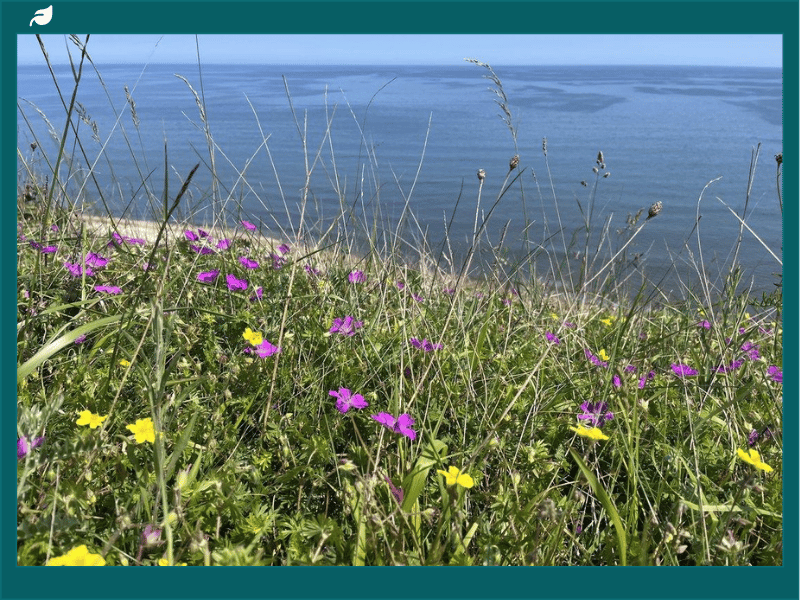
Durham County Council and the Heritage Coast Partnership are redefining how coastal conservation projects protect internationally significant habitats. Their latest success story involves a £1 million initiative to restore unique magnesian limestone grasslands along the Durham Heritage Coast, completed with support from the National Trust and Durham Wildlife Trust. The project focused on the globally unique stretch from Nose’s Point near Seaham to Blackhall Rocks, where the world’s only exposed magnesian limestone coastline supports distinctive wildlife communities. Through nearly 100 community events and comprehensive habitat restoration, the scheme has established a lasting conservation legacy while successfully achieving its original aims.
Globally Unique Ecosystem Protection
The Durham Heritage Coast represents a globally unique ecosystem where magnesian limestone meets the sea, creating internationally significant habitats that support distinctive plant communities, insects, birds and other coastal wildlife. This rare geological formation provides the foundation for specialised grassland environments that exist nowhere else in the world.
The restoration project was one of 20 initiatives funded nationally through the government’s Species Survival Fund, designed to halt species decline by 2030. The comprehensive approach targeted vital grassland areas stretching across the Durham coastline, focusing on habitat restoration that would provide both immediate environmental benefits and long-term ecosystem resilience.
Community Driven Conservation Success
Central to the project’s success was an extensive community engagement programme that brought together volunteers, schools and local groups across nearly 100 events. These activities ranged from wildlife surveys and habitat management to educational sessions and large-scale planting projects, creating meaningful connections between local communities and their coastal environment.
The initiative embraced modern technology through the iNaturalist app, which facilitated the recording of more than 900 species observations. The project team also introduced the “Durham Dozen”, a simplified species identification system designed to make wildlife recognition more accessible for staff, volunteers and community participants.
Independent Assessment Confirms Project Impact
Environmental consultancy LUC conducted an independent assessment of the project’s effectiveness, evaluating both its immediate conservation outcomes and longer-term legacy potential. The comprehensive evaluation examined habitat restoration success, community engagement effectiveness and the establishment of sustainable conservation practices.
Rob Booth, Chief Executive of LUC, said:
“The Durham coastal grasslands project has been hugely effective in restoring a unique environment, creating new habitats and engaging local communities in meaningful conservation activity.”
Building Foundations For Long Term Conservation
The project’s success extends beyond immediate habitat restoration to establish robust foundations for ongoing conservation work. The comprehensive community engagement programme has created a network of informed volunteers and local advocates who can continue supporting the coastal grasslands into the future.
Rob Booth, Chief Executive of LUC, reflected:
“The scheme has not only delivered significant short- and medium-term benefits, but has also created a strong foundation for a lasting, community-driven conservation legacy.”
Model For Coastal Conservation Excellence
The Durham coastal grasslands project demonstrates how strategic partnership between public sector organisations, environmental charities and specialist consultancies can deliver exceptional conservation outcomes. The collaboration between Durham County Council, the Heritage Coast Partnership, the National Trust, Durham Wildlife Trust and LUC created a comprehensive approach that addressed both ecological restoration and community engagement.
This project highlights how targeted conservation initiatives can protect internationally significant habitats while building lasting community connections to natural environments. The combination of government funding through the Species Survival Fund, expert environmental consultancy and extensive volunteer participation has created a replicable model for coastal conservation that other regions can adapt to their own unique ecological challenges.
The successful completion of this £1 million initiative demonstrates that ambitious conservation goals can be achieved when scientific expertise, community passion and strategic funding align around protecting irreplaceable natural heritage.