Why YULASTIC Sustainable Stretch Fabric Matters
The fashion industry is set for a major shift. Material science disruptor Yulex has introduced YULASTIC Sustainable Stretch Fabric, a plant-based alternative to petroleum-derived stretch fibers. This innovation aims to replace elastane, one of the least sustainable yet most used materials in modern fashion.
Several major fashion brands have already partnered with Yulex. While details remain undisclosed, YULASTIC could soon transform activewear, denim, and stretchable fabrics.
The Environmental Problem with Elastane
Elastane, also known as spandex or Lycra, appears in over 80% of clothing today. Yet, it makes up just 2% of fabric composition. Despite this small percentage, its environmental impact is massive. This synthetic fiber enhances comfort and flexibility but does not biodegrade or recycle easily. As a result, elastane significantly contributes to fashion’s waste crisis and increases the industry’s carbon footprint.
YULASTIC Sustainable Stretch Fabric as a Game-Changer
Yulex aims to restore nature’s original elasticity—natural rubber.
“Natural rubber was the first elastic,” says Yulex CEO Liz Bui. “Mother Nature has been making the best polymers since day one. We’ve deliberately moved away from many natural fibers, opting for non-biodegradable plastic products that are cheaper to make with easier chemistry. These plastics are so durable that they can last forever and are difficult to recycle. And look where that got us.”
“So Yulex is focused on returning us to gifts that mother nature gave us (again).”
This philosophy has already driven a breakthrough in the wetsuit industry. Yulex developed a natural alternative to neoprene, which Patagonia, O’Neill, and Finisterre now use. YULASTIC is set to do the same for fashion, replacing elastane in high-street denim, activewear, socks, fleece jumpers, and elastic components like waistbands and bra straps.
YULASTIC Sustainable Stretch Fabric Performance
A sustainable material must match or exceed the performance of its synthetic counterpart. YULASTIC not only competes with elastane but also outperforms it in key areas.
- Durability & Strength – YULASTIC filaments resist wear and maintain strength as well as elastane.
- Elastic Recovery – The material offers greater “bounce-back” capacity, helping fabrics retain shape longer.
- Consumer Benefits – Liz Bui describes YULASTIC denim as “soft, stretchy, and excellent recovery,” with “no bag, no sag”—a key factor for everyday wear.
Initially, brands will integrate YULASTIC into denim and socks, where stretch fibers are essential for comfort and fit.
A Renewable, Responsible Alternative to Elastane
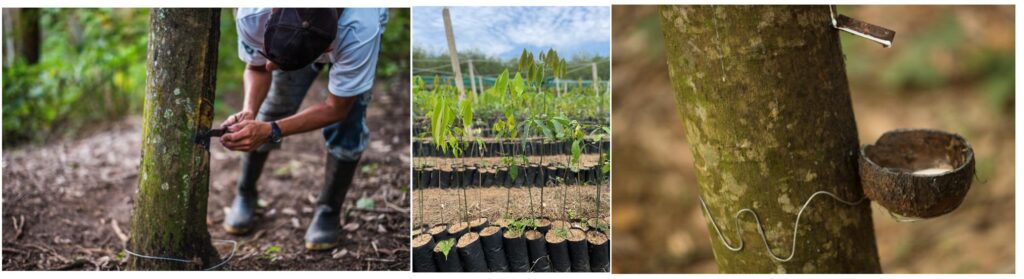
YULASTIC comes from the Hevea brasiliensis tree, commonly known as the rubber tree. Unlike elastane, which depends on fossil fuels, this natural rubber filament is a renewable resource.
Sustainability efforts extend beyond the materials themselves. Authorized manufacturing partners in Thailand and Vietnam produce YULASTIC fibers. These partners harvest and purify Yulex Pure latex locally. This localized supply chain minimizes environmental impact while ensuring economic benefits stay within producing regions.
The Future of YULASTIC Sustainable Stretch Fabric
As sustainability pressures mount in the fashion industry, brands must explore innovative, eco-friendly alternatives. YULASTIC represents a much-needed shift toward natural elasticity, aligning with broader trends in circularity and responsible sourcing.
Since several major brands have already committed to using YULASTIC in their collections, this plant-based alternative could soon become the new standard for stretchable, high-performance fabrics.
As brand partnerships unfold, the industry will closely monitor YULASTIC’s impact. If successful, this innovation won’t just be a breakthrough for Yulex—it could mark a turning point for sustainable fashion as a whole.