A factory can appear busy while losing time, material, and capacity at every turn. Scrap bins tell part of the story, but waiting parts, oversized batches, repeated adjustments, and excess inventory can create losses that are less visible.
The central question is what creates loss before it reaches the bin or the balance sheet. In manufacturing, waste reduction, operational efficiency, and sustainability often depend on how work moves through the system each day.
What Rethinking the Process Actually Means
Rethinking work means preventing manufacturing waste upstream instead of reacting to delayed orders, excess stock, or rework later. Flow, handoffs, batch sizes, scheduling, and quality checks shape cost, speed, and output together.
Lean manufacturing gives this effort a practical frame. It treats waste reduction as part of operational efficiency and continuous improvement rather than a separate sustainability exercise. For machining operations, material flow, machine setup, scheduling, and CNC milling services from 3-axis to 5-axis should match part complexity, tolerances, and batch needs.
Start With a Waste Audit, Not Assumptions
A waste audit replaces instinct with evidence. Teams should trace where scrap, rework, waiting, downtime, excess motion, and overproduction occur, then identify the conditions that repeatedly create each loss.
A machine with frequent stoppages, for instance, might not have a maintenance problem alone. Missing materials, delayed approvals, poor production scheduling, or inconsistent setup instructions can create the same idle time.
Value stream mapping works best when it follows both material and information. Material flow shows where parts sit, move, or queue, while information flow reveals whether plans, specifications, and demand signals arrive late or conflict.
For machining work, the map should capture setup, tool changes, inspection points, and transfers. Those details show whether losses originate in cutting, programming, inspection, or handoffs between departments.
The first audit should not become an unranked catalog of problems. Separating losses by line, shift, product family, or machine type exposes repeatable failure points that deserve attention first.
Where Most Manufacturing Waste Really Comes From
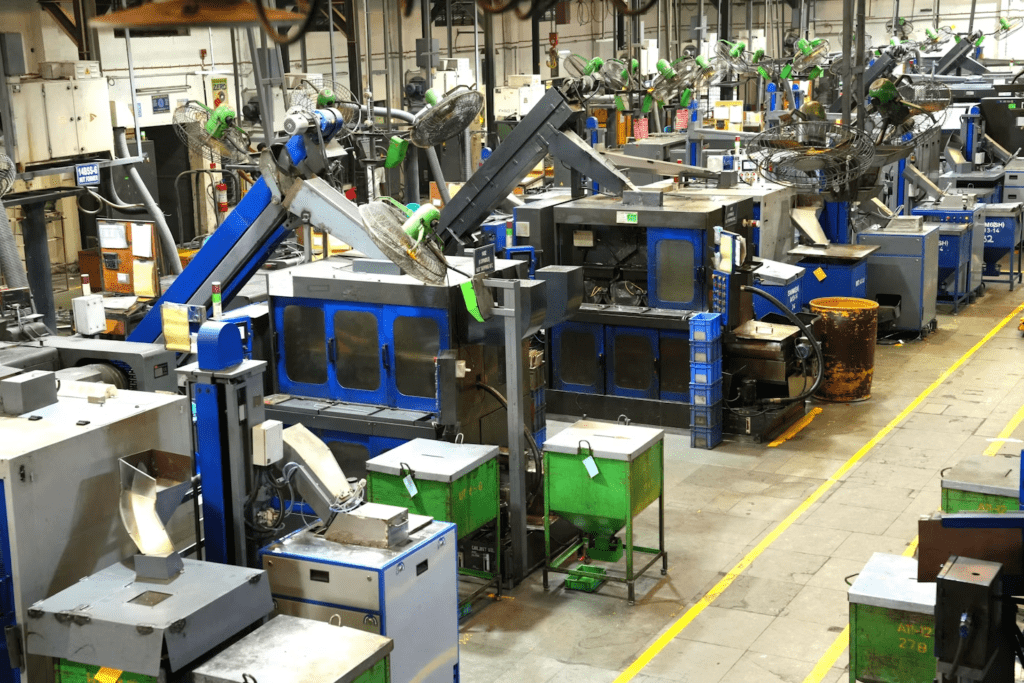
The 8 wastes of lean provide a useful way to spot losses that normal reporting often hides. They include defects, overproduction, waiting, unnecessary transportation, excess processing, excess inventory, unnecessary motion, and unused human capability.
Flow Problems Create Hidden Cost
Poor flow often begins with work released too early or moved in batches that are too large. Parts then wait between operations, occupy storage space, and force teams to search, move, count, and protect inventory.
Overproduction creates a chain reaction. It weakens demand forecasting because planners see stock rather than actual demand, complicates inventory management, and allows quality issues to remain undiscovered until many more parts have been made.
As an example, the Toyota Production System centers on making what is needed, when it is needed, and in the needed amount. That principle makes flow visible: work that is not moving toward a real requirement is likely consuming capacity without creating value.
Quality Problems Multiply Waste Fast
Defects rarely stay within the quality department. A nonconforming part consumes raw material, machine time, labor, inspection capacity, and often a place in the schedule before anyone identifies the issue.
Rework adds another layer of disruption because it competes with planned production. Quality control should therefore focus on finding the process condition behind recurring defects, such as a setup variation, an unclear work instruction, or unstable incoming material. Thus the importance of following clear and updated work instructions.
How Lean Changes the System, Not Just Output
Lean manufacturing changes the conditions that allow waste to build up. Smaller batches shorten the time between making a part and discovering a problem, while demand-aligned work reduces the temptation to fill every available hour with production.
Just-in-Time supports that approach by limiting excess inventory and obsolete stock. However, it depends on stable production scheduling, accurate demand signals, and reliable supplier coordination. Without those foundations, lower inventory simply exposes unmanaged variation.
Standard work gives operators a shared, repeatable method for tasks that affect safety, quality, or cycle time. Employee training then turns that method into daily practice rather than a document that sits outside the production area.
Predictive maintenance supports the same system by identifying deterioration before it creates unplanned downtime. The goal is not maintenance activity for its own sake, but dependable equipment that keeps flow predictable.
Together, these practices shorten the gap between detection and correction. That feedback loop is the working core of continuous improvement, and it connects directly with responsible craft production methods, where process discipline protects both material use and finished quality.
Measure Better Results With the Right KPIs
Broad cost totals show that money was lost, but they do not show where the process failed. Scrap rates, rework rates, downtime, and overall equipment effectiveness, or OEE, make losses easier to locate.
OEE combines availability, performance, and quality into one operating measure. It becomes more useful when reviewed alongside the underlying causes, since a higher result can conceal growing scrap or extended changeovers elsewhere.
A balanced KPI set should track efficiency, flow, and quality control at the same time. Falling downtime means little if overproduction rises, and lower scrap does not represent progress if rework shifts to a later operation.
Trendlines matter more than isolated snapshots. Repeatable waste reduction comes from stable process control, not from one unusually smooth week or a temporary push to clear a backlog.
Why Less Waste Also Supports Long-Term Resilience
Lower manufacturing waste leaves operations less exposed to material price swings, constrained supply, and avoidable energy use. Cleaner flow also makes it easier to see which inputs are genuinely required and where disruptions will affect production.
Closed-loop manufacturing becomes more practical after core process losses are controlled. Reusing offcuts, recoverable materials, or returned components requires consistent quality and traceable flow, not a system already overwhelmed by mix-ups and rework.
The same logic applies to the circular economy. Sustainability holds up when it comes from better process design, reduced material loss, and energy efficiency rather than a separate initiative layered onto unstable operations.
The Best Results Come From Fixing the System
Better results do not come from managing symptoms after production has already gone wrong. They come from redesigning the causes of waste, whether those causes sit in planning, flow, equipment reliability, or quality control.
The practical sequence is straightforward: audit waste, isolate root causes, change the conditions that produce them, and track the right KPIs over time. Lean manufacturing turns waste reduction into a disciplined way to improve operational efficiency, quality, and responsiveness together.