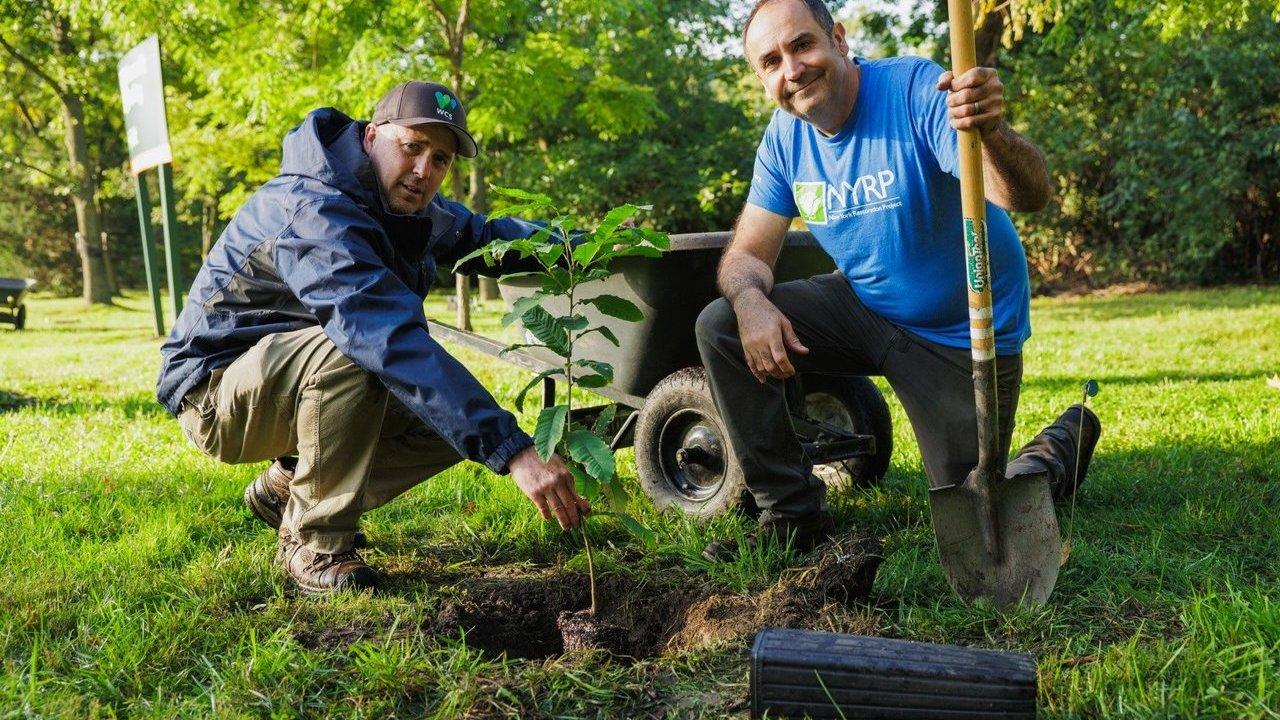
New York Restoration Project has donated 20 hybrid American chestnut trees to the Wildlife Conservation Society’s Bronx Zoo, restoring the species to the site for the first time in more than a century. Planted on 5 October 2026 with support from The American Chestnut Foundation, the two-to-three-foot saplings have been placed at three locations, including the east bank of the Bronx River and a pedestrian path north of Tiger Mountain. The return carries particular historical weight: the zoo’s Chief Forester Hermann Merkel first documented chestnut blight there in 1904. The fungal disease went on to kill an estimated nearly 4 billion American chestnut trees across North America, leaving the species functionally extinct in the wild.
A Historic Return
The planting links a major New York City green space to an ecological loss that reshaped forests across the eastern United States. Once widespread from Maine to Florida and west to the Ohio Valley, American chestnuts provided food and habitat for wildlife, alongside timber for generations of people. Their rapid decline in the early 20th century removed a defining tree from much of its native range.
At the Bronx Zoo, the new trees are intended to establish a living connection between that history and current restoration work. The hybrid chestnuts combine American chestnut genetic heritage with blight resistance, forming part of efforts to return the species to places where it previously thrived. The planting also adds another location to New York City’s emerging network of chestnut restoration sites.
Lynn Bodnar Kelly, Executive Director of New York Restoration Project, said:
“Bringing the American chestnut back to New York City is both an act of restoration and an invitation to imagine what our urban landscape can look like in the future,”
Lynn Bodnar Kelly, Executive Director of New York Restoration Project, said:
“For generations, this remarkable tree was a defining part of our forests, and its loss changed the landscape in profound ways. Through partnerships like this one, we have an opportunity to help restore the chestnut while inviting New Yorkers to be part of its return. We’re thrilled to see these trees take root at the Wildlife Conservation Society’s Bronx Zoo, a place with such a deep connection to the history of the chestnut and to conservation.”
Urban Restoration Network
The Bronx Zoo planting builds on New York Restoration Project’s urban programme to restore American chestnuts across the city. Since 2017, the organisation has worked with The American Chestnut Foundation and NYC Parks to introduce hybrid trees into New York City landscapes. Its work includes more than 200 hybrid American chestnuts planted and stewarded in Northern Manhattan’s Highbridge Park, described as the city’s largest chestnut grove.
In 2025, NYRP launched the 1,000 Chestnut Challenge, inviting New Yorkers and local institutions to plant and monitor chestnut saplings over time. The initiative includes TACF hybrids as well as trees propagated from chestnuts grown in New York City, placing community participation alongside long-term observation of tree performance.
For restoration partners, these planted populations provide an opportunity to monitor how hybrid chestnuts establish and develop in urban environments. Such work is especially pertinent for a species whose historic range was once measured across vast areas of eastern North America, but whose wild population was devastated by blight.
Michael Goergen, President & CEO of The American Chestnut Foundation, said:
“These trees do more than reconnect New Yorkers with a lost part of their natural history. They become part of a living restoration network, helping us learn which trees can survive, grow, and ultimately reclaim their place in forests and communities of the future.”
A Green Space Connection
The Bronx Zoo occupies 265 acres of hardwood forest and has served New York City since opening in 1899. Its landscape provides a fitting setting for the reintroduction, with the saplings planted beside the Bronx River and along a heavily used zoo route. The project brings a native tree back into a public setting where visitors can see a direct example of species recovery work.
The zoo’s collaboration with NYRP and TACF also aligns local habitat care with the institution’s wider conservation remit. The planting acknowledges a difficult chapter in the site’s own environmental history while creating a practical, visible expression of restoration in the Bronx.
Craig Piper, Interim Executive Vice President of the Wildlife Conservation Society’s Zoos and Aquarium and Director of the Bronx Zoo, said:
“In addition to being one of America’s great zoos, the WCS Bronx Zoo is an iconic greenspace in New York City. Throughout our history, we’ve worked to maintain a thriving forest on the zoo campus for the enjoyment of generations of New Yorkers and to provide critical habitat for local wildlife and the animals in our care. We’re thrilled to partner with the New York Restoration Project and the American Chestnut Foundation to return American chestnut trees to the WCS Bronx Zoo. Our conservation work spans the globe, but also includes a commitment to our historic home and roots in the Bronx.”
Restoring A Familiar Species
The chestnuts at the Bronx Zoo are modest in size today, but their placement represents a substantial symbolic and practical step for urban ecology. By establishing trees at three separate points across the site, the partners are extending a citywide effort that joins conservation, horticulture and public participation.
More than 120 years after chestnut blight was first recorded at the zoo, the species’ return offers visitors a chance to encounter an American tree that was once abundant but has become largely absent from the landscape. As the trees grow, they will stand as part of a wider restoration network intended to reconnect New Yorkers with the American chestnut’s ecological and cultural legacy.