Wildlife Conservation Society’s Bronx Zoo has helped rescue and rehabilitate more than 800 North American box turtles confiscated from the illegal wildlife trade since October 2024. Working with the U.S. Fish and Wildlife Service, the zoo has provided emergency triage, veterinary treatment, quarantine and rehabilitation for animals intercepted during attempted illegal exports through New York-area airports. Federal officials describe the recent rise in turtle trafficking as unprecedented, with most of the animals thought to have been taken from the wild for the international pet trade. The response places the Bronx Zoo at the centre of a vital conservation and enforcement support effort, helping protect individual animals while limiting pressure on wild turtle populations.
Emergency Care After Seizure
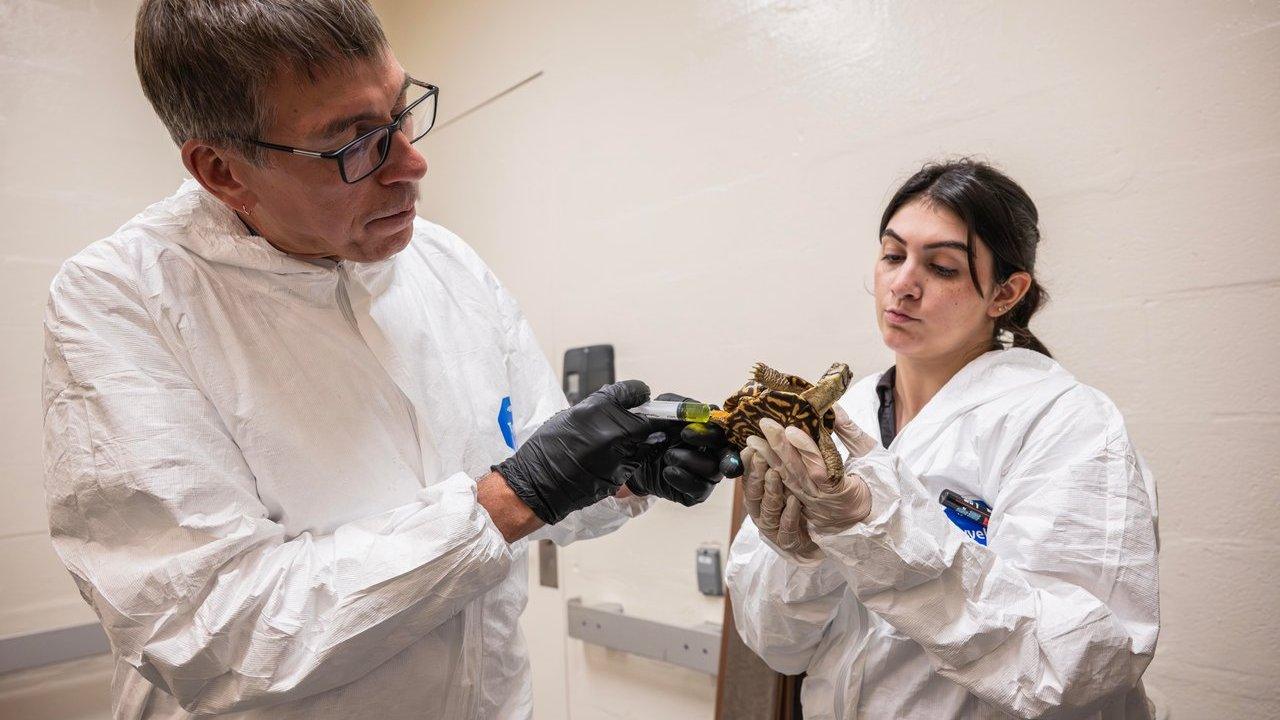
Confiscated turtles can arrive in a severely compromised condition after poor transport and holding conditions. At the Bronx Zoo, veterinary and husbandry teams carry out an intake examination for every animal, assessing its health, administering fluids and treatment, documenting injuries, testing for disease, recording weight, confirming species and sex, and determining whether quarantine or rehabilitation is required.
The most frequently received species are eastern, three-toed, ornate and Florida box turtles. Other animals involved in trafficking cases have included Gulf Coast box turtles, spotted turtles and diamondback terrapins. Although many turtles respond well to specialist care, some arrive too unwell to survive despite intensive treatment.
Kevin Torregrosa, WCS Bronx Zoo Curator of Herpetology, said:
“The Wildlife Conservation Society’s Bronx Zoo plays a critical role in combating the illegal wildlife trade by partnering with law enforcement agencies to provide triage, quarantine, veterinary care, rehabilitation, and placement for confiscated turtles and tortoises. Many turtles and tortoises seized from illegal trafficking operations arrive dehydrated, malnourished, injured, or suffering from infectious diseases after enduring poor transport and holding conditions. Our expertise allows us to stabilize and care for these animals while supporting ongoing investigations and helping ensure they ultimately have the best possible future. These efforts not only rescue individual animals but also contribute to broader efforts to combat wildlife trafficking, protect threatened and endangered species, and safeguard wild turtle and tortoise populations.”
Pressure On Wild Populations
The removal of adult turtles from the wild presents a serious challenge for local populations. Box turtles are long-lived, mature slowly and reproduce at relatively low rates, meaning the loss of breeding adults can be difficult to reverse. The damage can extend well beyond the animals seized from traffickers, particularly where collection occurs at scale.
Many of the turtles involved in trade are protected under the Convention on International Trade in Endangered Species of Wild Fauna and Flora, while state-level protections also apply to certain species. In New York and New Jersey, for example, it is illegal to collect or possess eastern box turtles.
Kevin Torregrosa, WCS Bronx Zoo Curator of Herpetology, said:
“Box turtles are especially vulnerable because they mature and reproduce slowly. Removing large numbers of breeding adults from the wild can devastate local populations. It may take decades—or even generations—for those populations to recover, if they recover at all.”
A Growing Conservation Role
The Bronx Zoo’s response builds on a longstanding role in caring for wildlife confiscated by law enforcement. For decades, Wildlife Conservation Society facilities in New York City have supported government agencies with veterinary care, rehabilitation and long-term placement while criminal investigations continue.
The scale of this work has increased substantially. In 1996, WCS’s zoos and aquarium received just over 100 confiscated animals for rescue and rehabilitation. By 2025, that figure had grown to well over 500 animals annually, covering birds, mammals, reptiles, fish, corals and other wildlife. The trend points to a wider need for accredited facilities with suitable quarantine space, specialist animal care and conservation experience.
Once turtles have recovered, their next destination is determined under USFWS disposition plans. Depending on species, health, legal requirements and the circumstances of each case, animals may be placed with accredited zoological institutions or conservation organisations. Where it is legally and biologically appropriate, some can be returned to protected habitat in the wild.
Coordinating Confiscated Wildlife Care
Wildlife trafficking cases require care capacity as well as enforcement action. The Association of Zoos and Aquariums launched its Wildlife Confiscations Network in 2023 to help coordinate placement and long-term care for confiscated animals. The network brings together accredited zoos, aquariums and other vetted wildlife care facilities in partnership with USFWS.
WCS is also championing the Wildlife Confiscations Network Act, H.R. 3835, bipartisan legislation intended to ensure confiscated wildlife can be placed with qualified animal care facilities while state and federal officers focus on investigating and holding traffickers accountable.
For the Bronx Zoo, the rehabilitation of more than 800 box turtles shows the practical value of conservation institutions equipped to respond when enforcement action interrupts illegal trade. Immediate clinical care can give seized animals a chance of recovery, while the evidence gathered through intake and treatment supports the broader work of tackling trafficking and safeguarding vulnerable wild populations.