Berlin-based sustainable furniture brand ROOM IN A BOX continues to redefine eco-friendly living with its innovative approach to circular furniture design. Since its founding in 2013, the company has remained committed to providing functional, high-quality alternatives to traditional furniture while minimizing environmental impact through the use of sustainable materials. With recent expansions into the United States and the United Kingdom, ROOM IN A BOX is making significant strides in global sustainability efforts.
A Commitment to Circular Economy and Sustainable Materials
ROOM IN A BOX operates on a core principle: reducing waste through landfill diversion. Their furniture, including the patented Bett 2.0, is crafted from 100% recyclable cardboard, ensuring that at the end of its life cycle, it returns to the paper stream instead of contributing to landfill waste. The materials used include 70% post-consumer recycled content, with the remaining fibers ethically sourced through Forest Stewardship Council (FSC)-certified methods.
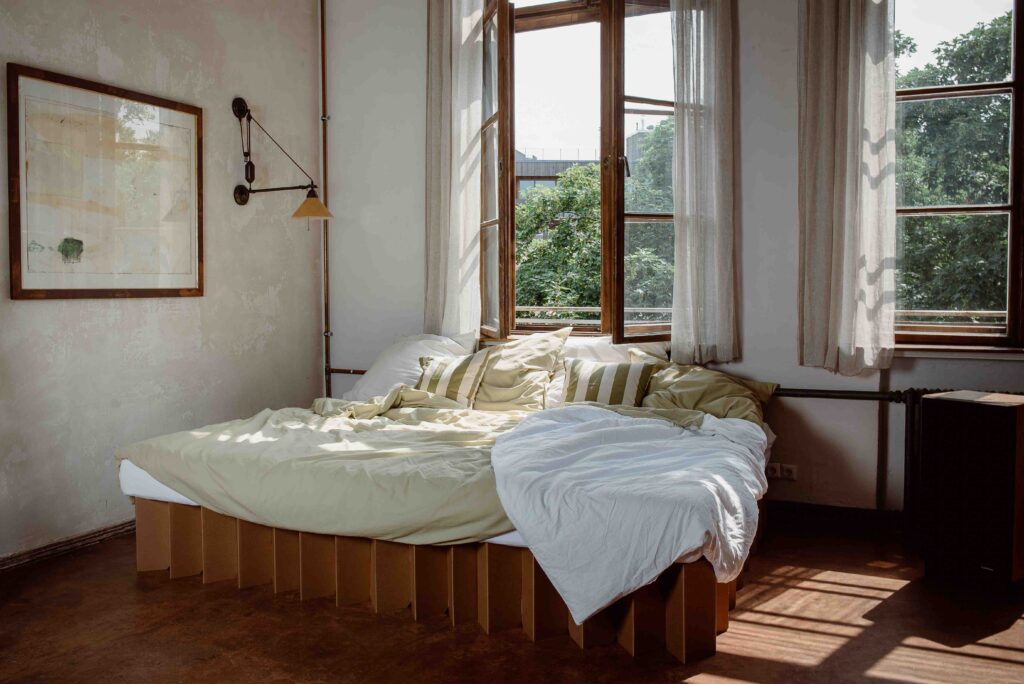
The Bett 2.0 bed platform exemplifies this sustainable mission. Designed for convenience and longevity, it arrives in a compact, easy-to-carry box and requires no tools for setup. Each unit is built to last for up to ten years, making it a viable solution for eco-conscious consumers seeking durability without compromising sustainability.
Expansion into the U.S. and U.K.
With an increasing demand for sustainable furniture, ROOM IN A BOX expanded its operations to the United States and the United Kingdom. By manufacturing and shipping locally, the company minimizes emissions associated with international transportation while supporting local economies.
In the U.S., the company sources corrugated cardboard from the Southeast region, maintaining a 70% post-consumer recycled content standard. Their zero-waste manufacturing processes and partnerships with carbon-neutral shipping providers align with their broader goal of reducing environmental footprints. Free shipping is available to customers across 48 states, further enhancing accessibility.
Functional and Sustainable Materials in Design
The Bett 2.0 is available in multiple sizes, including twin, twin XL, full, queen, and king. Designed for easy setup and storage, the bed platform is ideal for those who frequently move, live in temporary spaces, or want a sustainable guest bed option.
Each bed frame boasts a sturdy construction with weight capacities reaching up to 750 pounds for larger models. For enhanced stability, customers are encouraged to use anti-slip mats on smooth floors. The included storage box simplifies setup and breakdown, making it an ideal option for urban dwellers and minimalists.
Product Dimensions:
- Twin: 37.5 x 70.75 x 13 in
- Twin XL: 38 x 79.5 x 13 in
- Full: 52.5 x 73 x 13 in
- Queen: 55.5 x 77.75 x 13 in
- King: 76 x 79.5 x 13 in
- Transport/Storage Box: 65 x 14 x 12 in
Environmental and Social Impact
Beyond product design, ROOM IN A BOX actively contributes to global reforestation efforts. Through a partnership with Eden: People+Planet, a tree is planted for every bed sold in the United States. This initiative reinforces the company’s broader mission to create a circular economy and engage consumers in sustainability.
ROOM IN A BOX also prioritizes consumer education, encouraging responsible shopping habits and sustainable lifestyle choices. By fostering partnerships with like-minded organizations, they seek to amplify their impact and inspire more individuals to consider the environmental implications of their purchasing decisions.
The Future of Sustainable Furniture
As ROOM IN A BOX continues to innovate, their focus remains on enhancing product durability, recyclability, and production efficiency. Their approach to sustainability challenges traditional furniture manufacturing by proving that eco-friendly materials can deliver both functionality and aesthetic appeal.
By expanding its presence in key markets and reinforcing its commitment to sustainability, ROOM IN A BOX is not just selling furniture—it is advocating for a more sustainable future. Their pioneering work in circular furniture design sets a benchmark for the industry, demonstrating that environmental responsibility and modern living can go hand in hand.