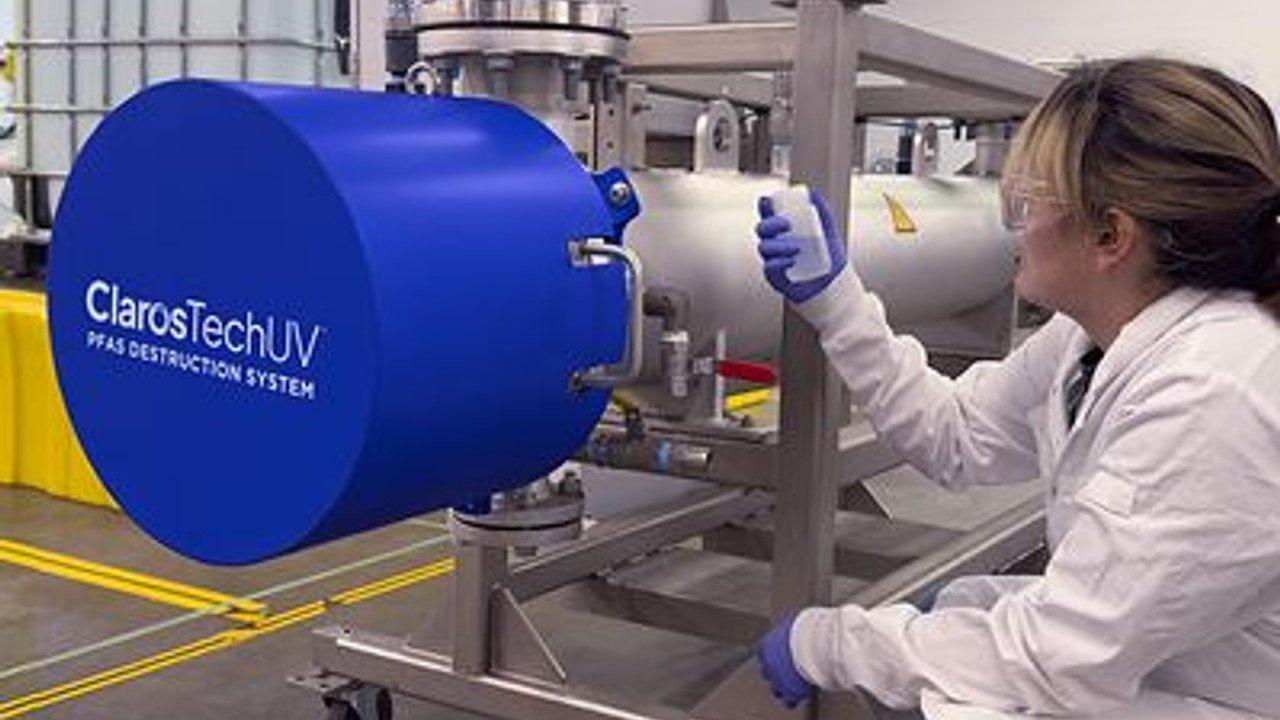
Claros Technologies and Daikin America have agreed to deploy a full-scale ClarosTechUV™ PFAS destruction system at Daikin’s Decatur, Alabama manufacturing facility. The long-term installation follows pilot and commercial optimisation phases, and will operate continuously within Daikin’s industrial processes. Claros says its high-flow UV-based platform permanently destroys 99.99% of target PFAS species, including long, short and ultra-short chain compounds. The project also combines destruction technology with continuous analytical testing through ClarosLabs™, marking a substantial commercial step for on-site PFAS treatment in manufacturing.
From Pilot To Permanent Deployment
The agreement formalises a multi-phase collaboration that has progressed from pilot demonstration to commercial optimisation and now a permanent installation. The system will be incorporated into wider improvements planned at Daikin’s Decatur campus over the next few years, placing PFAS destruction directly within the facility’s manufacturing operations.
For industrial sites managing fluorinated compounds, the distinction is important. Rather than concentrating contaminants for transportation or later disposal, the companies are positioning the installation as a continuously operating treatment option at the point of generation. ClarosTechUV™ is intended to treat target fluorine chemistries across long, short and ultra-short chains, including TFA.
Yuichi Hashikawa, CEO at Daikin America, said:
“Daikin America, Inc. is pleased to continue our partnership with Claros through our agreement for full-scale PFAS destruction deployment to demonstrate our commitment to innovation and environmental stewardship”
Yuichi Hashikawa, CEO at Daikin America, said:
“Our work together these past few years have shown that it is possible to be a responsible manufacturer while providing materials essential to today’s society. DAI hopes to establish a roadmap for all of industry.”
Treatment With Continuous Verification
The Decatur deployment will pair the ClarosTechUV™ treatment system with ClarosLabs™, the company’s analytical division. This brings measurement and performance verification into the same platform as destruction, supporting operational validation over the life of the installation.
ClarosLabs™ is described by the company as an ISO/IEC 17025:2017-accredited analytical division specialising in PFAS detection, quantification and exposure assessment. Combining testing with treatment can provide manufacturers with a more direct view of system performance while the equipment is operating at industrial scale.
The model is designed for applications where PFAS management must sit alongside normal production requirements. Claros deploys its systems across industrial wastewater, groundwater, data centre water and municipal wastewater applications, while this project centres on a manufacturing setting.
Industrial Applications In Focus
PFAS materials continue to be used in a range of critical applications, including semiconductor manufacturing, medical devices and healthcare, aerospace and clean energy. The companies present permanent destruction as a route to maintain access to these materials while reducing the environmental burden associated with their use and disposal.
Daikin America manufactures high-performance materials for applications where particular physical and chemical properties are required. Its Decatur project provides a commercial-scale test of how permanent destruction equipment can be integrated into an established manufacturing campus, rather than treated as a separate downstream activity.
The agreement also extends beyond the initial site. Claros and Daikin will evaluate further opportunities for ClarosTechUV™ applications across Daikin’s global operations, creating a basis for additional industrial deployment if the technology meets the companies’ operational objectives.
Beyond PFAS Management
PFAS have often been managed by capture, concentration and transfer to other waste streams. The central proposition behind the Claros and Daikin installation is that destruction can occur on site and as part of routine industrial operations. This offers a practical alternative for manufacturers looking to address PFAS at its source while retaining production performance.
Michelle Bellanca, CEO and Co-Founder at Claros Technologies, said:
“This is the defining commercial achievement in Claros’ history,”
Michelle Bellanca, CEO and Co-Founder at Claros Technologies, said:
“We believe this marks a turning point not only for Claros, but for the entire industry. For decades, organizations have focused primarily on managing PFAS—capturing it, concentrating it and transporting it elsewhere for disposal or destruction. Manufacturers now have a proven, commercially available solution capable of permanently destroying PFAS on-site as part of normal industrial operations. When environmental stewardship aligns with operational performance and commercial practicality, transformative technologies move from innovation to adoption.
A Commercial Milestone
The full-scale Daikin installation gives Claros a prominent industrial reference point for its proprietary platform. It also reflects a more integrated model of PFAS management, combining high-flow treatment, analytical verification and long-term deployment in one facility programme.
Michelle Bellanca, CEO and Co-Founder at Claros Technologies, said:
“This announcement is about far more than one installation. It demonstrates that permanent PFAS destruction has crossed the threshold from scientific achievement to commercial reality. We believe future generations will look back on this period as the point when industry began moving beyond PFAS management toward permanent PFAS elimination.”
As requirements surrounding drinking water, industrial wastewater and manufacturing operations continue to tighten, the Claros and Daikin agreement demonstrates how industrial companies can put permanent PFAS destruction technology into live production environments. The Decatur project will be closely watched as a meaningful commercial deployment for a sector seeking credible ways to eliminate, rather than relocate, persistent contaminants.