While Green Manufacturing focuses on ecological sustainability and minimizing environmental impact, flexible manufacturing prioritizes operational agility and the ability to rapidly adapt to market changes. Their relationship is highly synergistic.
Many classic EU plants struggle to create excellent components utilizing systems that are slow to change without consuming extra raw materials or energy. This causes both ecological harm from rising greenhouse gas emissions and wasteful budgeting.
This is where green manufacturing becomes a vital point. That’s what we are talking about today.
Why Green Manufacturing Matters Today
Green manufacturing might be and always will be the trend of the future. The impact is significant. World Economic Forum research shows that sustainable production can cut industrial emissions by up to 80%.
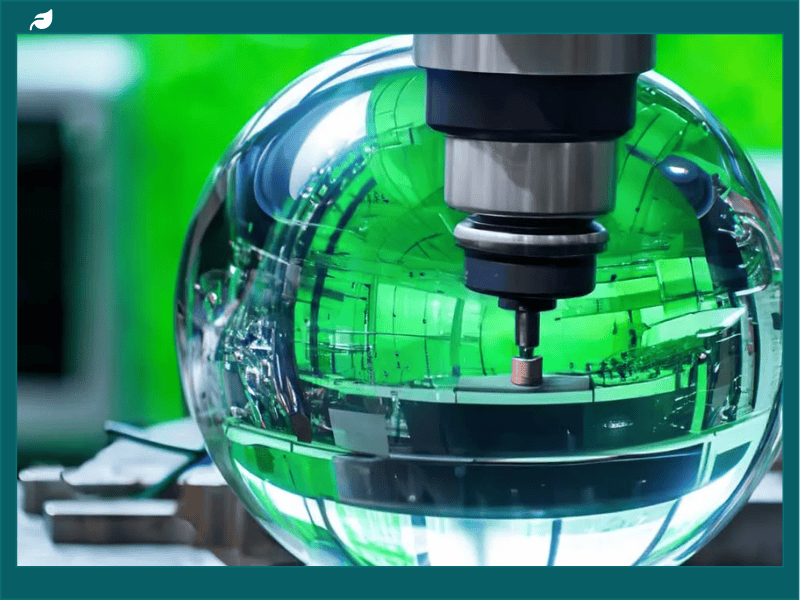
For fast-growing sectors like electric vehicles, green manufacturing is a competitive necessity, not just a branding choice. As production scales up, companies face intense pressure to reduce emissions and save materials. Flexible manufacturing makes this possible, allowing factories to easily adapt to strict environmental rules without losing efficiency.
What Flexible Manufacturing Means in Practice
General flexible manufacturing systems are those developed to swiftly modify product designs, volumes, or workflows. In machining manufacturing, for example, particularly involves sophisticated 4-axis or 5-axis machines, most of these contemporary factory designs combine CNC machines, automated material handling, and centralized computer control.
This mechanism guarantees real-time changes, therefore maintaining great efficiency and always advancing green manufacturing goals together with the Industrial Internet of Things.
What Supports Flexible Manufacturing?
Custom machining plays a vital role in the flexible production debate. Unlike the old, unconventional machines, CNC unlocks a certain degree of freedom with designs, which allows engineers to have a free day with complex geometries and intricate shapes without the high costs and wasteful retooling.
The machining precision can be useful for components that requires a high degree of precision, such as precision shaft components, which will be needed for production in the automotive industry or in robotics. Customized machining also allows for instant adjustment to changes made to blueprints. It also significantly enhances design for manufacturability through rapid prototyping and fast iterations of designs using digital files.
Green Material in Sustainable Manufacturing
The selection of green materials is another essential factor towards sustainable manufacturing. Utilizing recycled metals and engineering polymers in conjunction with existing factories, European environmental criteria such as REACH and RoHS drive the accuracy of components.
For instance, steel such as S235JR is a common choice because of its strength, recyclability, and longevity. Simultaneously, aluminium alloys like EN AW-6082 T6 and EN AW-6063 T6 are utilized more often since they enable light and energy-efficient product designs. Using these approved materials helps to guarantee environmentally friendly and long-lasting precision components.
Conclusion
Flexible production plays an important role in modern industrial sustainability. Green manufacturing’s connection with custom CNC operations creates a highly resilient, future-proof business model with digital technologies and automation. This shift towards achieving real progress with carbon-neutral manufacturing will create a long-term success rate with efficiency and sustainability.