Independent science shapes peatland management
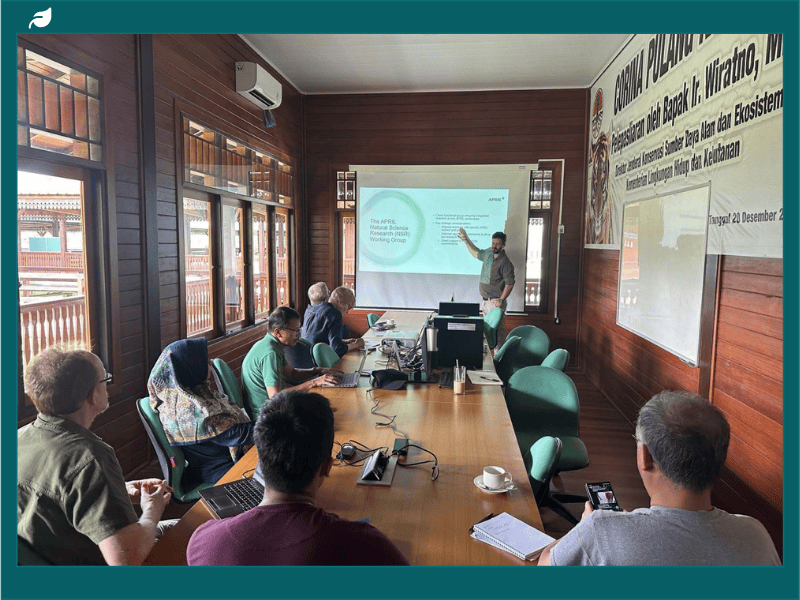
APRIL Group has marked ten years of collaboration between its Independent Peatland Expert Working Group (IPEWG) and its in-house Peatland Science team, reflecting a decade-long effort to embed scientific oversight into peatland management at scale. The milestone highlights how independent expertise has influenced corporate decision-making while contributing to the wider global understanding of tropical peatlands.
Established in 2015, IPEWG was created to provide independent scientific advice on peatland management within APRIL’s operations in Indonesia. At the time, the move was seen by many as an experiment in transparency and accountability in a sector often criticised for environmental impacts on carbon-rich peat landscapes. A decade on, APRIL says the collaboration has helped shape operational practices and elevate peatland science beyond the company’s own concessions.
“The launch of the IPEWG was a leap of faith for both the company and the scientific community,” said Dr. Ruth Nussbaum, IPEWG Coordinator and Director of Proforest. “What made it truly unique was the level of access and collaboration granted to independent scientists, allowing us to rigorously advise on operational decisions while contributing to global research.”
From oversight to operational influence
Over the past ten years, IPEWG members have worked closely with APRIL’s Peatland Science team, engaging directly with field data, infrastructure planning and long-term monitoring. This relationship went beyond high-level advisory roles, with scientists given access to sites, datasets and internal discussions that informed decisions on water management, canal design and peatland restoration strategies.
APRIL invested in extensive monitoring infrastructure to support this work. This includes four Eddy Covariance Flux Towers, rising between 40 and 48 metres above the forest canopy, which measure greenhouse gas exchanges across different land uses. Combined with long-term studies across hundreds of monitoring sites, the data has provided an unusually detailed evidence base for understanding how tropical peatlands respond to management interventions.
For APRIL, this scientific input has been positioned as a way to reduce uncertainty in complex landscapes where drainage, emissions, biodiversity and livelihoods intersect. For the scientists involved, the collaboration offered a rare opportunity to test hypotheses and gather long-term data at an operational scale that is often inaccessible to academic research alone.
Contributions to global peatland science
Beyond informing company practices, the collaboration has fed into the wider scientific literature. Joint research by IPEWG members and APRIL scientists has been published in peer-reviewed journals including Global Change Biology, Nature Geoscience and Nature. Findings have also been presented at international conferences, adding empirical data from Southeast Asian peatlands to global climate and land-use discussions.
Tropical peatlands are among the world’s most carbon-dense ecosystems, yet they remain less studied than their temperate counterparts. Drainage and conversion can turn these landscapes from carbon sinks into major sources of emissions, making management practices a critical issue for climate mitigation. The research emerging from APRIL’s peatlands has helped fill gaps in understanding greenhouse gas dynamics, subsidence rates and hydrological controls in these environments.
Data sharing has been a notable feature of the collaboration. According to APRIL, findings have been made available to the scientific community, supporting broader efforts to refine models and management approaches for peatland landscapes beyond the company’s operations.
Evolving governance and independent challenge
With the current phase of IPEWG concluded, APRIL is now integrating peatland expertise into its wider governance structures. In December 2025, Dr. Fahmuddin Agus of Indonesia’s National Research and Innovation Agency (BRIN), a long-standing IPEWG member, joined APRIL’s independent Stakeholder Advisory Committee (SAC).
Dr. Agus brings decades of experience in peatland science and greenhouse gas monitoring, and his appointment is intended to strengthen the SAC’s interdisciplinary perspective. The committee’s remit extends beyond operational performance to include social, economic and ecological considerations across broader landscapes.
“The inclusion of Dr Fahmuddin Agus ensures the spirit of independent scientific challenge continues within APRIL’s governance framework,” said Craig Tribolet, Director of Sustainability and External Affairs at APRIL Group. “It reflects our commitment to continuous improvement and maintaining world-class standards in peatland management as outlined in SFMP 2.0 and our APRIL2030 commitments.”
This shift signals a move from a standalone expert group towards embedding scientific scrutiny within long-term oversight mechanisms. It also reflects a broader trend among sustainability-focused companies to integrate environmental expertise into governance rather than treating it as an external check.
Science, credibility and corporate responsibility
The anniversary comes at a time when peatland management remains under intense scrutiny from regulators, investors and civil society. Peat drainage is a major source of land-use emissions in Southeast Asia, and restoration efforts are increasingly seen as essential for meeting national and corporate climate targets.
APRIL’s experience illustrates both the potential and the limits of science-driven collaboration. Independent experts can challenge assumptions, improve practices and generate valuable data, but translating science into consistent outcomes across large landscapes remains complex. Climate change adds further uncertainty, altering rainfall patterns, fire risk and hydrological stability in peat regions.
Still, proponents argue that sustained engagement with independent science builds credibility in a sector where trust has often been lacking. By allowing external experts to scrutinise operations over a decade, APRIL has sought to demonstrate that long-term partnerships can deliver more than short-term audits or one-off studies.
Lessons for the wider sustainability agenda
The newly published report, Challenge & Collaboration: A Decade of the Independent Peat Expert Working Group, documents the evolution of the partnership and the lessons learned. It highlights the importance of access to data, long-term monitoring and open dialogue between companies and scientists.
For the wider sustainable business community, the case raises broader questions about how science is used in corporate decision-making. Independent expertise can be costly and, at times, uncomfortable, but it may also offer a pathway to more resilient strategies in environmentally sensitive sectors.
As pressure mounts on companies operating in carbon-rich ecosystems, APRIL’s decade-long experiment suggests that sustained scientific collaboration can move beyond compliance towards shaping how industries engage with some of the planet’s most fragile landscapes. Whether similar models will be adopted more widely may depend on how convincingly they can balance commercial realities with ecological limits.