Residents living in three tower blocks in Blackburn are benefitting after receiving an award-winning renewable refurbishment.
The people living in Daisyfield Towers in the Lancashire town have had their old,
outdated and inefficient gas boilers replaced by ground source heat pumps.
The switch is expected to save 6,556 tonnes of carbon monoxide emissions over the
next 20 years – the equivalent of taking 1,413 cars off the round for a whole year, or
283,781 bags of waste being recycled instead of landfilled.
It will also help to tackle fuel poverty in the area during a time when the cost-of-living
crisis is hitting harder than ever.
Daisyfield Towers is a group of three tower blocks owned by social housing provider
Together Housing.
With these 183 properties standing tall since the 1950s, options for modernisation
were limited. And with many residents being elderly, anything other than a renewable
system would have risked putting occupants into fuel poverty. The only alternative
option would have been for the homes to have been demolished and rebuilt, but with
a lower density of homes available on the site.
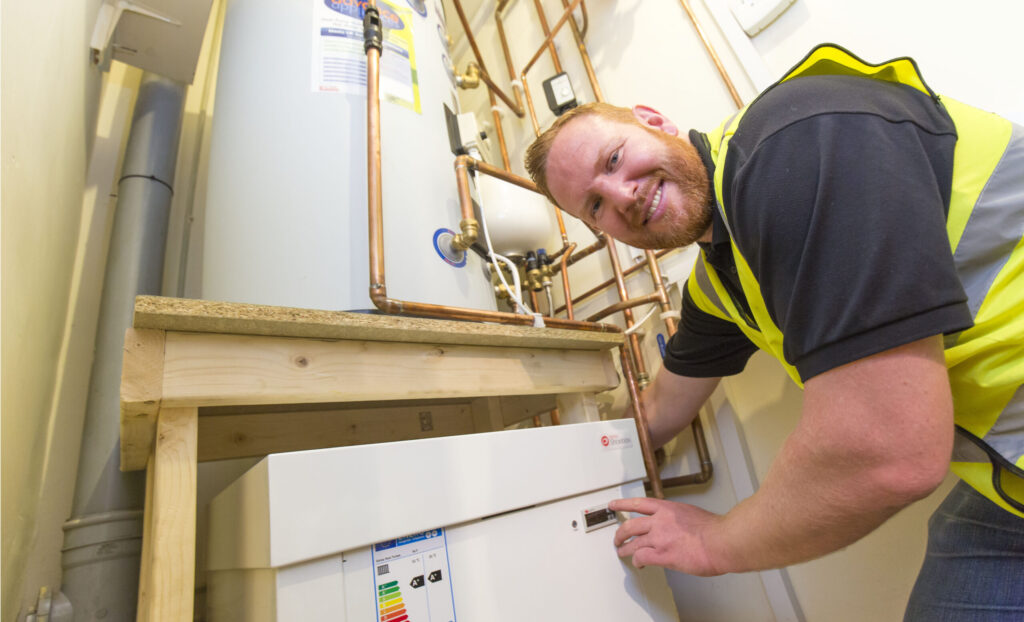
Compact and space-saving Kensa Shoebox ground source heat pumps were
installed inside each individual property in Daisyfield Towers, linked to a radiator
system and a hot water cylinder.
It was a challenging project, with more than 16,000m of pipe used in total.
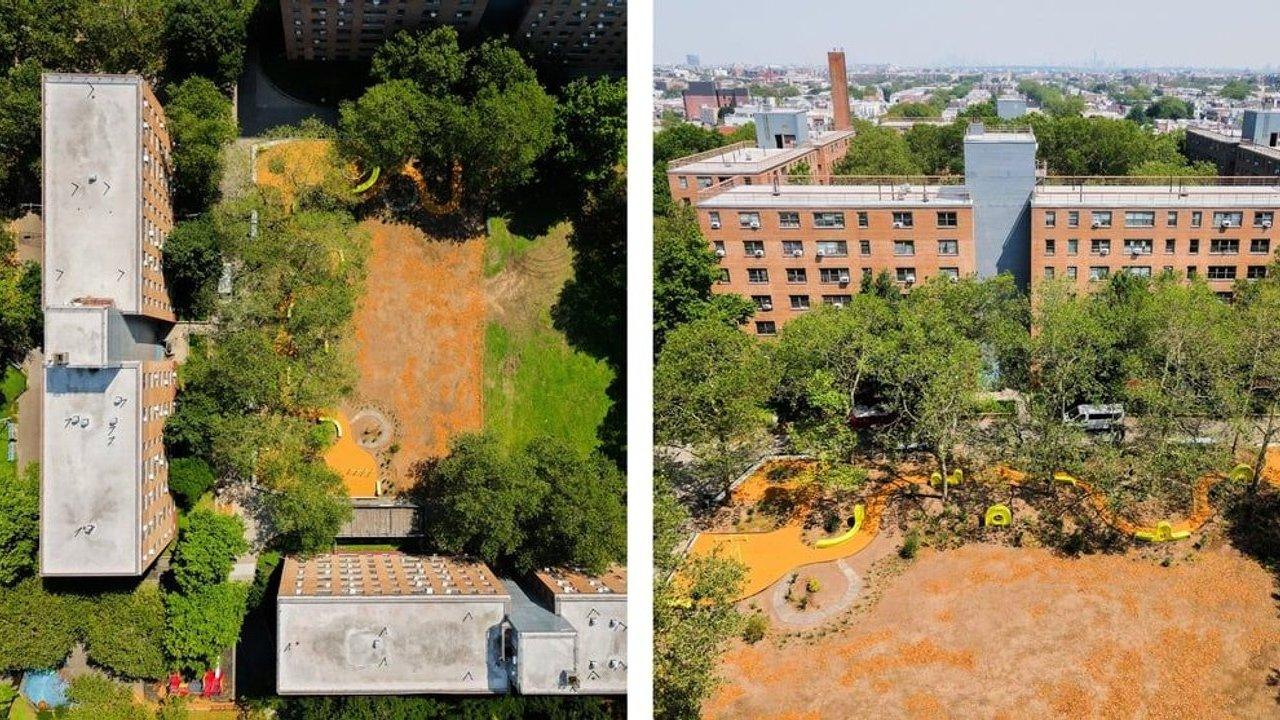
A shared ground loop array of boreholes was drilled underneath the green spaces and car parks adjacent to the tower blocks

-to extract natural heat energy stored underground. The small but powerful Shoebox heat pumps upgrade the heat for use within each flat whenever it is needed.
The innovative project trialled deeper than average boreholes of up to 300 meters,
which meant that less boreholes were needed in total, and the installation was more
cost effective to complete.
The system installed has been viewed as best practice by many stakeholders, with
more than a hundred officials having visited the site since its completion.
The solution delivered has made a significant impact on the quality of life of the
tower block’s occupants. Not only has the removal of the failing communal gas
system dramatically reduced potential safety risks, the removal of combustion engine
emissions from the site has had a huge positive impact on local air quality.
It’s the latest work of Together Housing and Kensa Contracting. The pair have been
on a mission to tackle fuel poverty and reduce carbon footprints since 2018.
Over the last three years, the organisations have conducted a renewable heating
retrofit programme, installing more than 1,200 low-carbon ground source heat pumps
into properties across Lancashire and Yorkshire.
Together Housing, which is one of the country’s leading social housing providers
with more than 37,000 homes, is investing £120m in green energy projects to move
fully away from fossil fuels by 2035. This project in Blackburn is one of just 3,000
projects they have taken on in recent times as they look to halve its operational
carbon impact by 2030.
Patrick Berry, Director of Together Net Zero, said: “This has been a challenging and
complex project combining a lot of retrofitting work, but one that we’re really proud
of. It will make a huge difference to people’s lives, and we thank our residents for
their patience while the work was carried out.”
Iain Carr, Director of Domestic Sales for Kensa Contracting, said: “Kensa
Contracting has pioneered the use of ground source heat pumps in social housing,
which significantly reduce carbon emissions and household heating bills.
“This innovative project has been a true partnership of client and contractor working
to achieve a shared goal of decarbonisation, reducing fuel poverty, and providing
affordable comfortable homes, through the adoption of British-manufactured
renewable technology.”
Late last year, the project to transform the outlook of the 1950s properties in
Blackburn was recognised in the Heating and Ventilation News Awards, impressing
judges to scoop the District Heating Project of the Year prize. It was also highly
commended in the Heat Pump Project of the Year category.