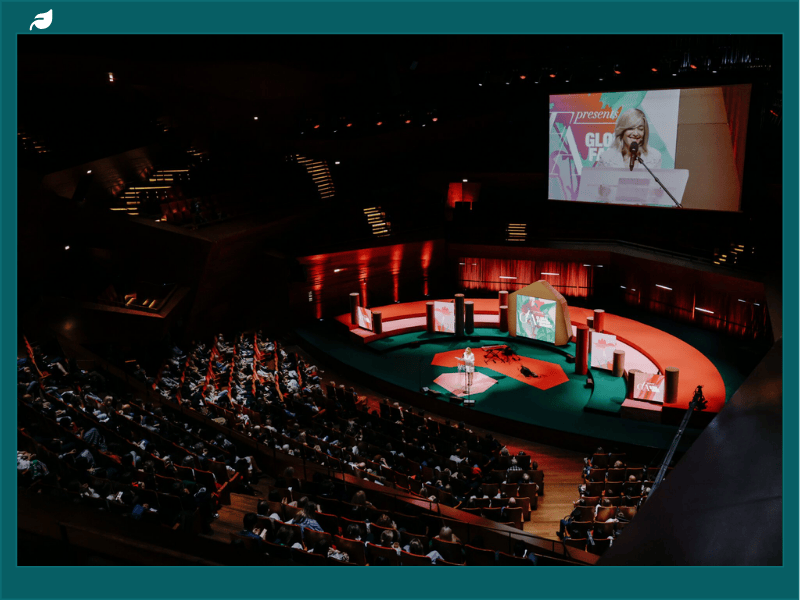
Global Fashion Agenda has announced the theme for Global Fashion Summit: Copenhagen Edition 2026, setting the agenda for discussions on resilience across the fashion industry. Taking place on 6–7 May at the Copenhagen Concert Hall, with pre-Summit events beginning on 5 May, the event will gather industry stakeholders under the patronage of Her Majesty the Queen of Denmark.
The Summit arrives at a time of mounting pressure on the fashion sector. Disruptions across supply chains in key sourcing regions such as Bangladesh, Turkey and Vietnam, alongside shifting consumer expectations and rising global temperatures, have tested the industry’s ability to adapt. The theme, ‘Building Resilient Futures’, reflects both the challenges faced and the need to strengthen long-term stability across environmental, social and economic dimensions.
Last year marked the first time global average temperatures exceeded the 1.5°C threshold outlined in the Paris Agreement. Against this backdrop, the Summit will examine how the industry responds to increasing volatility, with a focus on whether businesses remain resistant to change or adopt more adaptive approaches.
The programme will address the systems and mechanisms that underpin resilience in fashion. Areas of focus include circularity, material innovation, policy development, financing structures and data-driven accountability. These elements are increasingly seen as central to building an industry that can withstand disruption while maintaining responsible practices.
Collaboration is expected to be a central theme throughout the event. Organisers have indicated that the Summit will emphasise collective action, with content designed to support both strategic decision-making and practical implementation. The 2026 edition will feature sessions across five stages, expanding the range of formats and perspectives available to attendees.
A dedicated Innovation Forum will present solutions spanning the value chain, from material development to end-of-use processes. Participants will have access to a Matchmaking Programme, enabling one-to-one meetings aimed at forming partnerships and advancing sustainability strategies.
Federica Marchionni, CEO of Global Fashion Agenda, said: “Building resilient futures means embracing a plurality of perspectives. There is no single roadmap, only context specific pathways that must collectively lead towards a just and regenerative fashion system. Whether you are a policymaker, designer, manufacturer, innovator, investor, or changemaker, your role in shaping the future of this ecosystem matters. I encourage all attendees to choose a word that captures the future they are striving to build and bring that perspective into the Summit content.”
The Summit continues to position itself as a convening platform for stakeholders across the fashion value chain, including policymakers, brands, manufacturers, investors and innovators. By bringing together these groups, the event aims to support alignment on priorities and accelerate coordinated responses to shared challenges.
Recent years have seen increased scrutiny of the fashion industry’s environmental and social impact. Regulatory developments in key markets, alongside investor expectations and consumer awareness, have placed greater emphasis on transparency and accountability. Events such as the Global Fashion Summit provide a forum for discussing how these pressures translate into operational change.
The focus on resilience also reflects a broader shift within sustainability discussions. While earlier efforts often centred on target setting and commitments, there is now greater attention on the systems required to maintain progress under stress. This includes the ability to respond to supply chain disruptions, resource constraints and changing policy environments.
The inclusion of financing mechanisms and data-driven approaches within the Summit programme points to the growing role of measurement and capital allocation in sustainability strategies. Access to reliable data and appropriate funding structures is increasingly linked to the ability of organisations to deliver measurable outcomes.
At the same time, innovation in materials and circular systems continues to gain traction as companies seek to reduce environmental impact. Advances in recycling technologies, alternative fibres and product lifecycle management are expected to feature prominently in discussions.
The Copenhagen setting reinforces the Summit’s connection to European policy and sustainability leadership. The region has been at the forefront of regulatory initiatives affecting the fashion industry, including extended producer responsibility and requirements for greater supply chain transparency.
Registration for Global Fashion Summit: Copenhagen Edition 2026 is now open, with a range of ticket options available for different participant groups. These include regular, premium, student and NGO, and online access categories.
As the industry continues to respond to shifting environmental and economic conditions, the 2026 Summit is positioned as a moment for reflection and coordination. The emphasis on resilience signals an effort to move beyond short-term responses and towards systems capable of supporting long-term change.
Visit Global Fashion Agenda for more sustainability fashion, https://globalfashionagenda.org/.