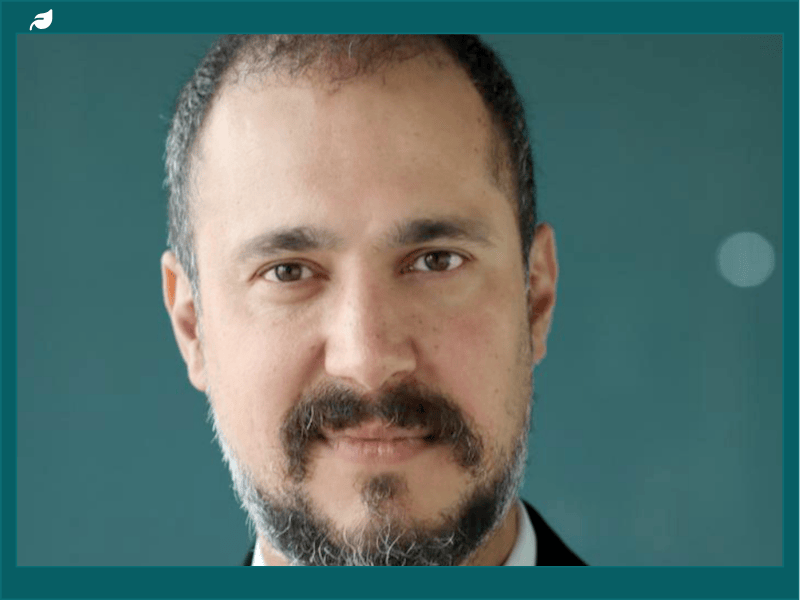
Professor Kaveh Madani, Director of the United Nations University Institute for Water, Environment and Health (UNU-INWEH), has been named the 2026 recipient of the Stockholm Water Prize. The award, widely regarded as the highest honour in water-related fields, was announced at UNESCO Headquarters in Paris during a World Water Day ceremony.
The Stockholm Water Prize recognises outstanding contributions to the sustainable use and protection of water resources. Madani will formally receive the award from H.M. King Carl XVI Gustaf of Sweden in August 2026 during World Water Week in Stockholm.
At 44, Madani is the youngest laureate in the prize’s 35-year history. He is also the first United Nations official and the first former politician to receive the award, marking a notable moment for the global water community.
The Prize Committee of the Stockholm Water Prize at the Royal Swedish Academy of Sciences cited his work “based on his unique combination of groundbreaking research on water resources management with policy, diplomacy and global outreach, often under personal risk and political complexity.”
Madani’s career spans academia, government, and international policy. Born in Tehran in 1981, he studied civil engineering at the University of Tabriz before continuing his education in Sweden and the United States. He earned a MSc in Water Resources at Lund University and later completed a PhD at the University of California, Davis, followed by postdoctoral research at the University of California, Riverside.
He went on to hold academic positions in the United States and the United Kingdom, including a faculty role at Imperial College London. His research focused on the intersection of hydrology, economics, and decision sciences, with a particular emphasis on modelling human behaviour in water systems.
In 2017, Madani returned to Iran to serve as Deputy Vice President and Deputy Head of the Department of Environment. His appointment was seen as a signal of engagement with the Iranian scientific diaspora and a step toward addressing the country’s environmental challenges.
During his time in government, he advocated for reforms in water governance and increased public engagement on environmental issues. His work, however, drew opposition from political factions. He was subjected to accusations in state-aligned media and faced arrest and interrogation during a broader crackdown on environmental experts.
Following these events, Madani left Iran in 2018 and continued his academic work abroad, including a position at Yale University. He later joined the United Nations University, where he now leads UNU-INWEH, often referred to as the UN’s water think tank.
Madani is recognised for introducing new approaches to water resource management through the application of game theory and decision analysis. His research challenged the assumption that stakeholders in water systems naturally cooperate, showing instead how competing incentives can lead to suboptimal outcomes.
By applying non-cooperative frameworks, his work has provided insights into transboundary water disputes and governance challenges. These approaches have informed both academic research and policy discussions in regions where water scarcity intersects with political tensions.
He is also known for developing the concept of “water bankruptcy,” which reframes long-term water scarcity as a structural condition rather than a temporary crisis. The concept has gained traction in policy and media discussions as water stress intensifies in many parts of the world.
Madani is the author of a recent UN report stating that the planet entered a state of “Global Water Bankruptcy” in January 2026. The report argues that many river basins and aquifers have lost their capacity to recover to historical levels, shifting the focus from crisis response to long-term management of depleted systems.
The framing has contributed to wider debate on how governments and institutions address water scarcity, particularly in regions facing chronic shortages. It also reflects broader concerns about the limits of natural resource systems under increasing demand and climate pressures.
Beyond academia and policy, Madani has built a public profile through science communication. With a large following on social media, he has used digital platforms, documentaries, and public campaigns to make water science more accessible to wider audiences.
His work has focused on connecting scientific evidence with public understanding and policy action. This includes efforts to engage younger audiences and support accountability in environmental governance.
Madani has also held international diplomatic roles. During his time in government, he served as Iran’s lead environmental diplomat and was elected Vice President of the Bureau of the United Nations Environment Assembly in 2017. In this role, he contributed to discussions involving all UN member states on environmental policy.
His advocacy has included calls to elevate water within global climate discussions. At COP23 in Bonn, he criticised the limited attention given to water in the Paris Agreement and argued for its inclusion as a central component of climate policy.
In his current role at UNU-INWEH, Madani continues to work with governments and institutions on water policy, with a focus on bridging scientific research and decision-making. His work often addresses challenges faced by countries in the Global South, where water scarcity has direct implications for development, stability, and public health.
The 2026 Stockholm Water Prize recognises both his scientific contributions and his efforts to connect research with policy and public engagement. It also reflects the increasing importance of interdisciplinary approaches to managing water resources under growing environmental and political pressures.
As global demand for water continues to rise alongside climate-related impacts, the role of science in shaping policy responses remains central. Madani’s work has focused on addressing this gap, linking technical understanding with governance and communication.
The award places renewed attention on the need for integrated approaches to water management, particularly in regions where scarcity, population growth, and environmental change intersect.