The Role of Fair Trade in Sustainable Business
By Paul Rice
Every day, we make purchasing decisions often without realising their true power. The choices we make as consumers shape industries, influence corporate behavior, and drive change on a global scale. In a world facing climate change, global poverty, and widening social inequalities, both businesses and consumers are being challenged to rethink their approach to sustainability. Paul Rice, a pioneer in the Fair Trade movement and founder of Fair Trade USA, speaks with Sustainable Business Magazine about his bestselling book, Every Purchase Matters, and how ethical sourcing is key to building a more sustainable future.
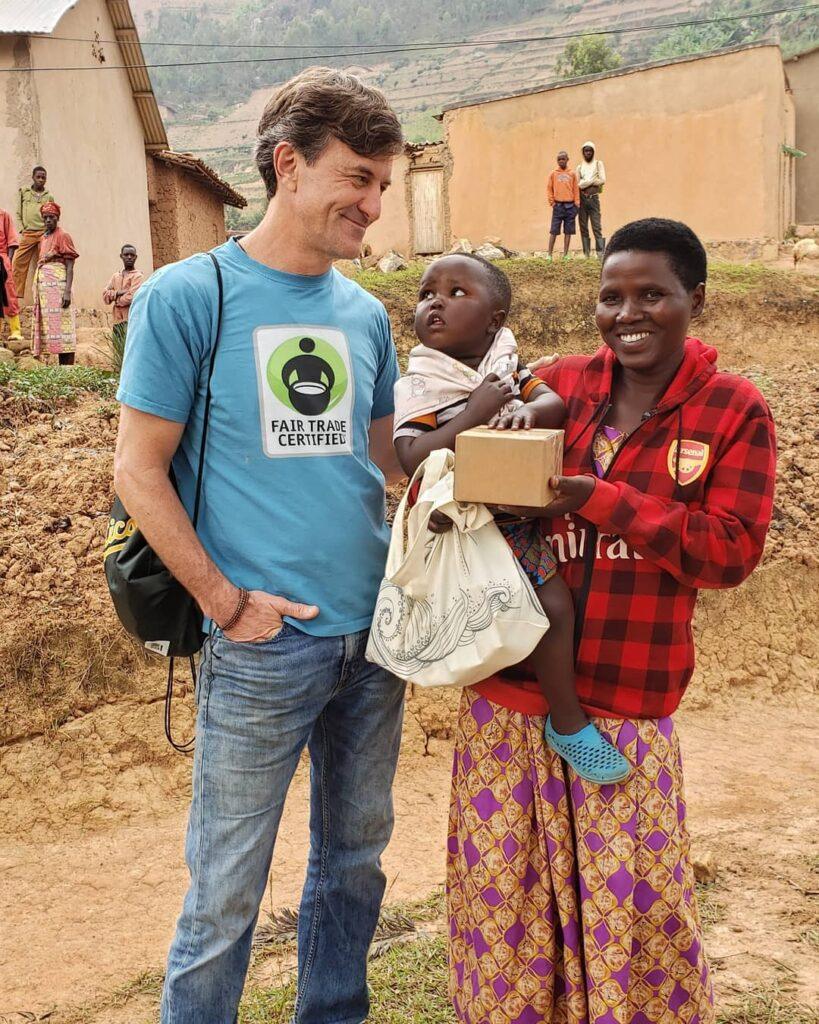
Paul Rice launched Fair Trade USA in 1998 after spending over a decade working alongside coffee farmers in the highlands of war-torn Nicaragua during the late 1980s and 1990s. He founded and led Nicaragua’s first Fair Trade coffee export cooperative, gaining first-hand experience in ethical sourcing. In his new book titled Every Purchase Matters, Rice amplifies the voices of those who helped shape the Fair Trade movement, from farmers and workers to corporate leaders such as Howard Schultz (former CEO of Starbucks) and Doug McMillon (CEO of Walmart). Today, Paul continues to champion Fair Trade as a powerful strategy for poverty alleviation, environmental stewardship, and sustainable business.
The Power of Consumer Demand
Paul describes his new book as “a book of hope.” Discussions on sustainability and climate change often focus heavily on the challenges and barriers, but Every Purchase Matters provides a tangible roadmap toward what he calls “conscious capitalism.” By examining successful case studies from the Fair Trade movement, the book offers an inspiring, solution-focused perspective.
“A lot of people feel quite powerless,” Paul observed. “They care but do not know what they can do. At the same time, you see a process of political polarisation across the world. People do not feel like their voice is being heard by the political process.”
Yet, he remains optimistic about consumer influence. “The amazing thing is companies are incredibly responsive to consumer demand. They are listening. If we all buy something, they will produce more of it. It really is that simple.”
This responsiveness underscores the power of ethical consumption. “If we choose ethically sourced and sustainable products that deliver social and environmental solutions, then the corporate world will follow. We can make a difference every time we shop. We can vote with our purchasing money for a better world.”
Integrating Sustainability into Business Models
For years, businesses operated under a “trade-off mentality”, in the belief that profit and sustainability were mutually exclusive. Paul challenges this notion. “Many in the business world are moving beyond the idea that you can either be profitable or care about the environment and people. The reality is, you can and should be doing both.”
Referencing John Elkington’s triple bottom line concept, which balances financial, social, and environmental responsibilities, Paul stresses the importance of win-win solutions. “We are on a journey to transform capitalism into a more enlightened system where people, planet, and profit go hand in hand. It will take time, but we’re already seeing the emergence of sustainable sourcing programs where everyone in the supply chain thrives.”
The Role of Fair Trade in Sustainable Business
Sustainability encompasses many challenges, from energy consumption to packaging and waste reduction. Paul argues that Fair Trade falls under “ethical sourcing,” ensuring transparency and accountability in supply chains. “Many companies don’t even know where their supply chain begins. The first step in building an ethical supply chain is transparency.”
Fair Trade goes beyond transparency by requiring companies to pay an “impact premium”, a direct investment that benefits farmers and workers at the start of the supply chain. “This premium drives incredible social outcomes and environmental projects at a local level.” Paul explores numerous case studies in his book, illustrating how this model creates tangible, lasting change.
Evolving the Fair Trade Model
The Fair Trade movement has grown significantly since its inception in the Netherlands in 1988. While the European model pioneered ethical sourcing, Paul highlights the need for adaptation in the U.S.
A key shift in the U.S. approach has been expanding certification beyond smallholder farmers to include farmworkers, factory workers, and fisheries. “Fair Trade for All is the idea that anyone who meets the environmental and social criteria should be eligible to join the movement,” Paul explains.
This approach also challenges outdated notions of the “Global North” versus the “Global South.” In today’s global economy, transparency and ethical sourcing must be upheld at every stage of the supply chain. Fair Trade USA has played a critical role in certifying farms and producers within the U.S., demonstrating that Fair Trade principles apply everywhere.
Fair Trade USA is also updating its agricultural standards to support regenerative agriculture, reinforcing its commitment to tackling climate change. Paul emphasises “The Fair Trade movement must continue evolving and innovating”
Fair Trade and Aid.
Fair Trade originally positioned itself as a better alternative to international aid. Paul argues that the two can be complementary. “There is definitely an important role for aid to play in providing humanitarian assistance and disaster relief.”
But to achieve sustainable economic development at the local level, Paul argues, market-based solutions are more effective and scalable. “By harnessing the power of markets and consumers, Fair Trade has generated impressive gains in the lives of over 1.6 million farmers and workers around the world – improving healthcare, housing, education, and environmental stewardship.
Drawing from his experiences in South America’s coffee industry, Paul highlights how aid, when it’s combined with Fair Trade, has helped farmers improve product quality and access global markets without being exploited by middlemen. His book brings these case studies to life, illustrating the power of ethical sourcing and how these ideas are replicable even when scaled up to global corporations like Starbucks.
Reputational Risk and Supply Chain Security
Beyond ethical considerations, Fair Trade also acts as a risk mitigation strategy for businesses. Transparency in supply chains is no longer optional in the digital age. “There are no more secrets in the global supply chain,” Paul states. “The internet has created immense reputational pressure. Companies do not want to be damaged by a scandal.”
Paul recalls in his book the 2013 Rana Plaza disaster in Dhaka, Bangladesh, where a factory collapsed killing 1,134 garment and textile workers for western brands. “It was a turning point in plausible deniability,” he explains, noting that the tragedy triggered a surge in Fair Trade USA’s initiatives. While this response may not have been purely ethical, companies recognised the financial risk of ignoring labour conditions in their supply chains. As consumer awareness of unethical sourcing grew, businesses had no choice but to take accountability.
The Future of Fair Trade
Looking ahead, Paul believes artificial intelligence (AI) will enhance consumer engagement with ethical sourcing. “AI can create a richer story of impact. Imagine a QR code on a Fair Trade product that allows consumers to meet the farmers they’ve supported and see exactly how the premium was spent.” This technology already exists and has the potential to bridge the gap between consumers and the people behind their products; ultimately influencing purchasing behavior and driving demand for ethical sourcing.
Technology can also enhance supply chain transparency, making it impossible for companies to plead ignorance about environmental and labor violations. With AI-driven tracking and data monitoring, businesses can ensure ethical standards are upheld throughout their operations.
A More Conscious Capitalism
Despite pushback on ESG reporting in the U.S., Paul remains optimistic. “Corporate leaders believe the shift towards sustainability is irreversible.”
For both businesses and consumers, Fair Trade presents a way to align profit with purpose. “We can vote for change today by choosing products that deliver impact,” Paul urges. By embracing Fair Trade, businesses and consumers can build a more sustainable and equitable future, one purchase at a time.
Every Purchase Matters is available to purchase wherever books are sold and is a must-read for consumers and business people alike It provides a positive outlook on what we can achieve when working collaboratively for the sake of people and the planet. It encompasses what it means to be a sustainable business and provides a roadmap for what still needs to be done. Sustainable Business Magazine would like to thank Paul for sharing his insights and experiences with us, his book is sure to become a staple of conscious capitalist literature.