Commercial solar panels let a business generate its own electricity on site, cutting energy bills and carbon emissions while giving a measurable return on the money invested. For most UK organisations, the appeal is simple: electricity you make on your own roof costs far less than electricity you buy from the grid, and every unit you generate lowers your reported emissions.
This guide sets out what commercial solar panels are, how much they generate, what they cost, and how they fit into a credible sustainability strategy. The figures below use UK government and regulator data so you can weigh the decision on evidence rather than sales copy.
What are commercial solar panels?
Commercial solar panels are photovoltaic (PV) systems installed on business premises to generate electricity from daylight. They work the same way as domestic panels, but at a larger scale: a company system is measured in tens or hundreds of kilowatts peak (kWp), against the 4 kWp typical of a home.
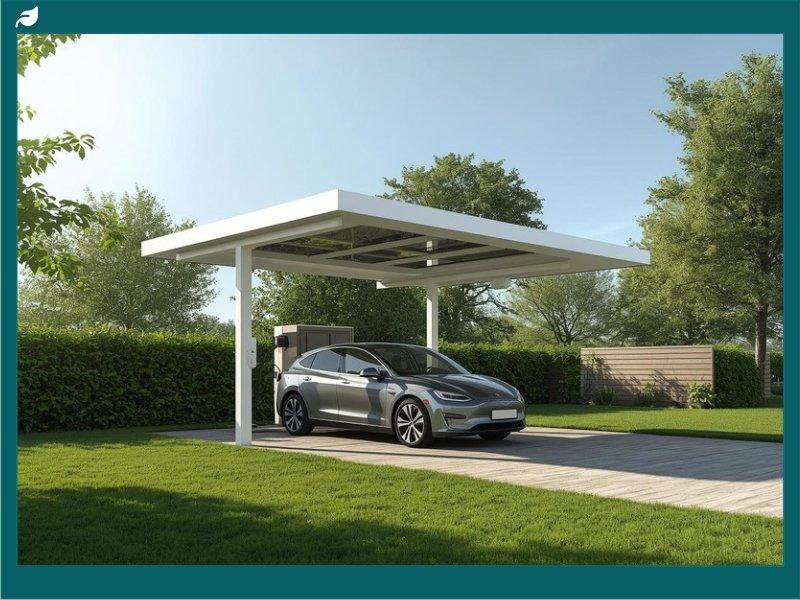
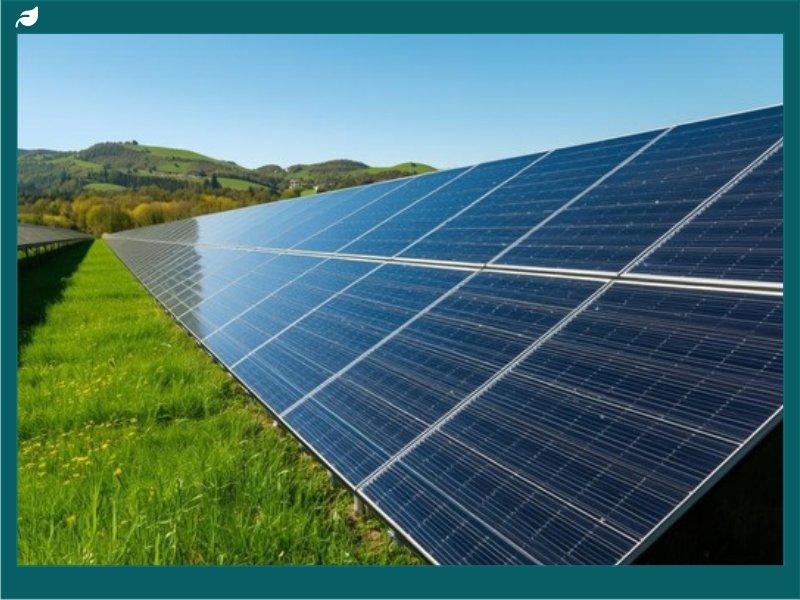
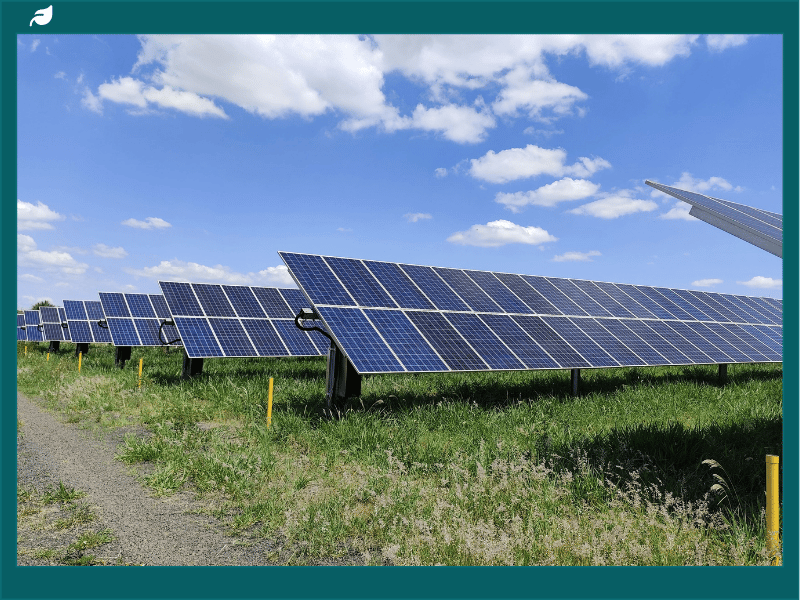
Most commercial installations are roof-mounted on warehouses, factories, offices, retail units or agricultural buildings, where large flat or south-facing roofs sit unused. Where roof space is at a premium, ground-mounted arrays or solar carports offer an alternative. The panels feed a set of inverters that convert the direct current they produce into the alternating current your building uses, and the system connects to your existing supply so solar power is used first, with the grid topping up the rest.
Why UK businesses are investing in commercial solar
Businesses are turning to solar for three reasons: cost, carbon and control. UK electricity is expensive by international standards, and organisations feel that on every bill. Average electricity prices for non-domestic users peaked at 28.39 pence per kilowatt hour at the end of 2023 and were still around 26 pence per kilowatt hour in late 2024, according to the Office for National Statistics. Solar offsets a chunk of that cost for 25 years or more.
Carbon is the second driver. Stakeholders, from investors to customers to employees, increasingly expect evidence of real decarbonisation rather than offset purchases. Generating your own clean power reduces the emissions tied to your electricity use, which feeds directly into carbon reporting.
Control is the third. Grid prices move with wholesale gas, and businesses have no cap to shelter behind. On-site generation gives a degree of price certainty and energy security that a supply contract cannot.
How much energy do commercial solar panels produce?
Knowing how much energy a solar panel produces is the starting point for sizing any commercial system. Output depends on four things: the total capacity installed, the orientation and pitch of the roof, the level of shading, and location within the UK. As a working figure, a well-sited UK system generates around 900 kilowatt hours per year for every kWp installed, the kind of yield the industry-standard MCS calculation uses.
That scales in a straightforward way. The table below shows indicative annual output, bill savings and carbon reduction for common commercial system sizes.
| System size | Indicative annual output | Indicative annual bill saving | CO2 avoided per year |
|---|---|---|---|
| 10 kWp | 9,000 kWh | around £2,300 | about 1.6 tonnes |
| 50 kWp | 45,000 kWh | around £11,300 | about 8.1 tonnes |
| 100 kWp | 90,000 kWh | around £22,500 | about 16.2 tonnes |
| 250 kWp | 225,000 kWh | around £56,000 | about 40.5 tonnes |
Figures assume roughly 900 kWh per kWp a year, electricity used on site valued at 25 pence per kWh, and the 2025 UK grid carbon factor of about 0.18 kg CO2e per kWh. Actual output and savings vary with location, roof orientation, how much power you use during daylight, and your electricity tariff.
The pattern matters more than the exact numbers: output is roughly linear with system size, and the value of that output tracks your electricity price. A business paying more per unit, or using most of its power during the working day, sees the strongest return.
The financial case: costs, savings and export income
The return on commercial solar comes from three places. First, and largest, is avoided grid purchases: every unit you generate and use on site is a unit you do not buy at your business rate. This is why daytime operations, such as manufacturing, cold storage, offices and retail, tend to see the best economics, because their demand lines up with generation.
Second is export income. Any electricity you generate but do not use can be sold back to the grid. Under the Smart Export Guarantee, which Ofgem administers, licensed suppliers must pay small-scale low-carbon generators, including solar systems up to 5MW, for the electricity they export. Rates are set by suppliers and vary, so it pays to compare.
Third is the long asset life. Panels are typically warranted for 25 years and degrade slowly, so savings continue for decades after the payback period. Battery storage can improve the picture further by shifting daytime generation into evening use, raising the share of your own power you consume rather than export.
Solar as part of a credible sustainability strategy
Beyond the bill, commercial solar produces a reporting benefit that carries real weight with stakeholders. Electricity drawn from the grid is the main source of Scope 2 emissions for most businesses. Under the UK government’s greenhouse gas conversion factors, each kilowatt hour of grid electricity carried about 0.18 kg of CO2 equivalent in 2025, so every unit you generate on site cuts your reported footprint by that amount.
This is decarbonisation you control directly, rather than emissions abated somewhere else in a supply chain. It sits comfortably alongside other measures in a wider net-zero plan and pairs naturally with the renewable energy technologies many organisations are already adopting.
The proof is in real installations. One steel fabricator featured in this magazine now runs equipment on power from its own on-site solar system, cutting both its electricity bills and its lorry journeys in a single move. Stories like that carry more credibility with customers and investors than any pledge.
What to weigh up before installing
A commercial system is a capital project, so a short assessment before you commit will save money and disappointment. Work through this checklist:
- Roof condition, age, orientation and load capacity, or suitable ground space
- Your electricity use profile, especially how much you draw during daylight hours
- Half-hourly consumption data from your meter to size the system accurately
- Grid connection and any Distribution Network Operator approval needed
- Whether battery storage improves your self-consumption enough to justify the cost
- Planning requirements, which differ for larger arrays and listed or protected sites
- An MCS-certified installer, which is also a condition of Smart Export Guarantee eligibility
- A realistic payback estimate based on your own tariff, not a generic figure
The single biggest factor in the economics is self-consumption. The more of your generation you use on site rather than export, the faster the system pays back, because avoided purchases are worth far more per unit than export payments.
Frequently asked questions
Are commercial solar panels worth it for a business?
For most businesses with suitable roof space and daytime electricity demand, yes. High grid prices and a 25-year-plus asset life mean systems commonly pay back well within their lifetime, after which the electricity is close to free. The return is strongest where a business uses most of its generation on site.
How long do commercial solar panels last?
Panels are usually warranted for around 25 years and keep working beyond that, with output declining slowly over time. Inverters have a shorter life and may need replacing once during the system’s lifetime.
Do solar panels work in the UK’s cloudy weather?
Yes. Panels generate whenever there is daylight, not just direct sun, and modern panels perform well in low light. Output is higher in summer and lower in winter, but a UK system produces useful electricity all year round.
Can a business sell surplus solar electricity?
Yes. Through the Smart Export Guarantee, licensed suppliers pay for electricity exported to the grid from eligible systems up to 5MW. You need a meter capable of measuring export, and you choose which supplier’s export tariff to take.
The bottom line
Commercial solar panels give UK businesses a rare combination: lower operating costs, a measurable cut in reported emissions, and protection from volatile grid prices, all from an asset that lasts decades. The economics depend on your roof, your electricity use and your tariff, so the sensible first step is a site assessment and a payback estimate built around your own figures rather than headline averages.
Looking for a solar installer?
Compare MCS-certified solar panel installers across the UK in our directory, with ratings, reviews and free quotes, listed by county.
Related solar guides: