Sustainability in construction tends to get discussed in terms of materials, energy efficient design, and waste reduction, but there is a less visible component that plays a genuinely significant role: the quality and reliability of the electrical infrastructure used throughout a project, starting with the power cables that keep tools, equipment, and temporary site power running.
Reliable power cables might not seem like an obvious sustainability topic at first glance, but the connection becomes clear once you look at how cable failures, inefficiencies, and premature replacements actually affect a construction project’s overall environmental footprint. Here is a detailed look at this connection, explained section by section.
1. Durable Cables Reduce Material Waste Over a Project’s Lifecycle
Lower quality cables tend to fail more frequently, whether through insulation breakdown, connector failure, or general wear from repeated use across a demanding job site. Each failure means replacement, and replacement means additional material consumption, manufacturing energy, and eventual waste that a more durable product would have avoided entirely.
Construction projects that specify higher quality, more durable cabling from the start reduce this cycle of replacement significantly, which directly reduces the overall material footprint of the project’s electrical infrastructure across its full lifecycle, not just during the initial installation phase.
2. Efficient Power Delivery Reduces Energy Waste on Site
Cable quality affects more than just durability, it also affects electrical efficiency. Cables with proper conductivity and appropriate sizing for their intended load lose less energy to resistance during power transmission compared to undersized or lower quality alternatives, meaning less wasted electricity powering job site equipment and temporary facilities.
On larger construction projects running substantial equipment loads over extended periods, this efficiency difference compounds into a meaningful reduction in overall energy consumption, which matters both for project sustainability metrics and for the practical cost of powering a site over months of construction activity.
3. Choosing the Right Cables Prevents Costly Site Delays
Cable failures on an active construction site do not just create a safety and replacement issue, they also cause project delays while equipment sits idle waiting for power to be restored. Specifying reliable power cables designed for the specific demands of a construction environment, exposure to weather, movement, dust, and heavy equipment traffic, reduces the frequency of these disruptions considerably, keeping projects on schedule and reducing the compounding inefficiencies that delays introduce into an otherwise well planned construction timeline.
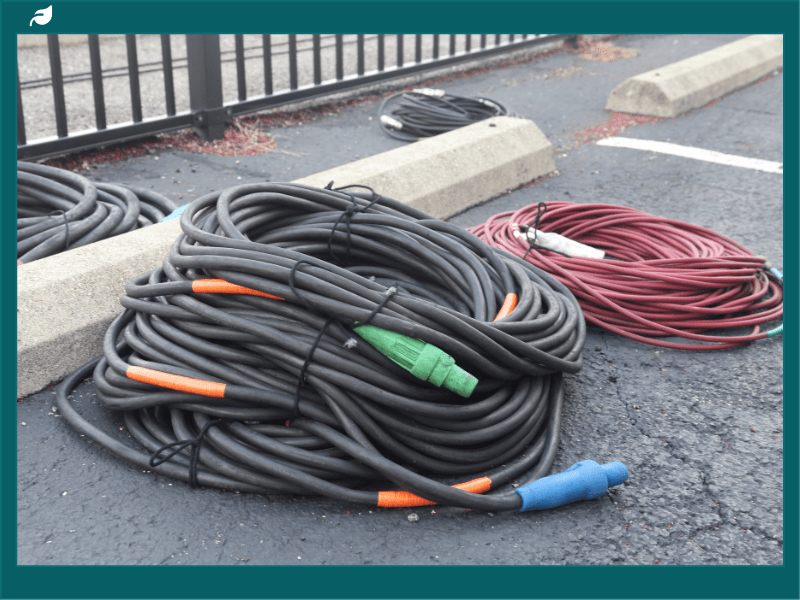
Duraline has built its reputation specifically around producing cables designed to withstand these demanding construction conditions, recognizing that reliability on site translates directly into fewer disruptions, less wasted material from repeated replacement, and a more efficient overall project timeline.
4. Longer Cable Lifespans Support Circular Construction Practices
The construction industry has increasingly embraced circular economy principles, designing projects and selecting materials with reuse and longevity in mind rather than a purely linear buy, use, discard model. Power cables fit into this framework as well, since higher quality cables can often be safely reused across multiple projects rather than being discarded after a single job.
This reusability extends the useful life of the material investment considerably, reducing the overall demand for new cable manufacturing across a construction company’s ongoing project pipeline, which is precisely the kind of practical, unglamorous sustainability improvement that adds up significantly over time.
5. Proper Cable Selection Reduces Fire and Safety Risks
Beyond environmental considerations, reliable cabling reduces genuine safety risks on construction sites, where electrical fires and equipment failures can cause serious property damage, project delays, and safety incidents. Quality cables with appropriate insulation and load ratings for their intended use significantly reduce these risks compared to cheaper alternatives that may be undersized or poorly manufactured.
This safety dimension connects directly to sustainability as well, since a serious electrical incident on a construction site can result in significant material waste, emergency response resource consumption, and project delays that ripple outward into the broader environmental footprint of a delayed or disrupted project.
6. The Industry Data Supports Investment in Quality Infrastructure
According to a report from the U.S. Green Building Council, construction projects that prioritize quality infrastructure components, including electrical systems, consistently report lower lifecycle environmental impact scores compared to projects using minimum specification components chosen primarily to reduce upfront costs. This finding reflects a broader pattern across sustainable construction practices, where higher initial investment in quality components frequently produces better overall environmental and financial outcomes across a project’s full lifecycle.
This data reinforces a principle that experienced construction professionals have often understood intuitively: cutting costs on infrastructure components frequently costs more in the long run, both financially and environmentally, than investing appropriately in quality from the outset.
Final Thoughts
Sustainability in construction extends well beyond the materials visible in a finished building. The electrical infrastructure supporting a project throughout its construction phase, including something as seemingly mundane as power cabling, genuinely affects the overall environmental footprint through material waste, energy efficiency, and project timeline impacts.
Construction companies serious about sustainability increasingly recognize that these less visible infrastructure decisions matter just as much as headline sustainability features. Choosing reliable, well built cabling designed for the demands of a construction environment is a practical, achievable step that supports genuine sustainability goals while also protecting project timelines and budgets along the way.